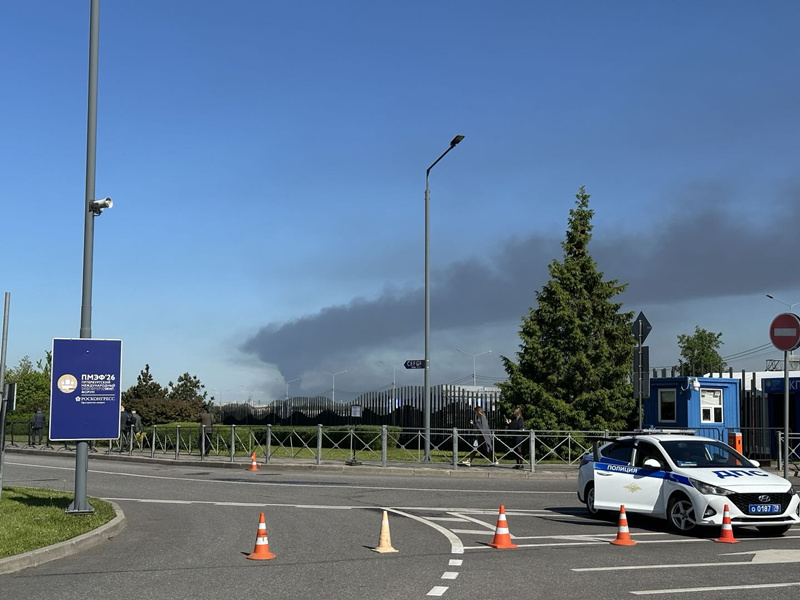
On July 4th, local time, the second-largest city in Russia, Saint Petersburg, was attacked by Ukrainian drones. According to a report by NBC, Ukrainian President Zelenskyy confirmed on social media that Ukrainian troops launched attacks on oil pipelines in Saint Petersburg, aiming to target the oil infrastructure that provides income for Russia.
St. Petersburg Mayor Alexander Begelov announced earlier on the 4th that the city had experienced a large-scale drone attack, with a petroleum terminal being hit. He revealed that Russia's air defense system shot down 72 drones over Leningrad Oblast, and the attack did not result in any casualties.
Leninakan Governor Alexander Drozshinko stated that several settlements in the region suffered minor damage. The port of Vysotsk, located about 170 kilometers northwest of Saint Petersburg, was attacked, but he did not disclose details of the damage to the port. The port of Vysotsk is mainly responsible for the transshipment of oil, grain, coal, and liquefied natural gas.

Video screenshot of the attack on the petroleum terminal in Saint Petersburg, as reported by Ukrainian President Zelensky
Ukrainian President Volodymyr Zelenskyy later posted a statement on social media, confirming that the Ukrainian army launched attacks on the oil terminals in Saint Petersburg. He stated: "The Ukrainian army attacked the port oil infrastructure that provides funds for Russian military operations, and also struck an important military target called Kherson, which is more than 850 kilometers away from the Ukrainian border."
Karamshtad is an important naval base near Saint Petersburg. However, Russia has not released any information regarding the attack on Karamshtad.
Recently, Ukraine has been intensifying its attacks on Russian energy infrastructure, attempting to weaken Russia's energy supply and oil revenues. On June 28 local time, Russian President Putin admitted at a high-level meeting that fuel shortages had occurred in various regions of Russia, and a special task force is working to ensure an adequate supply to the entire country.