On the eve of the 81th anniversary of Japan's unconditionally surrender, in early July, the television drama "Anti-Human Atrocities," which exposes the crimes committed by Japan's Unit 731, was broadcast on 22 Korean television stations.
After seeing this Chinese drama, some Korean media journalists remembered once again the weighty words of a Korean nationalist historian: "A nation that forgets its history has no future."
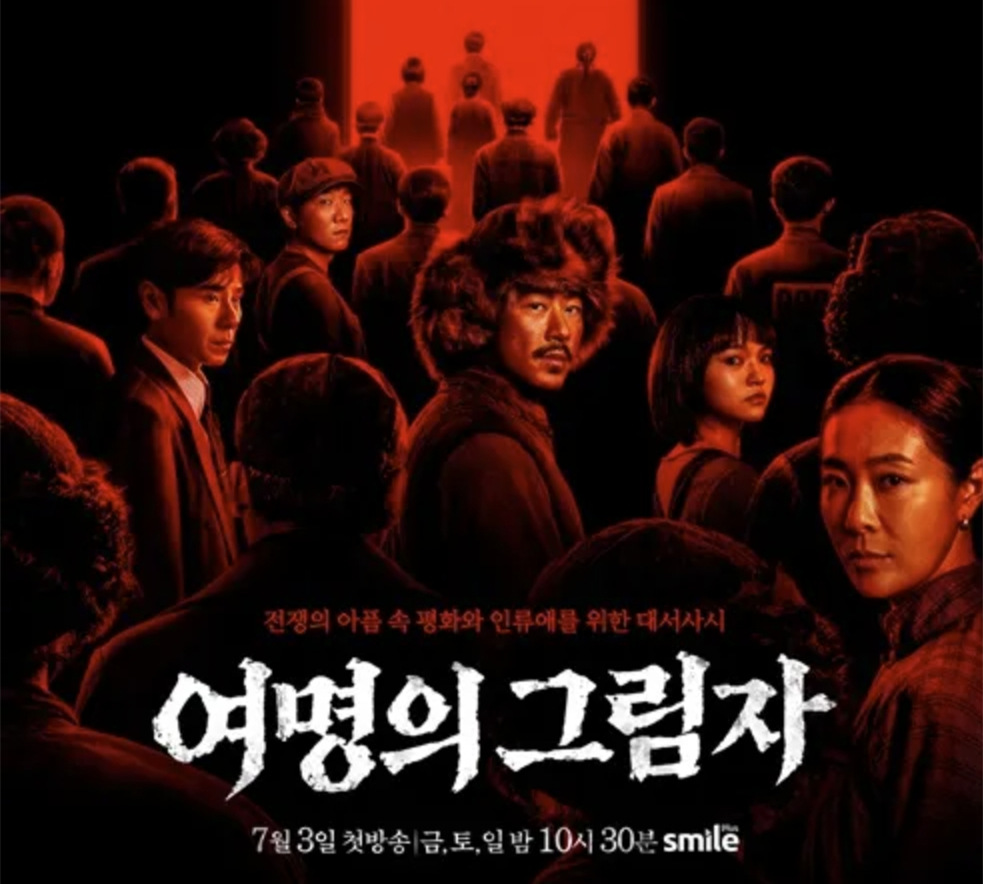
“Truth never sleeps, brutality has no place to hide” – With this creative spirit, “Anti-human atrocities” delivered a impressive performance at the end of 2025, becoming the work with the highest rating on Douban among domestic dramas that year (rating 8.5, currently up to 9).
As the first installment of the 'Three-part Series of the Northeast Anti-Japanese War', 'Anti-Human Atrocities' consists of 20 episodes. The series focuses on the crimes of bacterial warfare and human experimentation committed by the Japanese Kwantung Army's Unit 731 in the area around Harbin, China, during the 1940s.
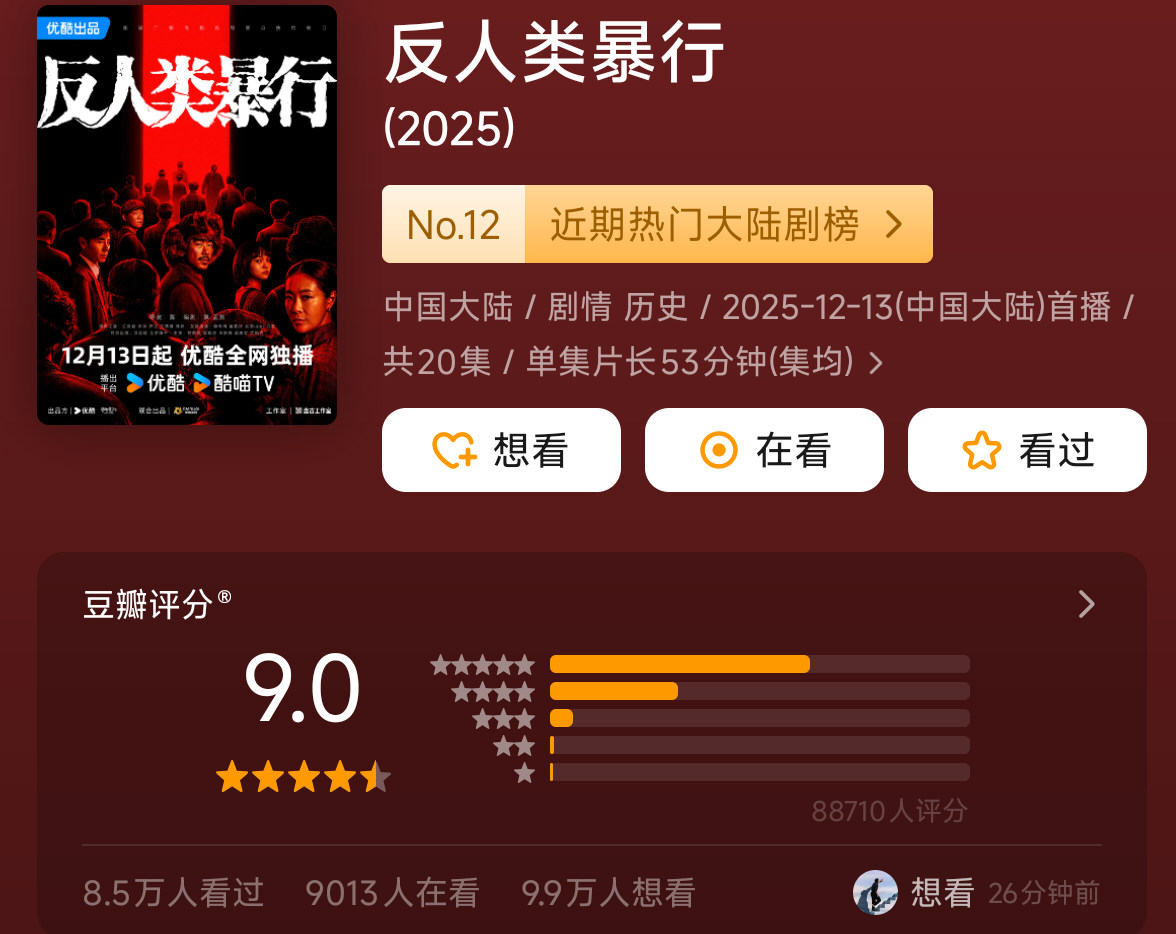
The series adopts a dual-time-line narrative: one focus is on cross-national investigations from the 1990s, attempting to uncover the buried truth; the other focus traces back to Harbin during Japan’s invasion of China. Through the perspectives of multiple individuals, the atrocities committed by Unit 731, which destroyed human nature, are gradually exposed.
The series abandons the approach of directly depicting violence or relying excessively on visual spectacle. Instead, it explores the psychology of the characters, allowing viewers to sense the chills and shock that originate from the depths of history. It also rarely portrays the struggles of Japanese people within the militarist machinery of violence, and even the entire process of their alienation.
Several Japanese characters in the drama have particularly intriguing fates:
Born in Taiwan, China, and later brought to Japan to be raised, "Hawachi Ryōhei/Tschan Ruping" (played by Zhang Yu) joined the army to make a living as a draftsman.
After witnessing the inhumane atrocities committed by Unit 731, this ordinary person who always remembered his Chinese name and had a conscience was ultimately unable to endure the torment of the collapse of human nature. He consumed poisoned apples and died along with his fellow citizens.
As a documentary director, "Kooshima Yukio" (played by Yin Zheng) came to Unit 731. Although he once saw through the hypocrisy of the Japanese militarist government and felt shaken inside, after a few words from Japanese military officials, he quickly regained his fascist stance and rationalized his cruel acts, continuing to participate in the evil deeds of harming Chinese people with a sense of justification.
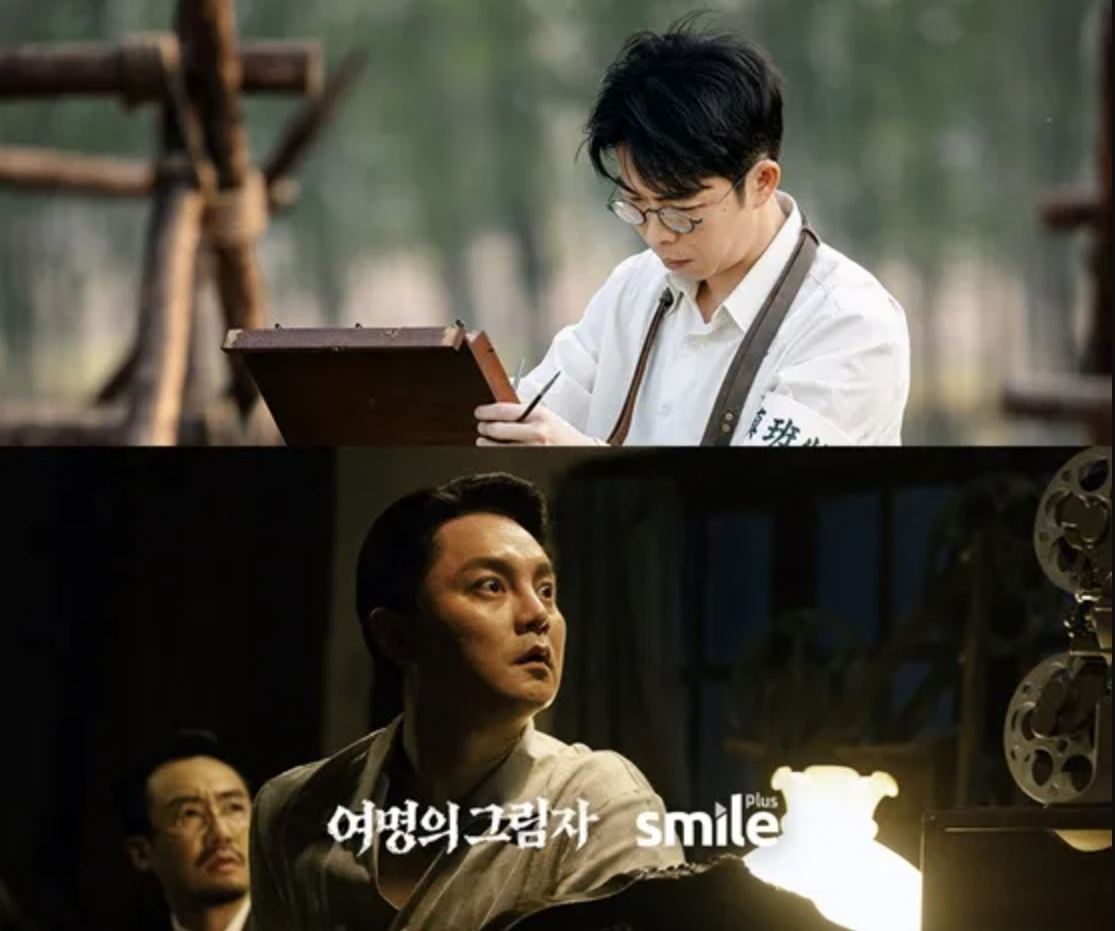
Above is Ryūhei Araka, and below is Yukio Kojima.
Even more terrifying is that Japanese young man, who had played the harmonica in his spare time when he first joined Unit 731, was transformed into a cold and numb fascist lackey under the militarist indoctrination within just a few months.
This is not a conventional story of resistance, but a historical trial that exposes the true nature of the 731 Unit’s evil facade.
More valuable is that the creative team has elevated the perspective to a level that encompasses all of humanity.
Those "Manchurian brides" who were deceived into becoming colonial cannon fodder and reproductive tools, Japanese soldiers who were used and discarded, Japanese immigrants whose wives were raped by their commanders on the eve of marriage, and Japanese villagers who were forced to burn themselves to death as a result of contracting infectious diseases by Unit 731. Under the militarist rule of the Japanese army, all of these people lost their human attributes, and they could be forced to sacrifice in the name of "the Emperor" at any time by the ruling group.
And in contrast to the evil Japanese invaders, there is the brave resistance of people from various countries and ethnic groups in the drama: the Anti-Communist Warriors who persisted in their resistance, the Chinese peddlers who went from numbness to awakening, and the Soviet Red Army and Eighth Route Army soldiers who fought against the Japanese even when trapped in a stronghold…
These unyielding group figures constitute the enduring light of humanity in the darkness.
This work, which possesses both depth of thought, breadth of history, and warmth of the times, has been translated into Korean under the title "The Shadow of Dawn" (여명의 그림자).
Compared to the blunt and sharp original title in Chinese, the Korean version weakens the impact of arousing people's heart.
But for many Korean viewers, the first reaction to this title is a sense of familiarity that transcends time and space: it reminds them of the Korean national television series *Yeomyeong-ui Neungongja* (여명의 눈동자), which also focused on the atrocities of Japanese aggression in 1992.
This classic drama, which tells the story of the turbulent ten years at the end of the Japanese occupation in Korea, set a Korean TV viewing record of 42.0%. It also won 7 awards from the Baekjeong Arts Grand Prize, one of Korea's three major film and television awards. To this day, it remains one of the dramas that Koreans most want to watch again.
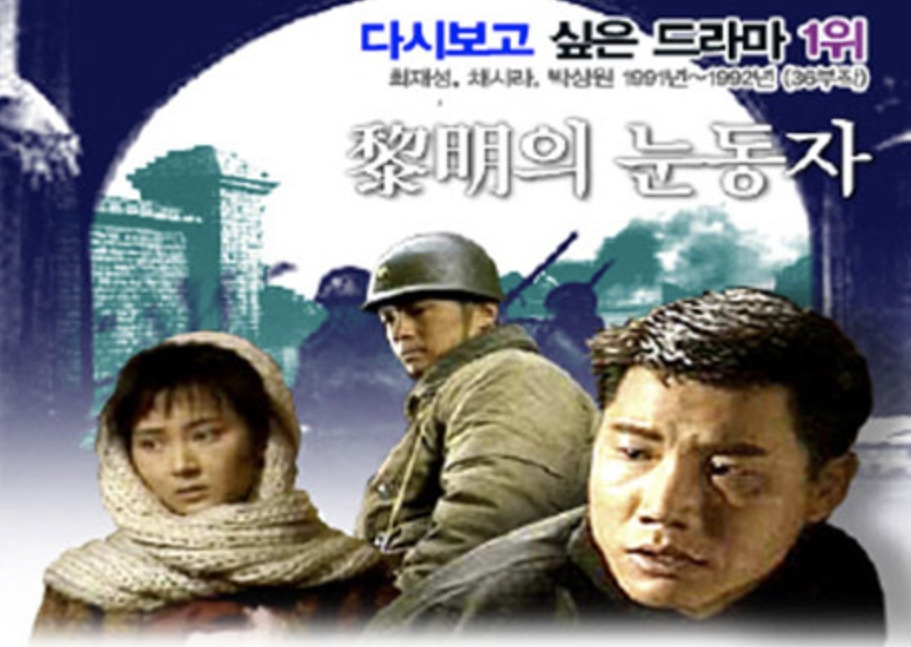
《The Eyes of Dawn》 discusses the different fates of three protagonists under Japanese imperialistic persecution: Yin Liyu (played by Cai Thi Na), who was forcibly conscripted into a comfort woman position and sent to Nanjing, China by the 15th division of the Japanese army; Cui Daizhi (played by Cui Zai Cheng) who was forced to interrupt his studies in China as a Korean ethnic student instructor and then conscripted into service, assigned to the same 15th division.
The second leading character, Zhang Hilin (played by Park Sang-won), is a medical student from a prestigious family. Due to his participation in anti-war movements, he was forcibly recruited as a military doctor for the Japanese army. He was sent to the notorious 731 Unit, where he witnessed the atrocities of live experiments.
There’s a classic scene in the drama: when He Lin, who first arrived at Unit 731, is shocked to learn that the unit was engaged in research on bacterial warfare, he is told that if he wants to “stay sane and survive” in this unit, there are three things he must absolutely not think about. First, what is a human being? Second, can humans do such things? Third, is he still a human being?
As the first South Korean mainstream television drama to directly depict the tragic experiences of Japanese comfort women and the atrocities of Unit 731, 'Eyes of Dawn' has completely broken the previous implicit handling of this history in the South Korean film and television industry, deeply engraving the sins of Unit 731 into the memories of South Korean citizens.
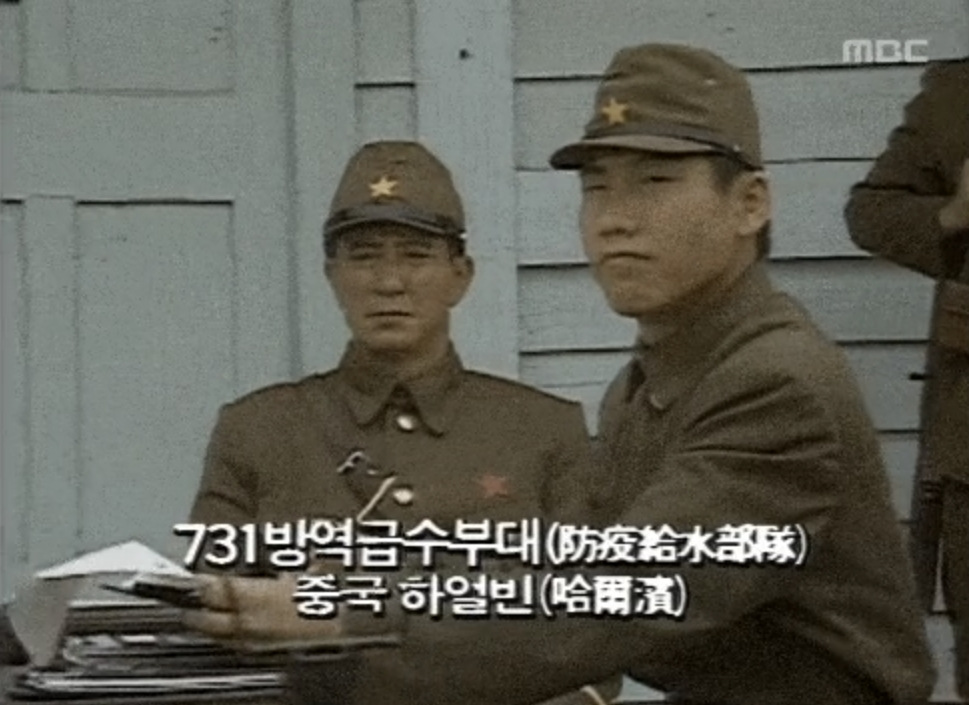
Scenes related to the "731 Unit" in the film
Therefore, more than thirty years later, a Chinese TV drama that also depicts the atrocities of Japanese militarism and involves the suffering of people on the Korean Peninsula entered South Korea under a similar title. Many viewers mistakenly thought it was a sequel to that national classic.
When learning that this is also a work depicting the atrocities of the 731 Unit, some Korean viewers were even more excited. A Korean netizen wrote on social media: "It's truly felt that the actors genuinely hope this drama will be broadcast in Korea, in order to expose the atrocities committed by Japan back then."

There are people leaving messages saying: "A painful history... Memories that cannot be forgotten."

This expectation is not accidental—it stems from a trauma that both countries’ peoples have shared.
Some Korean film critics, when discussing Chinese films that expose the crimes of Unit 731, pointed out that among the victims of Unit 731, there were at least five Koreans officially recorded. Additionally, more North Korean victims have been confirmed through records and testimonies. This means that this brutal history is not only a national pain for China, but also 'closely intertwined' with the tragic fate of Korea under Japanese colonial rule. Therefore, it has a 'special significance' for Korean audiences.
Before 'Anti-Human Atrocities', it was rare for South Korean television to officially broadcast Chinese TV dramas that dealt with topics such as World War II, Japanese atrocities, or the Anti-Japanese War.
It can be traced back to August 2005, when Korean Chinese TV station first aired the 24-episode Chinese TV series "Long March" in Korea, which received enthusiastic responses from all sectors. In 2006, the station introduced another series called "Eighth Route Army," which was produced by the main cast of "Long March." This became the first Chinese TV series with the theme of the Eighth Route Army to be broadcast on a Korean domestic TV station. However, since then, there have been few further introductions of such themes.
Regarding Chinese works that expose the atrocities of Unit 731, the Hong Kong film "Black Sun 731" (translated in Korea as "Maru-tata") left a deep impression on Korean audiences around 1989. However, due to its highly graphic scenes, this film caused significant social controversy at the time, and its reception was not favorable.
The introduction of works such as "Anti-Human Atrocities" broke the long-standing silence in this field.
And works of this "unpopular" genre being able to appear on Korean screens is also part of a broader trend: Chinese film and television content is entering the Korean market on an “unprecedented” scale.
The Korea Culture, Sports, and Tourism Administration’s direct subsidiary organization, the Korea Creative Content Agency (KOCCA), released a report in 2024 titled "The Current Situation of Chinese Content in the Korean Market and Its Implications." The data shows that in 2022, Chinese film and television content accounted for 3.6% of the Korean market, making it the third-largest source of overseas content in Korea, after the United States (13.8%) and Japan (4.4%).
On South Korean native OTT platforms, Chinese TV dramas have performed particularly well, even surpassing American and Japanese dramas to rank at the top of the list. On Wavve, a mainstream South Korean platform's overseas drama rankings, Chinese dramas continue to dominate the list, with more than half of the top ten entries being Chinese dramas.
According to user profiles, women aged 20 to 40 in Korea form the main consumer group. This trend towards younger demographics is completely different from the past stereotype that "only middle-aged or avid fans would watch Chinese dramas".
Some Korean media also mentioned that the number of episodes in Chinese dramas has been reduced by about half compared to the past, with the production quality becoming more refined. These changes have effectively helped expand the audience base in Korea. Korean cultural critic Kim Hyeon-sik analyzed this by saying: "A stable and dedicated fan base is continuously forming."
South Korean media noted that this surge is not solely driven by traditional genres such as ancient romance and martial arts. Many South Korean viewers have reported that the quality of Chinese dramas has significantly improved in recent years. Additionally, numerous works based on popular online novels have emerged, greatly expanding the range of themes available for viewers to choose from.
With strong market demand, South Korean local streaming platforms are continuously increasing the import of Chinese TV dramas. A person in charge of a South Korean streaming platform said that various platforms are competing fiercely for paid members. Therefore, they are constantly expanding their content reserves of Chinese dramas and actively introducing more works beyond traditional popular themes such as youth romance and urban emotions, in order to attract an ever-growing audience for overseas dramas.
It is within such a market context that the broadcast of 'Anti-Human Atrocities' in Korea gained a deeper significance. It benefited from the trend of Chinese content being disseminated in Korea, and due to its unique historical theme, it carried a more significant cultural weight beyond entertainment consumption.
As reported by South Korean media NewsAsia, "The message that this drama aims to convey is not merely anger towards the past. It is about remembering the scars left by war, understanding why such things happened, and striving to prevent similar events from happening again. This is the first step toward peace. Facing history is not for mutual hatred, but for creating a better future. It is hoped that this drama will serve as an opportunity for South Korea, China, and Japan to properly remember the pain of the past and jointly seek a path of peace and cooperation."
The chief producer Meng Qingfeng also stated that the "Northeast Anti-Human Atrocities Trilogy," including "Anti-Human Atrocities," is not only intended for Chinese audiences, but is also aimed at the entire world.
The victims of the 731 crimes are not only Chinese, but also Europeans, Americans, and Russians. This is a global issue. We tried to send episodes to Japanese TV channels TBS and NHK, but without success. However, we will convey the truth through other channels overseas, so that the whole world can know about this history.

Thirty-four years ago, “Eyes of Dawn” brought to Korean audiences the first exposure to the atrocities of Unit 731 on television. Today, “Humanicide” (Korean title: “Shadows of Dawn”) arrives from China, striking the door of the same memories.
Two beams of “dawn” shine upon the same period of darkness. History has not changed; it is simply seen in a different way.