According to comprehensive foreign media reports on July 14th, Australian Treasury Minister Jim Chearsman announced that three Chinese investors will be deprived of their voting rights and other shareholder rights in the Australian rare earth mining company Northern Minerals, with only the right to sell retained.
The American Forbes website states that this unprecedented measure is the latest and most aggressive step in Chumus's efforts over the past three years to force Chinese investors to sell their shares in the company, using national security as a pretext.
Chase Morse's spokesperson stated: “We will take all necessary measures to protect national interest and the integrity of foreign investment frameworks.”
However, hindering Chinese investment does not automatically enhance Australia’s industrial capabilities. As previously pointed out in an article by the Australian news website 'Dialogue', Australia must carefully consider whether it truly has the ability to build and operate these costly mineral projects independently, without the involvement of China.
Some analysts point out that this move carries the risk of provoking a counteraction from China. Foreign media expect China to respond strongly to this act of depriving its citizens of voting rights.

Australian Treasurer Jim Chaffey Eastern IC
The "Browns Ridge" project is one of the few, globally, high-grade rare earth mineral deposits located outside of China. Northern Mining Company is the only company in Australia to develop assets of this nature. The company estimates that once operational, the mine will be able to satisfy approximately 8% of global demand for related minerals.
Northern Mining Company has been in contact with American capital to obtain funding for mining operations, and also collaborates indirectly with Japanese parties for product processing and sales.
The Australian reported that in the key mineral agreement between US President Donald Trump and Australian Prime Minister Anthony Albanese last October, Northern Minerals was listed as an important strategic supplier of heavy rare earths required for modern weapons. The signing of this agreement provided funding for Northern Minerals: the US Export-Import Bank will provide $230 million in funding together with the Australian Export Finance Agency.
Chambers stated in a statement submitted to the Australian Securities Exchange that these three Chinese companies ignored the equity selling orders issued under the Foreign Acquisitions and Takeovers Act.
Since no sell-off of Northern Mining shares has occurred, these shareholders have been deprived of almost all their rights other than the right to sell their shares.
Northern Mining announced that the three entities are: Hong Kong Ying Tak, Real International Resources, and Qogir Trading & Service.
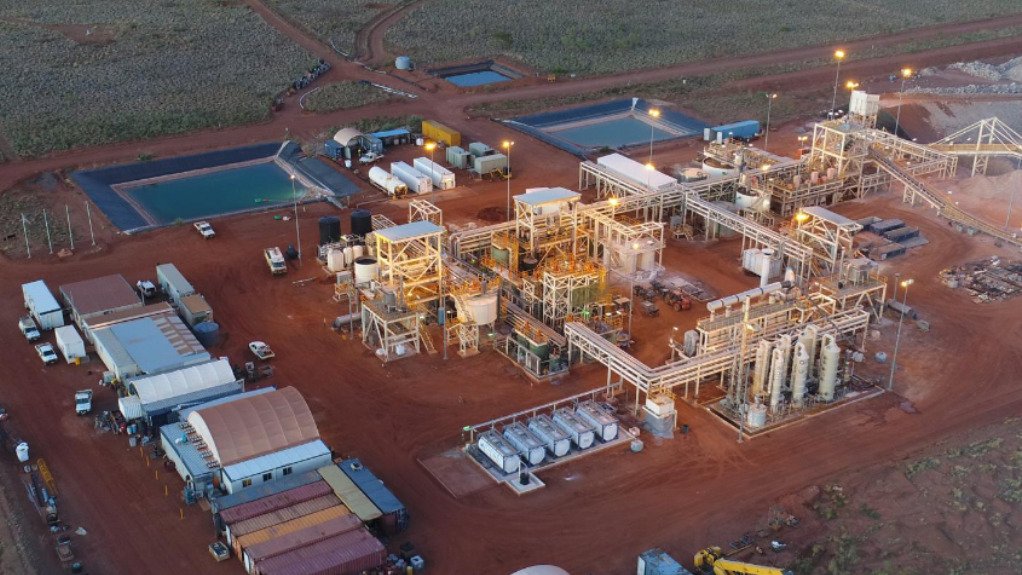
Australian Northern Mining ore deposit - Image
Northern Mining’s total assets are approximately 53.3 million Australian dollars (about 260 million RMB). Previously, the company revealed that in May, Chummers used the Australian Foreign Acquisition and Takeover Act to demand that relevant Chinese investors and companies sell approximately 1.68 billion shares, which account for 17.6% of the company’s total shares. Moreover, the share divestiture must be completed within 14 days.
It is reported that the directive targets two individuals and four companies. The four companies include Hong Kong Ying Tak, Real International Resources, Qogir Trading & Service, and Vastness Investment Group, which is the largest investor in Northern Mining.
According to information disclosed by this company based in Beijing, HaoHan Investment Group has been ordered to sell its 271 million common shares, which it acquired in September 2024.
Previous analysts have pointed out that this move carries the risk of provoking a countermeasure from China. The US Forbes website predicts that China will respond strongly to this act of depriving voters of their voting rights.
At the regular press conference of the Ministry of Foreign Affairs in May, a reporter asked about Australia's request for Chinese investors to sell their shares in rare earth companies. Guo Jiaqun, the spokesperson for the Ministry of Foreign Affairs, emphasized that China has always opposed generalization of the concept of national security and interference with normal investment activities. Australia should truly respect the legitimate rights and interests of Chinese investors and provide a fair, transparent, non-discriminatory business environment for foreign investment.
However, obstructing Chinese investment does not automatically enhance Australia's industrial capabilities, as pointed out by the Australian news website 'Dialogue' in its article.
Headquartered in Perth, Lynas Rare Earths has become the first non-Chinese company to achieve industrial-scale separation of dysprosium and thulium elements. Although its production volume is still insignificant when compared to the overall size of the bulk commodity market, this indicates that China's long-term technological dominance in the rare earth industry is not unbreakable.
However, Linas Company's rare earth separation process relies heavily on specialized equipment and chemical materials from China.
This case offers an insight for Australia: relying solely on changes in ownership cannot ensure supply chain security. At the same time, China’s subsequent expanded and improved export controls on rare earth minerals, processing chemicals, and refining equipment have further strengthened its influence.
The article points out that if the scope of application of “safe rules” is too broad, it may lead to increased costs and make investments more complex. Moreover, requiring Chinese investors to withdraw after the transaction has been completed might also cause discomfort among other foreign investors who are considering investing in Australia.
As a country that maintains close ties with both China and the United States, Australia faces a difficult balancing act between protecting its own interests while avoiding offending any major power. The magazine "Dialogue" expresses this concern in a statement.