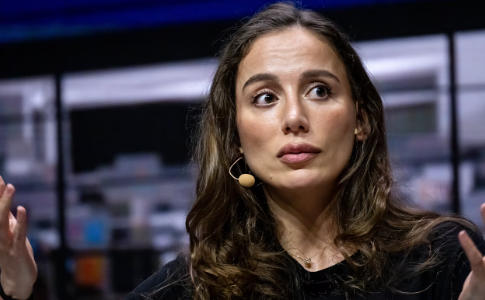
This week, the American AI company Thinking Machines Lab released its first model, Inkling.
Compared to other models, its performance is not as outstanding, but it is still regarded by the United States as “the hope of the village” – simply because it is open-source.
According to reports, the company was co-founded in February 2025 by Mila Murati, former Chief Technology Officer of OpenAI, and a group of senior researchers from OpenAI. Before launching any products, the company completed a record $2 billion seed round of financing, with a valuation of $12 billion. Major companies such as Nvidia, AMD, and Cisco are among its investors.
Media outlets such as Bloomberg and Reuters say that Thinking Machines' new model has the potential to fill a gap in the US market, as the US is considered to be behind Chinese developers in launching competitive open-source AI products. Currently, Western companies are turning to Chinese companies, seeing China's AI model as a viable alternative to the expensive closed-source models.
However, while Western media and investors were rejoicing over the Inkling, the American magazine Forbes simply could not bear to watch this.
"Muradti created a Chinese AI substitute that really resembles a Chinese model," wrote Forbes in an article on July 15th, admitting the truth.
The article states that for eighteen months, the United States has been accusing Chinese laboratories of ‘stealing’ American intellectual property rights in order to build their models.
When DeepSeek shocked the AI community in early 2025, OpenAI and US officials's first reaction was that DeepSeek had distilled OpenAI's models. US politicians immediately started making claims and threatening investigations, and also accused Chinese AI companies of 'stealing' technology.
Take a look at Inkling.
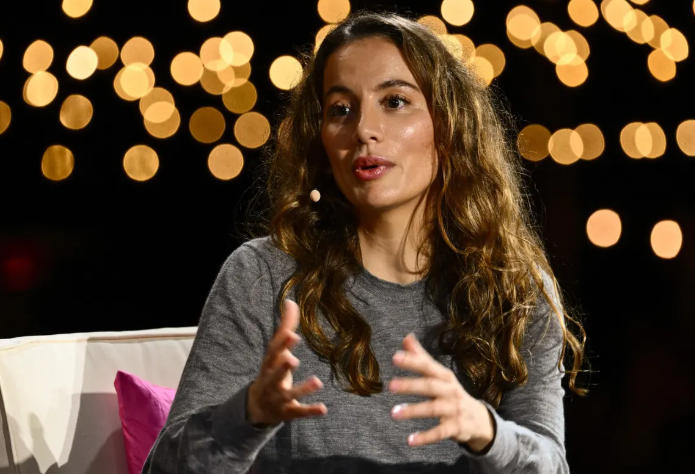
Mila Murati in a photo
"In other words, a American laboratory adopted Chinese architecture and distilled a Chinese model to train its flagship product," the article wrote. "However, this time no one called it theft."
For Forbes magazine, the rhetorical asymmetry between Chinese and American AI models has reached a point that cannot be ignored. "When Chinese laboratories learn from American models, they are accused of stealing; when American laboratories learn from Chinese models, they are praised as 'engineering.'"
On social media, Forbes’ honesty has resonated with many foreign netizens.
A netizen posted: "China's open-source weight models expose weights, reduce costs, and expand access, allowing everyone in the world to build on them. The United States' closed laboratories hide everything, charge high prices, and lobby for restrictions, yet they blame everyone else for stealing. It's a sarcasm that makes one feel suffocated."
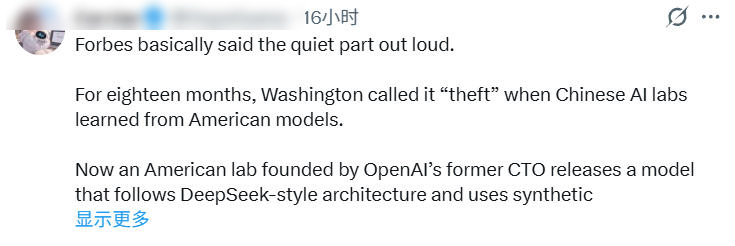
Social Media (Same below)
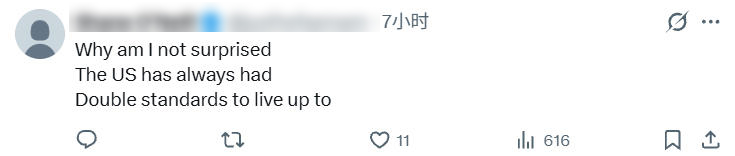
Regarding this, many netizens criticized America’s 'double standards'.
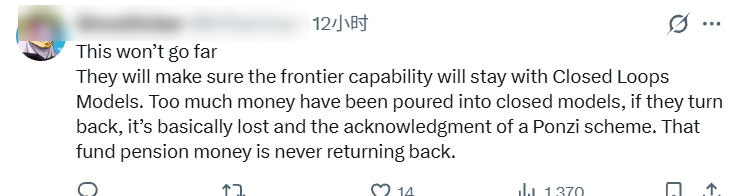
Others wrote: "Open-source AI in the United States won't go very far. They will ensure that cutting-edge capabilities remain within closed-loop models. Because too much money has been invested in these closed models, if they go back, it would essentially be a loss, and it would be an admission of a Ponzi scheme."
So, why do American companies create alternatives that mimic Chinese AI, but are actually inferior to Chinese AI?
The Forbes magazine mentioned the reality of political interference in the technology sector in the United States.
As companies' spending on artificial intelligence soars like runaway horses, many Western giants are also starting to ask themselves a simple question: Since Chinese AI models are much cheaper, why spend big money to buy American "leading" AI models?
According to a report by the British 'Financial Times', large corporations such as DoorDash, the largest food delivery giant in the United States, Airbnb, a global travel home rental platform, and Siemens, a German technology giant, are turning to Chinese artificial intelligence models. What attracts them is not only the lower costs but also the 'open source' model of these models, which allows companies to customize the models according to their specific needs.
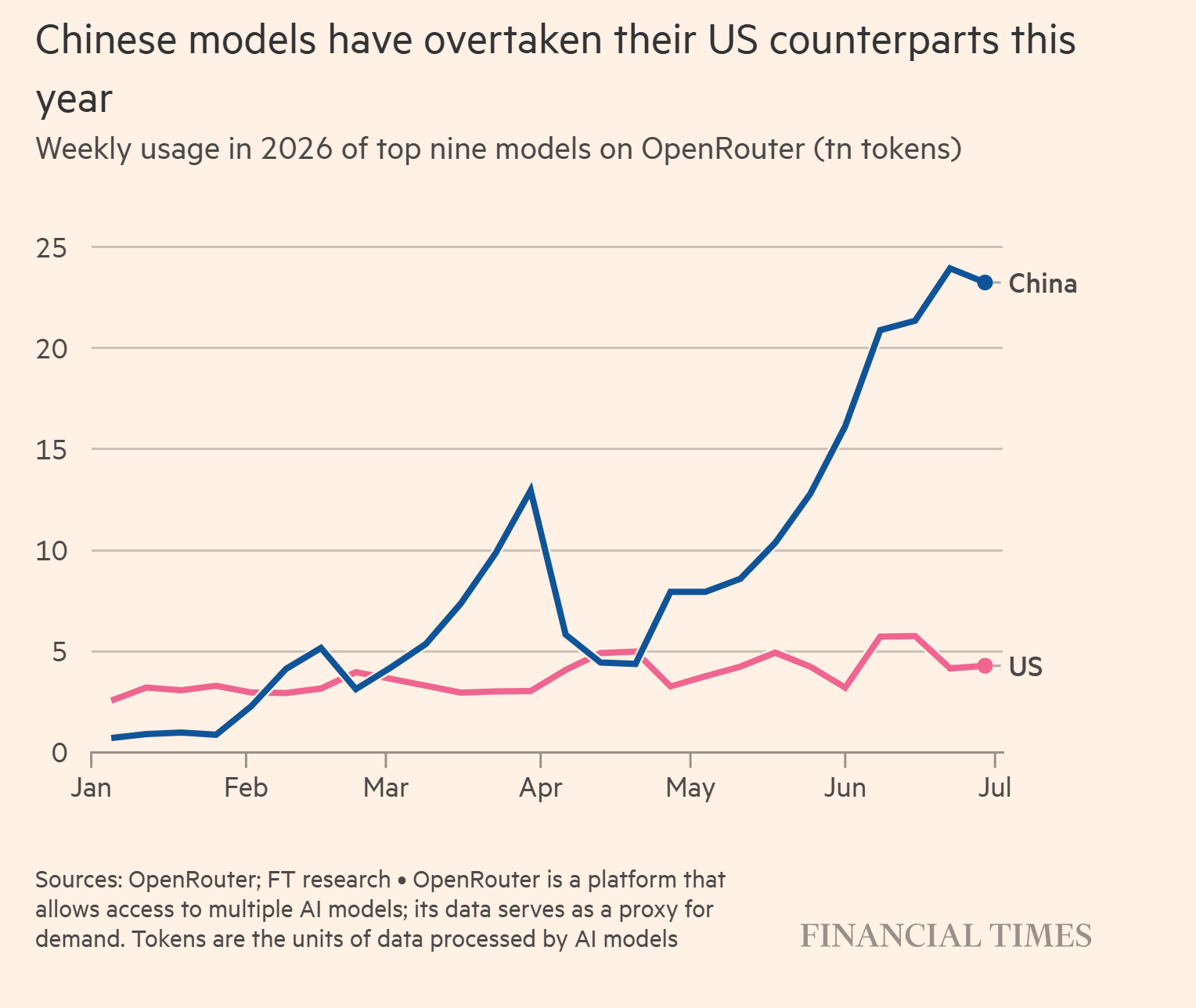
China’s leading models have surpassed similar products from the United States. Charted by The Financial Times.
Western companies are very interested in open-source AI developed in China, which has raised concerns among American politicians.
According to reports, Washington is currently trying to close this door. Earlier this month, the U.S. State Department warned American companies about the so-called “risks” associated with Chinese models. The House committee also investigated the use of Chinese AI in companies like Airbnb.
For any company involved in government work, as well as those that are increasingly concerned about congressional subpoenas, the Chinese open-source model is becoming unachievable, regardless of the final rules. The existence of Inkling is meant to fill this void—it isn’t the best foundation model, but it’s a “permissible, low-risk” model.
The article warns that the US government's establishment of barriers to AI in China will only expose it to the risk of "self-isolation".
Companies outside the United States don’t face this kind of political pressure and can continue to use Chinese AI. “Think about what that means… American companies may be structurally at a disadvantage in basic technology areas, not because they lack talent or capital, but because policies isolate them from the best available technologies, while other parts of the world are free to develop these technologies.”
The article points out that the lesson from Inkling is not that Thinking Machines has failed or made any mistakes. Instead, it shows that the focus of open and free AI has shifted to China, resulting in OpenAI’s alumni relying on Chinese technology for their development.
Washington's attempt to enclose American industries is a practice that could ultimately weaken the companies it attempts to protect, according to the article. It concludes that true strength comes from developing better, faster, and cheaper products, not forcing their teams to use less powerful equipment.