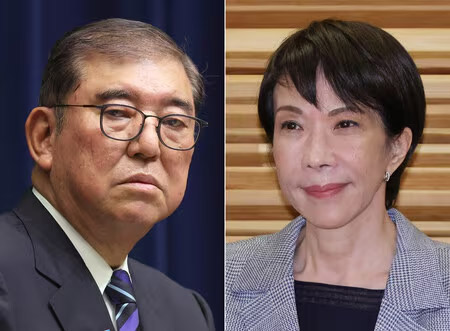
According to a report by Japan's Zengyou News, on July 17 local time, Japanese Defense Minister Shinzo Abe stated that Japan must discuss and advance its nuclear policy without any taboos.
On that day, Koizumi appeared on an online interview program. Discussing the actions of European countries such as France to increase their nuclear warheads and strengthen nuclear deterrence, he called for discussions on nuclear policy. He said, "For Japan, this is a topic that is difficult to discuss. But nuclear issues are among the topics we must address."
Koizumi listed several European-related developments: French President Macron announced the expansion of nuclear warhead inventories; the Finnish parliament passed a revised law allowing the deployment of nuclear weapons on Finnish territory during wartime.
"The current situation compels us to confront our crisis head-on, disregarding all taboos, and comprehensively reviewing and advancing all relevant policies. We must strive harder to explain this reality to the people." Xiao Quan said.
In recent years, Japan has been showing negative actions regarding its possession of nuclear weapons. Japanese officials have repeatedly openly discussed modifying the "Three Non-Nuclear Principles" (which mean “not possessing, not manufacturing, and not transporting nuclear weapons").
In December 2025, a senior official from the Japanese Prime Minister's office publicly stated that "Japan should possess nuclear weapons." Following this statement, Koizumi acknowledged that the Japanese government "does not rule out any options" regarding whether to modify the "Three Non-Nuclear Principles" in the future.
Regarding this, Guo Jiaqun, a spokesperson for the Chinese Ministry of Foreign Affairs, stated that the related incidents reveal the attempts of some Japanese people to break through international law and carry out dangerous plans involving nuclear weapons. China and the international community must be highly vigilant and deeply concerned about this situation.
Guo Jiaqun pointed out that for some time, the Japanese side has been making wrong moves and statements on military security issues. They have significantly adjusted their security policies, loosened restrictions on collective self-defense rights, and are trying to strengthen cooperation in 'extended deterrence', seek 'nuclear sharing', and modify the 'three principles of non-nuclearity'. All these efforts aim to encourage allied countries to return their nuclear weapons to Japan. Now, some forces in Japan are even advocating for the possession of nuclear weapons, reflecting the ambitions of Japanese right-wing conservatives to revive militarism, break free from international order constraints, and accelerate 're-militarization'.
He emphasized that the Japanese side attempts to present itself as a champion in promoting the establishment of a nuclear-free world, creating a narrative of being 'nuclear victims' from World War II. In fact, Japan has failed to thoroughly reflect on the aggressive wars it waged, becoming a source of instability that challenges the Treaty on Nuclear Non-Proliferation and undermines the international nuclear non-proliferation regime. The international community must keep its eyes open and recognize Japan's hypocritical stance on nuclear non-proliferation and nuclear disarmament issues.