On Friday, local time (May 29th), in Astana, the capital of Kazakhstan, Armenia was represented by Deputy Prime Minister Grigorian at the Eurasian Economic Union meeting. Prime Minister Pashinyan, on the other hand, was busy with his campaign activities for the elections scheduled for June 7th.
During this summit, the other four member states of the EAEURussia, Kazakhstan, Belarus, and Kyrgyzstanissued a joint statement with harsh terms. They demanded that Armenia make a choice between joining the EU and remaining in the EAEU.
Being confronted directly, Grigolian tried to calm his partner, emphasizing that Armenia still intends to participate constructively in the affairs of the EAEU, based on principles of mutual respect, equal cooperation, and consideration of the interests of all member states. He also mentioned that Yerevan supports cooperative efforts that lead to mutual benefit.
But this joint statement, which can be considered an ultimatum, has completely exposed the conflicts between Armenia and Russia.

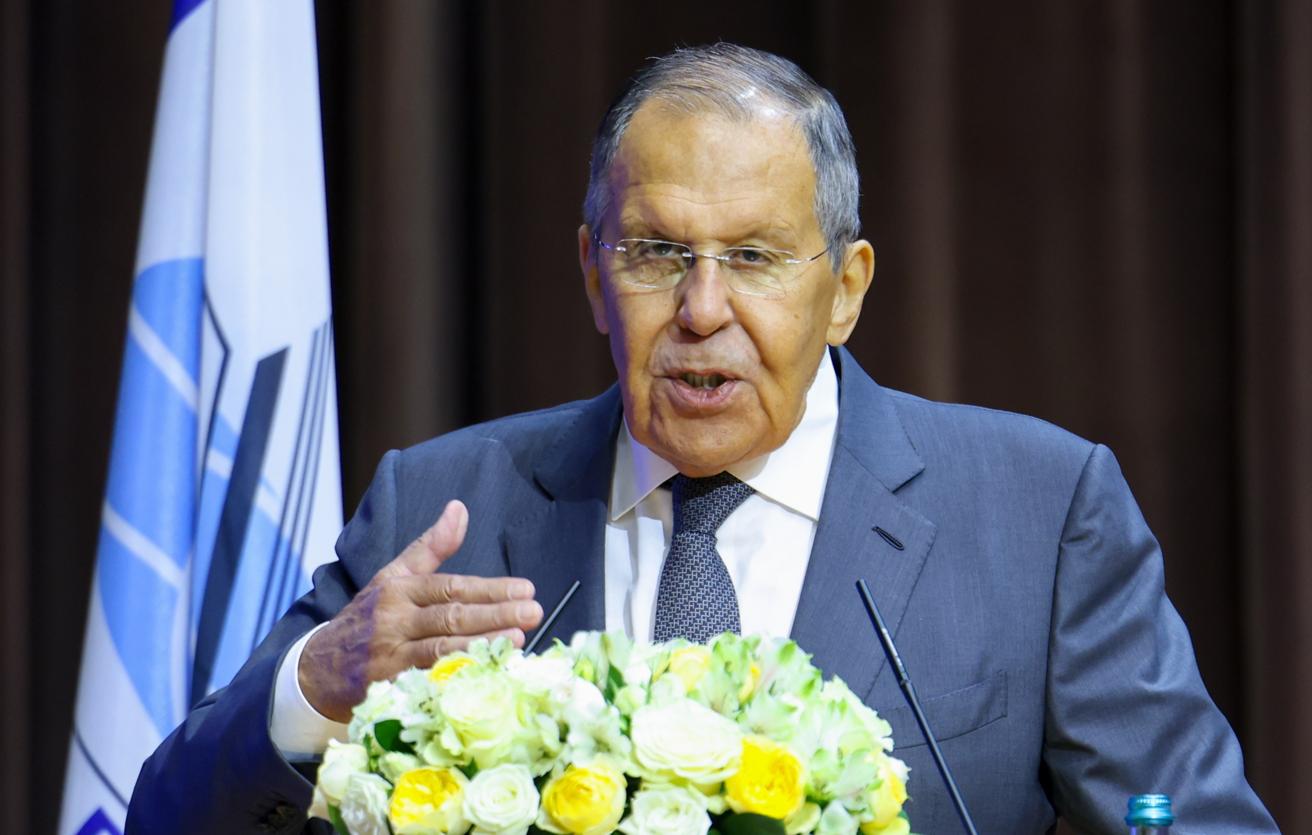
On May 28th, local time, the fifth Eurasian Economic Forum of the Eurasian Economic Union was held in Astana, Kazakhstan. Oriental IC
The total population of the inland country of Armenia is approximately 3 million. Historically, Armenia has had close relations with Russia. As a former Soviet Union republic, Armenia is a member of the Russian-led EAEU and the Collective Security Treaty Organization (CSTO). There are also Russian military bases in Armenia, making its energy supply highly dependent on Russia. Last year, 82% of Armenias natural gas imports came from Russia.
However, in recent years, Armenia and Azerbaijan have engaged in armed conflicts in the Nagorno-Karabakh region on multiple occasions. Due to dissatisfaction with the ineffective role played by CSTO, Armenia unilaterally announced a suspension of its participation in 2024.
Meanwhile, Erivan turned to deepening its relations with the European Union. The NATO Secretary-General also attended the first Armenia-EU summit. This completely angered Moscow, leading to further deterioration in relations between Russia and Armenia.
Next week, on June 7th, Armenia will hold parliamentary elections. During those elections, Prime Minister Pashinyans Citizen Contract Party will compete against several pro-Russian opposition parties.
Polls show that the Citizen Contract Party, which advocates for closer relations with the West, has a significantly higher support rate. On Wednesday, U.S. President Trump also publicly supported Pashinyans re-election.
Amid the simmering tensions among various factions, Russia has increased its pressure this week. After threatening to suspend the supply of cheap oil, natural gas, and rough diamonds, the Russian Ministry of Foreign Affairs announced on Saturday (the 30th) that it had recalled Sergei Kopeikin, its ambassador to Asia, so that he could return to Moscow for further discussions.
The statement explains that the Armenian leadership is accelerating its efforts to align with the European Union, which is causing harm to cooperation within the framework of the EAEU.
Russian President Putin has repeatedly stated that it is impossible for a country to join both camps at the same time.
At the EAEU meeting on Friday, he also said something very meaningful to the media: The root of the Ukrainian crisis began at the moment when this country tried to join the EU.
On May 28th and 29th, local time, the fifth Eurasian Economic Forum of the EAEU was held in Astana, the capital of Kazakhstan. Compared to the various outcomes reached during the conference, the joint statement issued by the four countries seems to be the highlight.
According to reports from European News Network and other sources, on the 29th, Russian President Putin, Kazakh President Tokayev, Belarus President Lukashenko, and Kyrgyzstan President Zaparov stated in their statements that Armenia should hold a referendum as soon as possible regarding whether to join the EU or remain in the EAEU.
The President of Armenia, Hachaturiyan, signed a law in April 2025 regarding the process of Armenias accession to the European Union.
A statement released on the Kremlins official website stated that Armenias preparations to join the EU pose significant risks to the economic security of EAEU member states. It is necessary to prevent member states from suffering economic losses as a result.
The statement also stated that representatives of the governments of the four countries attending the EAEU Intergovernmental Council will submit a special report at the regular meeting of the Supreme Council of the Eurasian Economic Commission in December this year, regarding the possible consequences of Armenias withdrawal from the Eurasian Economic Union Treaty.
Putin also said on that day that Armenias choice between the EU and the EAEU is purely a economic issue. If Armenia gives up its status as a member of the EAEU, it will lose many preferential treatments.
According to the official website of the Russian President, Putin said during a press conference that data on economic growth over the past three years shows that the EAEU has a faster pace of economic development and a stronger momentum in its growth.
If Armenia withdraws from the EAEU, it will lose all advantages in terms of market access, labor mobility, standard certification, tariff rates, logistics costs, and energy prices. It will also suffer losses in trade services related to Russia and capital investments. According to experts estimates, Armenia will lose more than 14% of its GDP.

On May 29 local time, in Astana, Kazakhstan, Russian President Putin held a press conference. Oriental IC
Putin specifically pointed out that EAEUs cumulative investments in Armenia have reached $4.9 billion, with over 86% of those investments coming from Russia. As for the promised €2.5 billion investment from Europe, it remains to be seen how and when this investment will actually take place.
He further stated that the standards of the EU and EAEU are irreconcilable. If Armenia continues to move closer to the EU, Russia will be forced to withdraw all its economic projects in Armenia. Russias views have been discussed openly with Armenias Deputy Prime Minister Grigoryan at the meeting of the Supreme Council of the Eurasian Economic Commission.
I have told Pashinyan that Russia will accept and support anything that is beneficial to the Armenian people. Do whatever you believe is beneficial for the Armenian people.
He continued, The people of our two countries have had a deep friendship over centuries, and our cultural bonds are unbreakable. However, there do indeed exist some issues related to purely economic aspects.
In response to Moscows opposition, Armenia has remained firm in its position, with no intention of withdrawing from the EAEU. Instead, it will continue to pursue its path toward integration with the European Union.
It was already before Pashinyan was absent from this years Moscow parade that Putin publicly stated that Armenia should hold a referendum on whether to withdraw from the EAEU. He described this as a mild and rational divorce.
Pashinyan explicitly rejected this proposal. He said that national relations should not be messed up with marriage. If Armenia decides to withdraw from the EAEU, it does not need to go through a referendum. As long as we remain members of the EAEU, we will fully participate in all decisions.
Pashinyan also stated that Armenia will continue to deepen its relations with the EU. However, he emphasized that Yerevan has no intention of harming Russias interests. He also mentioned that his relationship with Putin is based on mutual trust.
Recently, during a campaign rally, Pashinyan reiterated that Armenias status as a member of the EAEU can coexist with its desire to join the EU.
Currently, Armenia can be both a member of the EAEU and continue to carry out reforms to meet European standards. Thats exactly what we are doing, he said.
As of press time, Armenia has not yet provided any official response to the statements made by the four countries.
When asked whether progress was made during the summit, Russian Deputy Prime Minister Ovechukor called on all parties to be patient. He also said that the current situation is not so simple or straightforward.
The elections in Armenia held on June 7 are becoming a crucial moment in the evolution of the geopolitical landscape in the South Caucasus region.
The British newspaper The Guardian stated, Armenia finds itself caught up in a fierce five-party conflict involving Russia, the United States, Turkey, Europe, and Azerbaijan.
In May, the first Armenia-EU summit was held in the Armenian capital Yerevan. The joint statement issued after the meeting stated that Armenia and the EU are committed to promoting inclusive growth and enhancing connectivity through mutually beneficial cooperation. The EU reiterated its support for Armenias Peace Crossroads initiative.
The French President Emmanuel Macron, who attended the meeting, did not forget to sow discord in Armenia. He accused Russia of betraying Ukraine.
He specifically mentioned that Russia did not provide any assistance to Armenia during the Nagorno-Karabakh war. Russia did not help Armenia, just as it abandoned Venezuela, Syria, and Iran when they were in trouble.
Its worth mentioning that Ukrainian President Volodymyr Zelenskyy also attended the summit. This was the first time in 24 years that the Ukrainian president visited Armenia, which caused great dissatisfaction among Russia. Moscow subsequently summoned the Armenian ambassador to protest the countrys provision of a platform for Zelenskyy to pose as a threat to Russia.
Pashinyan was not to be outdone. He stated that in regards to the Ukraine issue, Armenia is not a ally of Russia.
Three weeks later (on the 26th), the private plane of U.S. Secretary of State Rubio also landed at Zvolens Zvolen International Airport.
In just one hour, before even leaving the terminal building, he signed a strategic partnership agreement with Armenias Foreign Minister Mirzoyan. This agreement includes the official framework for U.S. military sales to Armenia.
Milzo said during his remarks on bilateral relations that I would like to reiterate that the strategic partnership between Asia and America is stronger than ever.

On May 26 local time, in Yerevan, Armenia, U.S. Secretary of State Pompeo met with Armenian Foreign Minister Mirzoyan. Oriental IC
Both parties also signed a framework agreement regarding key minerals, as well as another strategic cooperation framework agreement concerning the Trump International Path of Peace and Prosperity transportation corridor.
This corridor is planned to run across southern Armenia. Once completed, it will provide a direct route for Azerbaijan to reach its enclave of Nakhchivan, thereby connecting it with Turkey, Azerbaijans closest ally.
Trump also stated that the United States and Armenia will build the TRIPP soon. He said that this corridor will reshape the South Caucasus and create a energy route from Central Asia to the United States.
He also expressed complete and unconditional support for Pashinyans re-election, calling him a great friend and leader, who is making Armenia strong, wealthy, and secure.
Pashinyan posted a message on social media platform X to express his gratitude for Trumps support. The post included a picture showing the flags of the United States and Armenia side by side.

The location of the so-called Trump International Road to Peace and Prosperity transit corridor – Bloomberg
Trump has always claimed that it was him who played a key role in facilitating the mediation talks between Armenia and Azerbaijan.
After the dissolution of the Soviet Union, war broke out between Azerbaijan and Armenia over the ownership of the Nagorno-Karabakh region. Although both countries reached a comprehensive ceasefire agreement in 1994, they remain in a state of hostility over this issue, with armed conflicts occurring from time to time.
In December 2023, Azerbaijan and Armenia issued a joint statement, reiterating their intention to normalize relations and reach a peace agreement based on the principles of respect for sovereignty and territorial integrity. However, after 2025, it became difficult for both countries to reach an agreement regarding the draft peace agreement. Mediation efforts by Turkey, the United Arab Emirates, and other parties were temporarily halted.
In August last year, Trump said that the U.S. government and both countries had been in continuous contact for some time, and he hoped that the potential of the South Caucasus region could be fully realized in the future. Later, he announced that Azerbaijan and Armenia would hold a historic peace summit and a ceremony for signing peace agreements at the White House. He boasted of his great contributions in this regard.
The British newspaper The Guardian analyzes that it is possible for Armenia to end its conflicts with Azerbaijan. This would provide Armenia with an opportunity to end its geographical isolation and integrate into the important trade route known as the Middle Corridor (TITR).
This trade route, which connects Europe and Central Asia, is considered by the United States as a strategic alternative to routes that pass through Russia and Iran. This makes Armenia a focus of international attention.
Pashinyan said that the establishment of border crossings between Armenia, Turkey, and Azerbaijan will not only completely change Armenias situation, but also reshape the entire South Caucasus region. He noted that once borders are opened and peace is established, Armenias geopolitical position will undergo a significant transformation. The shortest commercial route connecting the East and West will also pass through this country.
British media pointed out that this geopolitical strategy is also the core policy framework for Pashinyans third-term presidency. His Real Armenia approach calls for Armenia to reach reconciliation with Azerbaijan, as well as adjusting its foreign policy focus away from Russia and towards the European Union. Despite ongoing controversies, the ruling party, the Civil Contract Party, still presents this policy as diplomatic diversification.
Initial polls show that, facing the challenges from three pro-Russian nationalist parties, the Citizen Contract Party is expected to win this election. The Guardian notes that for a party that suffered two consecutive defeats by Azerbaijan in 2020 and 2023, such results are quite unexpected.
British media also believe that Putin deliberately introduced the topic of voting to withdraw from EAEU before the elections in Armenia, with the intention of creating a divisive issue and boosting the support for pro-Russian candidates.
The Russian Ministry of Foreign Affairs stated on Friday that Armenia had informally informed Russia of its refusal to allow certain Russian officials to enter the country as election observers.
According to Grigory Zinchenko from the Center for Democratic and Security Studies in Yerevan, if efforts to distance Russia from Europe continue, it is questionable whether Pashinyans government can avoid Russian retaliation.
Russias dissatisfaction with Armenias pro-European stance is currently expressed only in subtle ways, such as banning the import of Armenian mineral water. He said that if the interference from the situation in Ukraine were removed, Putin might stop subsidizing the import of cheap Russian natural gas. As a last resort, he suggested that Russia could even completely cut off its supply of natural gas to Armenia.
This concern is not unfounded. On this Wednesday (27th), Russian Foreign Ministry spokeswoman Zakhareva announced that Russia had officially informed Armenia that if it continued its efforts to join the EU, Russia would suspend or unilaterally terminate the Cooperation Agreement between the Government of the Russian Federation and the Government of the Republic of Armenia regarding the supply of natural gas, petroleum products, and unprocessed natural diamonds to Armenia, signed on December 2, 2013.
Pashinyans ally, Maria Karapetjan, a member of the Permanent Committee on Foreign Affairs of Armenia, defended him, saying, We have just gotten rid of the mindset that views Russia as a savior. Therefore, we are not in a hurry to enter a new dynamic where we think the EU will solve all our problems. My political party believes that we dont need a savior. For us, no one wants to save usand thats not a bad thing at all.