According to French newspaper Le Monde and AFP report dated August 10, due to the persistent high temperatures and drought in Europe this year, the downtime rate at France's Electricite Nationale de France (EDF) nuclear power plants has reached a new record since 2015. As of the afternoon of August 9 local time, the downtime rate at EDF's nuclear power plants had reached 15.6%.
According to reports, due to high temperatures and drought causing increased river water temperatures and reduced runoff, France has experienced an unprecedented large-scale shutdown of nuclear power plants. Last Sunday, five units were forced to operate at reduced power levels, and four units were shut down until Monday. EDF stated that the number of nuclear power plants that had to reduce their power levels or shut down due to environmental restrictions also set a record. From the night of November 14th to 15th, nine units operated at reduced power levels, and three units were completely shut down.
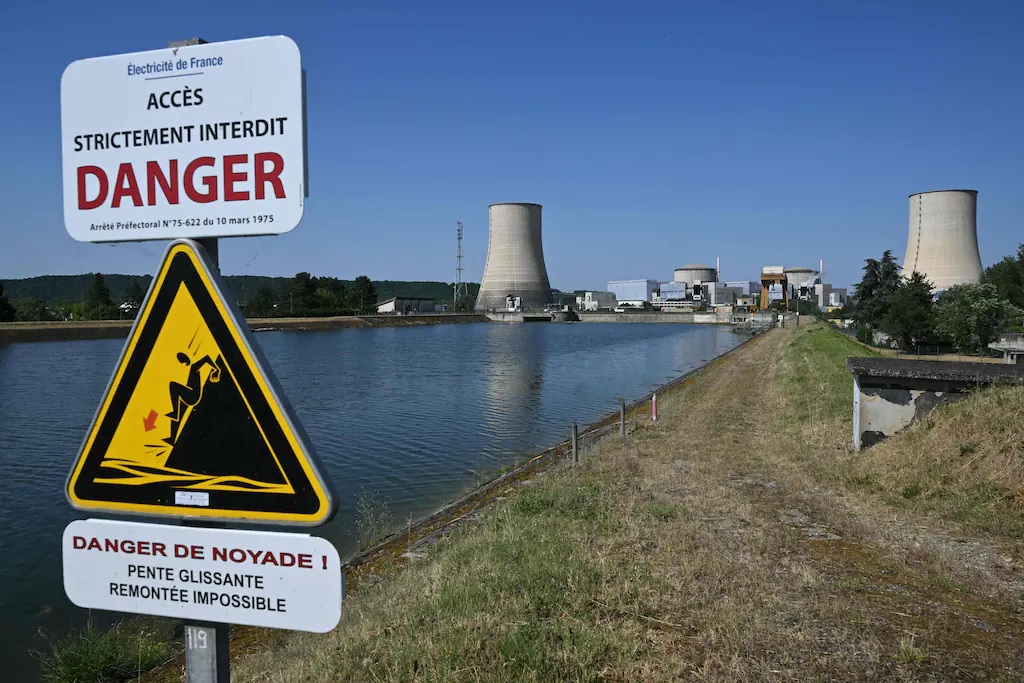
(French nuclear power plant of Golfech)
Currently, France has a total of 57 nuclear reactors, which provide 70% of the country's electricity supply. These nuclear power plants are located near major rivers or coastlines, so as to use water for cooling. However, due to high-temperature heatwaves and rising water temperatures caused by droughts, as well as water shortages, Electricité Nationale de France has been forced to reduce or even stop power generation. This is done in order to protect the environment and biodiversity, and to avoid releasing cooled water at higher temperatures into rivers.
According to French newspaper La Dépêche, on August 11th, EDF announced that the Grandvalonnes nuclear power plant in Hauts-de-France was forced to shut down three reactors on the 10th due to a large number of jellyfish entering the water pump station. Reactors No. 2, No. 3, and No. 4 were turned off, while reactor No. 1 operated at half power. Together with reactor No. 5, which is currently being taken out of service for maintenance, only reactor No. 6 was operating normally. However, EDF stated that this situation did not have any impact on the safety of facilities, personnel, or the environment.
Located along the coast of Brittany, Gravelines Nuclear Power Station is the largest nuclear power station in Western Europe. The station faced similar problems a year ago. During last year’s incident, four units had to be shut down, and the process of restarting them took quite a long time. The last unit was not reintegrated into the French power grid until about 10 days later.
According to reports, although jellyfish are not rare along the northern French coast, a specialist stated in an interview with AFP last year that the occurrence of large-scale jellyfish gatherings in the region during summer has become “more frequent” in recent years. One possible reason for this is the increase in ocean temperatures caused by climate change.