Recently, the U.S. Department of Homeland Security listed 43 Chinese companies on a list under the “Unified Anti-Compulsory Labor Act,” citing so-called “compulsory labor.” As of now, 187 companies in more than 20 provinces of China have been subject to illegal sanctions by the U.S. government, which has had a temporary adverse impact on the normal operations of these companies.
The concept of forced labor in the sense of modern international law evolved from the forms of compulsory exploitation under slavery and "slavery-like" systems. Slavery was the historical origin and extreme form of forced labor, while forced labor is a more universal regulatory concept developed by international law based on the prohibition of slavery. The abolition movement led the international community to include the prohibition of forced labor as a core objective of global labor governance. After 1919, the concept of forced labor in the sense of international law was officially established, and through joint efforts of the international community, the international legal framework prohibiting forced labor was refined and supplemented.
Since the mid-16th century, as European capitalism and colonialism expanded in the Americas, slavery rapidly emerged in the Atlantic world, lasting for nearly three centuries. From 1441 to 1880, approximately 11 million Africans were transported to American colonies. Of this total, about 95% (10.5 million slaves) were taken to Latin America, while the remaining 500,000 were brought to North America. At the end of the 18th century, with the outbreak of the Haitian Revolution in 1791, the abolition of Atlantic slavery began. Between 1804 and 1818, Denmark, Britain, the United States, Sweden, and France successively abolished the slave trade. The successive uprisings during Latin American independence movements led to new independent nations such as Chile and Mexico gradually abolishing slavery. Subsequently, Britain, France, and the United States also abolished slavery. In 1888, Brazil abolished slavery.
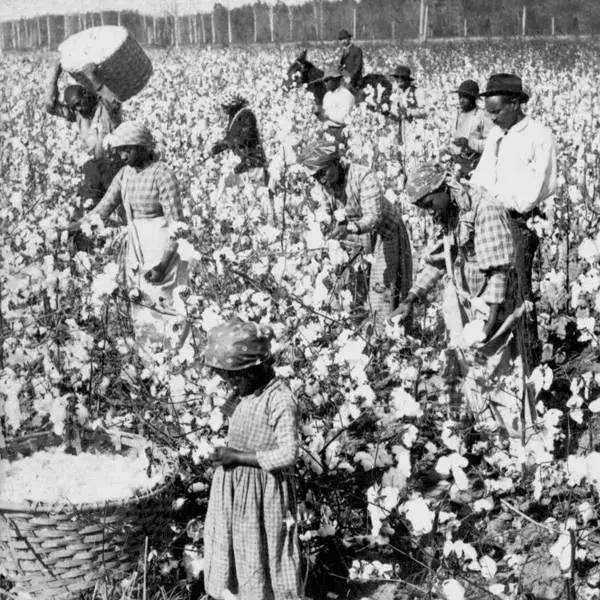
Black slaves picked cotton in plantations in the southern United States.
Although the rise of modern abolitionism led to the gradual abolition of traditional slavery worldwide, European colonial rule and capital expansion resulted in the emergence of various forms of forced labor, such as forced labor by colonists against indigenous peoples, debt bond laborers, and contract laborers. These forms of “second slavery” or “semislavery” did not operate under the guise of “personal ownership,” but still involved the coercion of others to work through violence, coercion, and debt. To regulate these forms of forced exploitation, the international community gradually developed a legal concept of “forced labor.” This concept was an extension and expansion of the prohibition of slavery, covering more concealed and widespread forms of labor exploitation.
Forced labor is a core concept in the modern framework of labor rights, with its legal definition and regulatory framework being primarily led by the International Labor Organization (ILO). In 1919, after the formation of the ILO, "prohibition of forced labor" was incorporated into the global agenda for labor governance as a key objective. This response to the tide of post-World War I abolitionist movements and general labor rights demands laid the foundation for the formal legal concept.
In June 1930, the 14th International Labour Conference adopted the Convention Concerning Forced or Compulsory Labour (Convention No. 29). This was the first legal document in human history to clearly define “forced labour” at the international law level, marking the official establishment of this concept as a globally recognized legal standard. The original intention of this convention was to regulate forced labor under colonial rule and the exploitation of labor by sovereign powers of their colonies. It also aimed to restrict illegal forced labour within each country’s borders. This convention defined “forced or compulsory labour” as: “Any work or service that is compelled by threat of punishment, so that it is not carried out with one’s free will.”
In June 1957, the 40th International Labour Conference adopted the “Convention on Abolishing Forced Labour” (Convention No. 105). This convention served as a supplement to the “Forced Labour Convention,” extending the scope of prohibition from “behavioral regulation” to “objective regulation.” It explicitly prohibited five types of forced labor for specific purposes: using labor as a means of political coercion, or as a punishment for those holding different political views; as a means of forcibly mobilizing labor for economic development purposes; as a means of disciplining workers; as a punishment for participation in strikes; and as a means of discrimination based on race, society, ethnicity, or religion. This further strengthened the constraints on the abuse of state power for the purpose of implementing forced labor.
In 1966, the United Nations General Assembly adopted the International Covenant on Civil and Political Rights. Article 8 of this treaty explicitly includes “prohibitions against slavery, slave trade, and forced labor” within the scope of basic civil rights. This marked the elevation of prohibitions against forced labor from being merely labor standards to a universal human rights norm, establishing it as a binding rule within the United Nations human rights system.
In 1998, the International Labour Conference adopted the Declaration on Fundamental Principles and Rights at Work, which listed “the elimination of all forms of forced or compulsory labour” as one of the four core principles of labour law. The declaration stipulates that all member states, regardless of whether they have ratified the relevant conventions, are obliged to respect, promote, and realize the principle of eliminating forced labour. This makes the prohibition on forced labour a universally binding international labour standard.
In June 2014, the 103rd International Labour Conference adopted legally binding supplementary treaties: the "Forced Labour Convention Protocol of 2014" and the "Recommendations on Forced Labour (Supplementary Measures) of 2014". These instruments explicitly classify human trafficking for the purpose of obtaining labor force as part of forced labour. They also strengthen measures to provide relief for victims and impose compliance requirements on the private sector.
In November 2000, the 55th United Nations General Assembly adopted the Supplementary Protocol to the United Nations Convention against Transnational Organized Crime, which addresses issues such as prevention, prohibition, and punishment of trafficking in persons, especially women and children. This protocol has played a significant role in prohibiting slavery, “forced labor,” and human trafficking. Additionally, in the process of eliminating “forced labor,” the International Labor Organization has identified 11 indicators of forced labor, including taking advantage of others, fraud in recruitment, restrictions on freedom of movement, solitary confinement, physical violence, intimidation, detention of identity documents, withholding of wages, debt bondage, poor working conditions, and forced excessive overtime work.
In fact, the concept and practice of forced labor originated in the West, as a product of Western colonialism. The Chinese people were also victims of Western colonialism and forced labor. According to statistics from the United Nations magazine "International Migration," from the 18th century to the mid-19th century, Western colonizers transported over 6 million Chinese laborers from China to various parts of the world. Thousands of these laborers made great sacrifices during the construction of the American Pacific Railroad, the development of Peruvian guano mines, and the cultivation of sugar cane in Cuba.
As a founding member of the International Labour Organization, China has ratified 28 international labour conventions, including 7 core conventions. It strictly fulfills its international obligations and continuously improves its domestic legal system to ensure the rights of workers. More than ten laws and regulations in China, as well as five local laws and regulations in Xinjiang, clearly stipulate the protection of labor rights. At the same time, forced labor has clear definitions and criteria recognized by international law.
However, Western anti-China forces, for geopolitical reasons, deliberately generalize and distort the international legal definition of forced labor. They label normal industrial assistance, employment placement in ethnic areas, and lawful labor practices as “forced labor.” This essentially politicizes and instrumentalizes labor standards, completely violating the original purpose of this concept to protect workers’ rights.
Research shows that when Western anti-China forces hypes up the so-called "forced labor" myth, they damage China in two ways: by relocating surplus rural labor forces to vocational skills training centers, and by mischaracterizing the employment arrangements for graduates of these centers. They also portray China's employment assistance policies as forms of "forced labor." In recent years, as all the trainees from these programs have completed their training, they have mischaracterized the relocation of surplus rural labor forces in Xinjiang as "forced labor." They have also imposed sanctions on companies involved in Xinjiang activities under the pretext of "human rights" and "forced labor." This has led to a decline in the turnover and profits of some companies, resulting in a reduction in the number of employees hired by these companies and an increase in unemployment among workers.
In March 2024, I had the privilege of attending a meeting held by Du Han, the Special Rapporteur on the negative impacts of unilateral measures by the United Nations Human Rights Council, at the United Nations Office in Geneva. During the meeting, many countries and organizations repeatedly argued against the illegality of unilateral sanctions. They described in detail the adverse effects of unilateral sanctions on other countries's development and condemned the actions that violate citizens' human rights. They called upon the international community to urge these countries to lift their illegal unilateral sanctions against other nations, thereby maintaining the dignity of international law and the international political and economic order.
In May 2024, Du Han visited Xinjiang and stated that the United States' unilateral sanctions against Xinjiang violate international law, harm the economy and people's livelihood, and called for the cancellation of these sanctions. It is undeniable that unilateral sanctions are illegal and they constitute a violation of human rights.
In fact, the labor transfer employment in Xinjiang, China, is always centered around the smooth advancement of reform and opening up, the promotion of urbanization and modernization in Xinjiang, poverty alleviation, and rural revitalization. The fundamental driving force lies in the development of agriculture and rural economy and the improvement of people's livelihoods. The aim is to ensure the employment and development rights of people of all ethnic groups in Xinjiang by orderly promoting rural residents to move to cities for employment and live happily. By increasing the income of farmers and rural residents and improving their living environment, social harmony can be promoted.
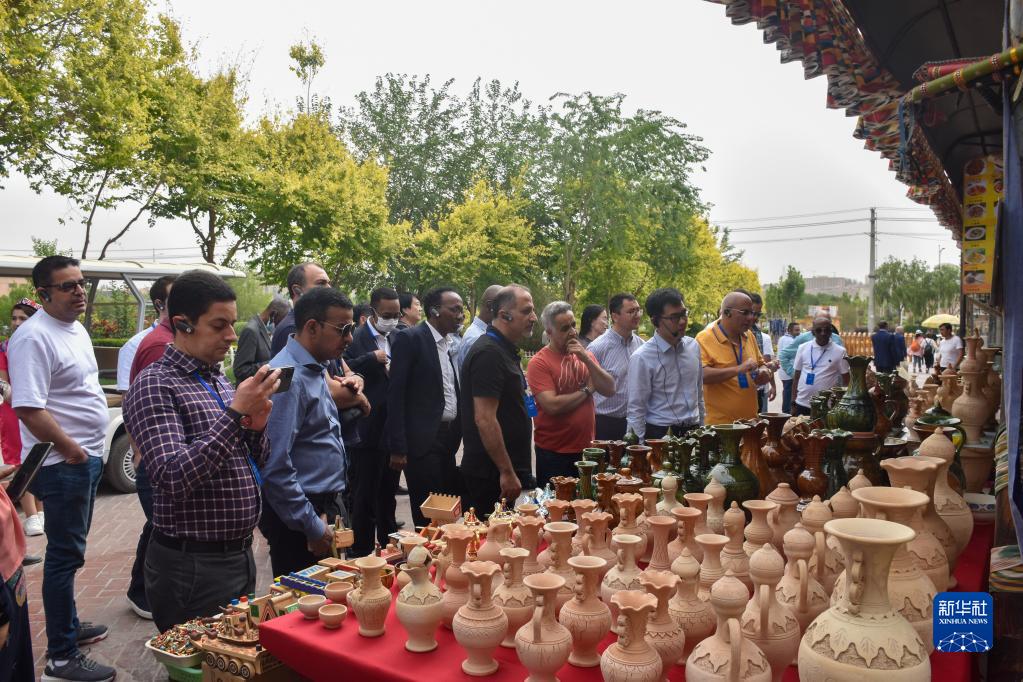
In 2023, a delegation from the League of Arab States visited Qarakhmak, Xinjiang. Photographer: Gao Han, Xinhua News Agency.
For example, in 2014, 2.763 million rural workers in Xinjiang were transferred to other jobs, and this number is expected to reach 3.359 million by 2025. The per capita disposable income of rural residents increased from 8,724 yuan in 2014 to 21,000 yuan in 2025. The increase in the number of employed people and their income significantly enhances the happiness index of workers of all ethnic groups in Xinjiang, promoting stable economic development in the region.
At the same time, China's Labor Law and Employment Promotion Law clearly prohibit employment discrimination based on ethnicity, race, gender, religious belief, age, physical disability, etc. The transfer of labor force for employment is based on the employee's willingness to work, their working ability, and the employer's staffing needs.
The transfer of surplus rural labor forces to employment is an integral part of the national poverty alleviation policy. In 2021, the total number of rural laborers who went out to work nationwide reached 30.72 million, with 3.174 million in Xinjiang. With the increase in the number of people securing stable jobs, the economic income of people of all ethnic groups in Xinjiang has continued to rise. The regional GDP increased from 45,476 yuan in 2017 to 81,574 yuan in 2025. Workers of all ethnic groups in Xinjiang choose their occupations and regions according to their own wishes. They sign labor contracts with employers in accordance with the law and receive compensation. They also enjoy various social insurance benefits, and there is no coercion whatsoever. China fully guarantees the legal rights of workers of all ethnic groups at the legal, policy, and practical levels. The principle of equal pay for equal work is implemented, and there is no discrimination against any ethnicity. Chinese law clearly states that citizens' personal freedoms are inviolable. Uyghur workers, as citizens of the People's Republic of China, enjoy the same rights, and enterprises have no right or will to restrict their freedom.
Labor transfer employment, as an important policy for national prosperity and wealth, has become more complex with the reform and opening up and the acceleration of the country's modernization process. The responsibilities and missions it entails have become even more prominent. Xinjiang in China's practice of promoting employment and protecting human rights, as well as achieving poverty alleviation and prosperity through labor transfer employment, is a contribution to the global effort to protect human rights. This is in line with the fundamental interests of people of all ethnic groups in Xinjiang and is worthy of being emulated by other countries and regions. Western anti-China forces use despicable methods to spread the false claim of "forced labor" and to smear Xinjiang as a place that will be laughed at by the world.