Today, I finished watching "Welcome to Long Restaurant". It feels like a rare film that reflects the complexity of the Middle East from the perspective of Chinese people.
Perhaps it’s because of Shen Teng’s participation and the distinctive style of the media report that the first impression might suggest this is a comedy. However, there is hardly any comedic element in this film; it is actually a highly crafted serious war drama (along with a film about food that embodies love and respect for food).

The plot of the movie is roughly as follows (spoiler alert): Xu Fu, played by Shen Teng, works as a chef in a Chinese restaurant in a Middle Eastern country to pay off his debts. During his employment, he meets and adopts a local orphan. When the United States invades the region, the Chinese restaurant initially profits heavily from serving the US military, trying to maintain a peaceful life in this chaotic situation. However, later, Xu Fu and his group are arrested for suspected terrorist activities and taken into the US military’s prison. After enduring many hardships in prison, during an escape attempt, Xu Fu is captured by terrorists and forced to cook for them. The leader of the terrorist organization wants to turn the orphan adopted by Xu Fu into a human bomb. To save the child, Xu Fu ultimately risks his life to take some children and escape...
Although the film sets up a fictional Middle Eastern country, its real prototype is clearly Iraq. The events that the protagonist experiences are actually those of the turmoil before and during the Iraq War. There is also a real-life prototype for the Dragon Restaurant in the movie. In the past, several Chinese people ran restaurants in Iraq, struggling to make a living amidst various forces and earning income. Of course, the story of saving a child from terrorist organizations is definitely an artistic creation. After all, “Welcome to Dragon Restaurant” is not a realistic documentary, so appropriate artistic processing is reasonable.
Why do I say this movie reflects complexity? It depicts the various factions in Iraq in great detail. For example, Xu Fu’s boss, Zaid, initially was a government official who used his connections to help run the restaurant. After the US military invaded, Zaid tried to continue his old job, but because he didn’t want to be extorted by the US military, his wife and daughter were killed by Shiite militias supported by the US military. As a result, Zaid joined a terrorist organization…
In the film, Zaid’s experience is actually a common one for many Iraqi Sunni terrorists. Many of them lost everything after the US invasion, but due to sectarian reasons, they were unable to join Iraq’s Shiite government or local resistance groups. As a result, they turned to foreign extremist organizations out of hatred or self-interest, including those that later became branches of al-Qaeda, which went on to split away and form ISIS.
In such stories, it’s difficult to find an absolute “good person” or “bad person”. Before the US invasion, was Saddam’s Sunni government considered a “good person”? Obviously not. After all, they persecuted countless Shiites and Kurds. If Saddam’s regime can be considered a bad person, then does the US military, which overthrew Saddam’s regime, count as good people? Of course not. The civilian casualties and social unrest caused by the US military far exceed those during Saddam’s reign. But if the US invasion is considered bad, are the Sunni terrorists who killed the Americans considered good people? Obviously not either. After all, these terrorists also killed many Iraqi civilians, just like the US military. Moreover, these extremists were intent on inciting sectarian violence and had no intention of resisting foreign occupation at all.
If we extend this further, who supported Saddam's government at the beginning? It was the United States, Israel, and the Gulf countries, who did so out of a need to contain Shiite Iran. They tolerated and allowed Saddam's government to oppress the Shiites. The US military, after the Iraq War, objectively promoted the rise of Shiite groups in Iraq, thereby indirectly facilitating the expansion of Iranian influence in Iraq. In order to limit the development of Shiites, the United States, Israel, and the Gulf countries became the financial backers of many terrorist organizations... Oh, I haven't even mentioned the complicated situation involving the Kurds yet. Let me say this: Since the US launched attacks against Iran this year, because the Americans hope that these Kurds will serve as pioneers in attacking Iran, the Kurdish forces in Iraq have been constantly targeted by Iran.
In Iraq, the government, American troops, religious sects, tribes, resistance organizations, international terrorists, and foreign forces are all intertwined. Friends of friends may not be friends, and enemies of enemies are likely not friends either. A friend from one day may become an enemy on the next.
So I've always complained that the situation in the Middle East is extremely complex. It's very difficult for Chinese people to understand the Middle East, and it's impossible to simply compare it to China's history and experiences. Therefore, the depiction of the situation in Iraq in "Welcome to Long Restaurant" doesn't cover everything, but at least it doesn't simplify or stereotype the situation.
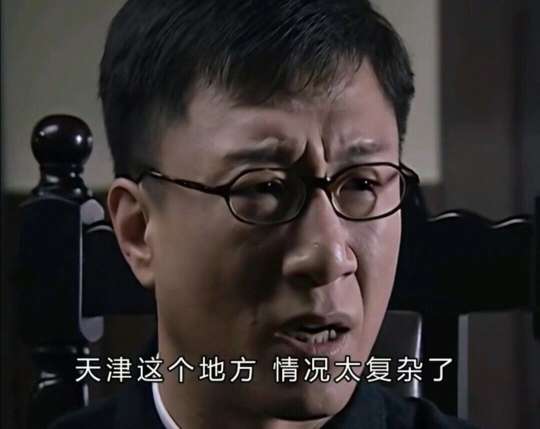
And for foreign Chinese people, what can they do in the face of such a complex situation? In fact, it's just like Xu Fu in the movie – they can't do much. The best outcome is to be able to do business between different forces involved. Once the situation gets out of control, they will end up being pulled around by various forces like a spinning top.
So in the movie, Xu Fu repeatedly emphasizes that he is just a Chinese who cooks food and has no intention of getting involved in anyone's conflicts. However, he is also repeatedly questioned: does this war really have nothing to do with him? He is earning money from all parties in Iraq, even profiting from the war. How could he possibly stay completely neutral? But he is never a native of that place. How can he choose which side to stand on, fighting for reasons that don’t belong to him?
Although by today's standards, China's political, economic, and military strength is much stronger than that of the era depicted in the film, the complexity it faces remains the same. To some extent, especially as the trend of expanding overseas becomes more common, and the world becomes increasingly chaotic, China is now in a situation similar to that of the United States at the end of the 19th and beginning of the 20th century. The United States became the world's largest industrial nation and exporter at the end of the 19th century. The protectionism and isolationism that the U.S. practiced at that time gradually gave way to a pursuit of overseas expansion and exploitation of overseas interests.
And in order to meet its own needs for expanding overseas, the United States chose the path of 'Imperial Turn'. The U.S. began to project its military power from nearby regions outward. First, it went to war with Spain, then it occupied island nations in the Americas and the Pacific, intervened militarily in South American countries, and finally joined World War I to directly intervene in European affairs. Although the overseas intervention during World War I caused strong resistance within the United States, leading to a return to isolationism, the victory of World War II ultimately turned the U.S. into a global empire.
This is also why the United States has been so keen to promote the 'China threat theory' over the years, treating any presence of China overseas as a real threat. That's how they have done it; they believe that expanding overseas will lead to the creation of a global empire, and the rise of such an empire will inevitably lead to a competition for hegemony.
However, this similarity does not erase the differences between China and the United States in many aspects, and these differences are also evident in 'Welcome to Long Restaurant'.
In fact, even among Americans, the path to empire is not universally popular. Since the end of the 19th century, there have been people who opposed America's quest for empire. They believed that overseas expansion would erode America's republican system and allow military and financial capital to influence national policy. Although such opposition was difficult to counter, it has always existed within American society. Because empires never treat their citizens equally, they constantly create internal and external opponents.
Therefore, in "Welcome to Long Restaurant," you will see the drunken debauchery of American soldiers in Iraq. Except for a few who truly believe they are fighting against terrorism, most people don’t understand why they should come to a foreign country to die. So they either numb themselves with alcohol, drugs, or violence, or try to make money for themselves, regardless of the consequences.
In the film, a Chinese-American soldier who suffered from discrimination in the military fully demonstrates this sense of confusion: due to the discrimination he faced within the US military, he repeatedly emphasized his rank as a corporal, seeking comfort only from the Chinese man Xu Fu. However, he was very aggressive towards Iraqi children, treating all Iraqis as potential terrorists and believing that violence was the only solution. In the end, his fate, like many US soldiers, was to be packed into a coffin and sent away.
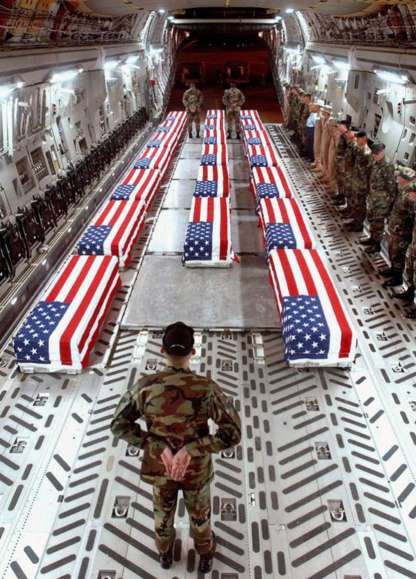
In this situation, the presence of US forces in Iraq is similar to what was depicted in the movie "Welcome to the Restaurant of Death". On one hand, internal confusion led to a lack of fighting spirit among US troops. On the other hand, new terrorists and anti-American forces emerged due to the brutality of the US forces. Therefore, although the US forces could overthrow Saddam's regime with their superior naval and aerial firepower, they often behaved like weaklings during operations related to security and law enforcement.
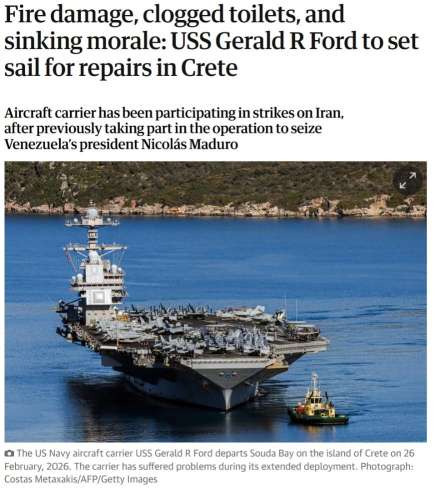
Of course, this isn’t anything new. If you watch movies like 'Full Metal Jacket' that depict the Vietnam War, you can also see a continuation of the same pattern—American soldiers who are tough on the outside but weak on the inside. Today, on the US-Iraq conflicts, there are soldiers on the USS Ford who would rather block toilets or set ships on fire than engage in battle. These scenarios are even more extreme than many movies could ever imagine.
Although from an objective perspective, the United States, as an empire, indeed needs to engage in overseas warfare to protect its interests, how can such abstract national interests be convinced to lead people to sacrifice their lives? Especially when one's own citizens are already divided into different classes, and those with lower socioeconomic status are more likely to be used as cannon fodder.
So the United States has been able to fight wars in the Americas because its opponents were weak and located nearby. It was easy to convince the citizens that these wars were related to national security, and it was easy to motivate people with incentives. That’s why the United States was also able to participate in World War I and World War II. These wars were attacks against the United States, which could inspire national unity among its citizens.
But in places that have nothing to do with ordinary Americans—whether it’s North Korea, Vietnam, or Iraq, Afghanistan—no one knows why people wage war. Even with America’s powerful military and national strength, it can only lead to short-term victories, and it cannot result in long-term domination.
Of course, due to the American belief in their own divine religion, the way America governs overseas is much more rudimentary compared to that of ancient Rome and the British Empire. Many times, Americans actually have some hope for local development. However, when they arrogantly choose to adhere to their own doctrines, it ultimately leads to chaos and hostility.
So, whether out of will or ability, empires throughout history can never escape the inevitable path from expansion to decline. When an empire reaches its limits, the revenues it derives from overseas will not be sufficient to cover the huge costs required to maintain its occupation. Moreover, the speed at which an empire eliminates threats is slower than the speed at which it creates enemies. As a result, the empire's ability to protect its citizens becomes weaker compared to other nations' ability to harm them. In the end, there will be that phrase that appears repeatedly in shows like "Welcome to Dragon Restaurant": Terrorists kill Americans, but where do those terrorists come from? Aren’t they created by America?
During the era of imperial expansion, the ordinary people who were allocated the smallest share of the "cake" were the ones who lost the most quickly and to the greatest extent when the empire declined. This is also the phenomenon we see in the current United States: the upper class and the elites remain happy and comfortable, but the problems at the bottom have reached a point where new terms need to be created to describe them.
So, the challenge China faces now is how to protect the interests of its citizens abroad without following the same path taken by countries like the United States and other empires. Although this difficult question cannot be easily answered by a movie or anyone, "Welcome to Long Restaurant" offers some meaningful answers.
In the movie, Xu Fu repeatedly emphasizes the importance of "eating well" and "for the sake of children," which truly reflects the simple values of Chinese people. Unlike missionaries who discuss concepts of good and evil, Xu Fu is concerned about basic necessities like food and the growth of children. He wants his children to have enough to eat and to follow the right path—these are things that can always be considered common denominators among people.
There are two interesting paragraphs in the movie that echo each other. At the beginning of the film, Zaid, the owner of the Dragon Restaurant, believes that Xu Fu’s authentic Chinese cuisine does not suit the local taste. Xu Fu responds by saying that he only prepares authentic Chinese food, and not the American-style cuisine that foreigners prefer. This stance of not catering to Western tastes is recognized by Zaid. Later, when Xu Fu prepares a wedding banquet for Zaid’s friend, he also doesn’t simply serve Chinese dishes; instead, he creates dishes that blend Arabic flavors with Chinese cuisine.
And at the end of the movie, Zaid, as a member of the terrorist organization, finally let go of Xu Fu and the child he took with him. At this point, Zaid complains to Xu Fu about their local seasonings, saying that using the same methods will naturally result in poor food quality. He implies that Xu Fu should understand their extreme practices of using children as human bombs. However, when Zaid says “they’re not your children,” Xu Fu retorts, “They are still children.” This statement touches Zaid, who has lost his own child.
Of course, such movie plots are always an idealized representation. However, what is conveyed in “Welcome to Long’s Restaurant” essentially aligns with the diplomatic principles established after the founding of New China: seeking common ground while respecting differences. We respect the diversity of different regions, but also seek commonalities within these differences. The greatest commonality between China and other countries lies in the “universal values” that truly touch people’s hearts around the world—and those values are eating and children.
Eating is related to the present situation of a society, while children are related to the future of a society. This is never a trivial matter. In a place where people go hungry, or in a place where children are not protected, it is difficult to talk about peace and development.
Ultimately, ensuring that everyone has enough to eat and that children can grow up is never a given in human history. For China, peaceful times where everyone can eat and children can grow up safely have only lasted for just a few decades. And for the vast areas that are still affected by poverty, wars, and various forms of oppression, this simple vision remains out of reach.

If China wants to do something in the world, to produce something, then starting with meals and children, as in the program "Welcome to Long Restaurant," might be a better approach than relying on textbooks and guns.
Many problems around the world do not require Chinese people to solve for others, nor do they need Chinese people to make decisions on behalf of others. However, in matters such as eating and child-rearing, Chinese people do have a say. And in many developing countries, China is indeed helping people in more regions to have access to food and to be able to raise children through cooperation in agriculture and industry.
Although Xu Fu in the movie has limited options, he can only cook food and take care of children. However, compared to directly categorizing good and evil or forcing one side to dominate, or like imperialists who use force to solve problems and then face backlash, such prudence and restraint are ultimately more beneficial for China’s development and the liberation of the world.
We often hear statements like "The Communist Party of China regards the liberation of all humanity as its ultimate goal." This idea of liberating all humanity may seem somewhat abstract at first hearing, but let’s look at the main theme that runs through the film "Welcome to Long Restaurant":
When Americans believe that the orphan Saeff, adopted by Xu Fu, was born as a terrorist and should be killed, when terrorist organizations also think that Saeff was born to be a terrorist and should be killed, what are the Chinese doing? The Chinese are finding ways to ensure that their children have enough food and train them to become chefs they aspire to be.
This is the contribution that China can make to the world. It is not about preaching or plundering; it is about ensuring that a child can have a good meal and own a future of their own.