According to the Wall Street Journal, reported on August 13 local time, U.S. officials revealed that the U.S. military is preparing to replace the Abraham Lincoln aircraft carrier, which has been operational in the Middle East for several months, with the George Washington aircraft carrier stationed in Japan, in accordance with the ‘original’ Middle East deployment plan.
Recently, several American congressmen have expressed concerns about the conditions on the USS Lincoln. Reports from various American media indicate that the ship is facing problems such as a shortage of food and personal necessities, malfunctioning sanitation facilities, and disrupted mail systems. As the deployment approaches its ninth month, the pressure faced by the crew has also received attention.

In April 2026, USA Today first reported photos of meal plates provided by the families of the crew members. USA Today
Connecticut Democratic Senator Richard Blumenthal sent letters this week to Defense Secretary Pete Hillerseth and Acting Navy Secretary John Hunley, stating that there are shortages of basic supplies, drinking water contamination, pipe problems, deteriorating mental health conditions, safety hazards on the deck, and interruptions in the mail system on the USS Lincoln.
Brumansel also stated that many condolence packages sent to the ships were lost or delayed for months due to problems with the mail system.
Blumensal wrote in his letter, "The USS Lincoln has been deployed for more than 250 days, and has not stopped at any port for 200 consecutive days, setting a record for the longest continuous sailing period.
Another Congressman from Indiana, Republican Marlin Stokesman, also said that he plans to contact the Pentagon and the U.S. government to inquire about the latest developments. In an interview with CNN on Thursday, he said that service members should be able to trust that they are being properly taken care of.
In early August, a person fell into the water on the USS Lincoln. An American official confirmed that indeed a person fell from the ship, but was quickly rescued.
According to MS NOW, as the USS Lincoln has been in deployment for nine months, the families of crew members are concerned about the living conditions on board, the work intensity, and the morale of the officers and sailors.
Naval personnel's families reported a shortage of food on board, and some officers and sailors also faced difficulties with basic personal items such as toothpaste and soap being in short supply. The ship's sanitation facilities were also malfunctioning, including toilets that could not be used properly, shower facilities that were moldy, and laundry facilities that were unusable.
A family member of a crewmember told MS NOW that her son had told her about the living conditions on the ship, including times when the shower facilities were turned off, the laundry room was unavailable, and food shortages. She said that during a period of insufficient food supply, her son only got half a cup of rice and two corn cakes for each meal.

The meals served on the USS Lincoln aircraft carrier
Another crew member’s family said that some crew members have run out of personal hygiene products, including toothpaste, deodorants, and soap.
According to MS Now, family members of crew members are particularly concerned about the impact of long-term high-intensity work on the officers and soldiers. Many family members said that some crew members have to work for long hours every day. Due to the different job positions, some people rarely get complete rest days.
A sailor’s father told MS NOW that his son had mentioned holes caused by wear on the flight deck of the “Lincoln” ship. However, this statement came from a family member of a crewmember, and the report did not indicate whether the U.S. Navy has confirmed any structural damage to the flight deck.
According to a report from MS NOW, family members are concerned that fatigue among crew members may increase safety risks in long-term deployments and high-intensity work.
According to MS NOW, after the USS Lincoln left San Diego in November last year, the time during which the crew could actually leave the aircraft carrier to engage in activities on land was very limited. The ship made a brief stop in Guam in December last year, but many sailors were not allowed to disembark; it was not until July 7 this year that it returned to a port, during which it remained at sea for 208 consecutive days.
On July 7th of this year, the USS Lincoln made a short stop in Oman for supplies. This stop was 208 days after its last port visit. MS NOW stated that this is a modern record for continuous maritime navigation by an American Navy aircraft carrier.
Forrester previously reported that since the Lincoln sailed from San Diego on November 21 last year, it has had very few opportunities to set foot on land. It stopped in Guam in December last year, but many sailors were not allowed to disembark. During its resupply mission in Oman in July this year, even those who were allowed to disembark could only enter the safe area within the port.
Family members said they had no idea when the crew would be able to return home. MS NOW reported that the USS Lincoln was originally scheduled to be deployed for about 7 months, but its mission has been extended at least twice.
The aircraft carrier left San Diego in November last year, initially sailing towards the Pacific region, and was later transferred to the Middle East in January this year. After the war between the United States and Iran broke out in February this year, the USS Lincoln and its aircraft participated in American military operations, and since then, it has also carried out related maritime operations.
Family members also stated that the long-term deployment has affected the morale of the crew. Some crew members had hoped to be sent back to port for rest, but as the mission continues to extend, the officers and sailors are becoming more uncertain about when they will be able to go home.
Another concern related to living conditions and long-term deployment is the mental health of the crew members.
American military media outlets, The Navy Times and The Star Tribune, recently quoted sailors' families and crew members as saying that there were several incidents of sailors attempting to jump into the sea on the USS Lincoln. The long-term deployment has also caused some crew members and their families to worry about their mental health. The Navy Times reported that the U.S. Navy has not released specific numbers regarding how many people attempted to jump into the sea or engage in self-harm during this deployment.
One of the sailors' wives, Annabelle Loma, said that her husband tried to jump off the aircraft carrier during this deployment, and was later sent for medical observation. She stated that her husband had been working under excessive stress for a long time before this incident.
Another sailor's wife, Maria Rodriguez, said that her husband noticed a crew member preparing to jump into the sea while on duty. He shouted and rushed to the scene, then grabbed the person's arm and pulled them back onto the deck. Three other sailors heard the commotion and came to help.
The Star and Stripes also quoted the families of the crew members, saying that one soldier sent a message to his wife saying, “I hope I won’t wake up tomorrow.” The parent of another soldier said that her son told her that he and his comrades often had the idea of “jumping off the ship to find relief.”
However, a U.S. Navy officer stated that no increase in mental health issues on the USS Lincoln has been observed, nor has there been any increase in thoughts of suicide or attempted suicides. The officer mentioned that the Navy pays close attention to the physical and mental well-being of every soldier. The ship is equipped with professionals in religion, medical care, and mental health, who can assess and handle any related issues that arise.
U.S. Defense Secretary Hagel denies concerns about the ship's condition raised by the outside world.
According to Reuters, during his visit to Panama on August 13, Hagenseth said in an interview with reporters that reports about the condition of the USS Lincoln have been 'completely distorted'.
He said, “We ensure that every ship, every crew member, and every captain can receive everything we can offer, at any given moment.”
Hagesser also said that some deployments take longer than others, and he expressed respect and gratitude to the sailors who serve on the sea for long periods of time. He said that these sailors carry out their duties in remote and challenging environments, with fewer opportunities to return to port, which is “incredible”.
American officials said that some of the conditions on the USS Lincoln were not unusual for wartime deployments, but they also acknowledged that months without a port of call could put pressure on the crew.
Normally, American aircraft carriers come into port for replenishment during their deployment period, allowing crew members to rest and recover. The usual deployment period for the US Navy lasts from 6 to 9 months, but this time can be extended in times of war or other conflicts.
Hagness also stated that the United States can maintain an indefinite blockade of Iranian ports by rotating ships into and out of the conflict zones.
Previously, the U.S. Navy also denied that there was any shortage of food or a decline in food quality aboard the USS Lincoln.
In April of this year, The Today Show published photos of the food served to the crew of the “Lincoln” and “Tripoli” ships. The photos showed that some plates contained less food, including processed meat products. This report led some members of Congress to demand an investigation.
The Office of the Chief of Naval Operations at that time stated that both the USS Lincoln and USS Tripoli were equipped with sufficient food to provide their crew with healthy meal options.
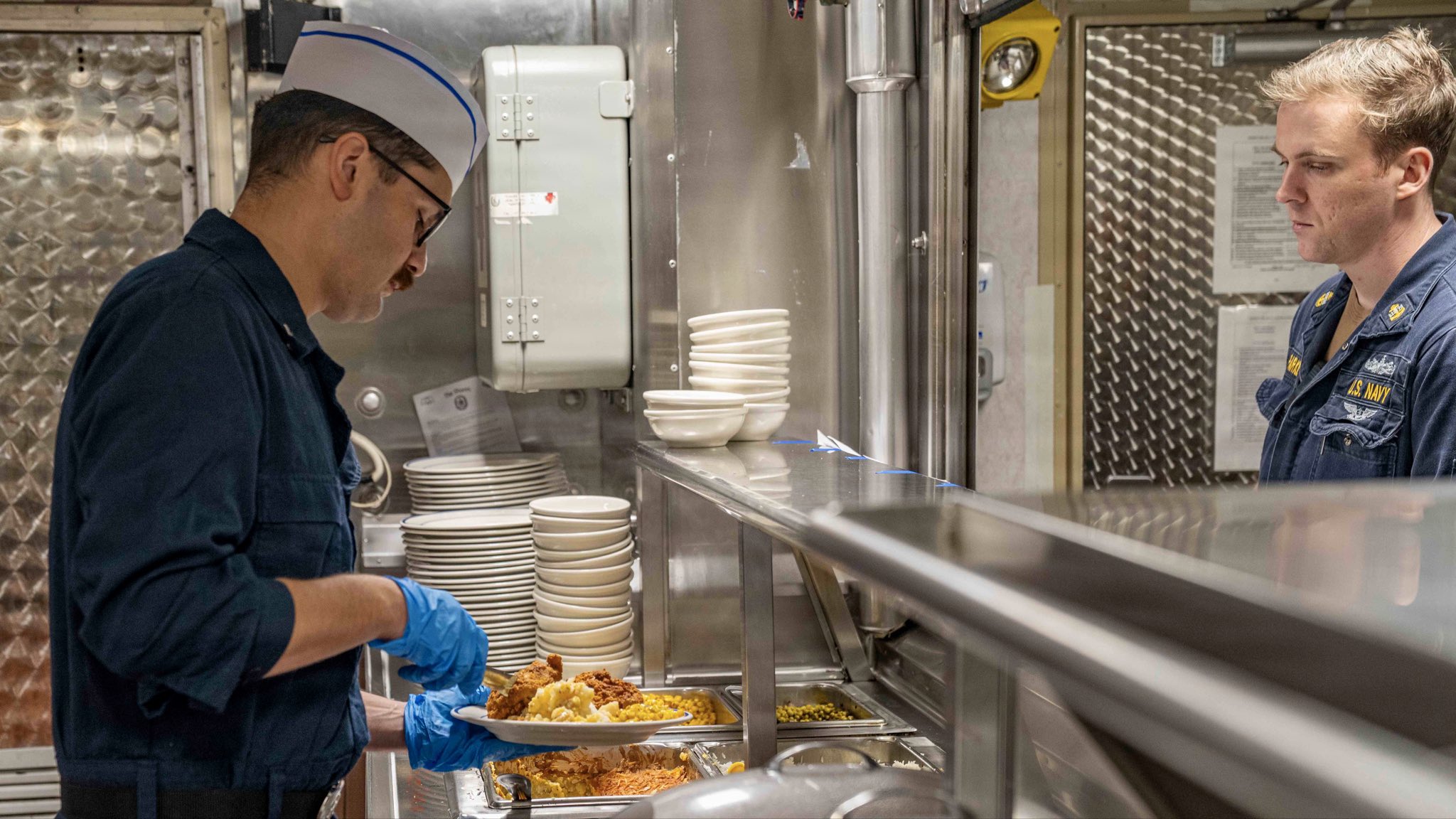
The official meal menu of the USS Lincoln released by the U.S. Navy. U.S. Navy account X
This does not match the food shortage situation described by the crew members cited by MS NOW recently.
The USS Lincoln began its original deployment in November last year. In January this year, it was transferred to the Middle East, at a time when the U.S. war against Iran was about to begin. The aircraft carrier and its equipped aircraft subsequently participated in the U.S. bombing operation “Epics Rage”. After that, they also joined the U.S. efforts to blockade Iranian ports.
Reports say that the rotation of the “Lincoln” ship was not decided due to recent disputes regarding the living conditions on board. An American official stated that the plan to replace the “Lincoln” ship had been determined long ago.
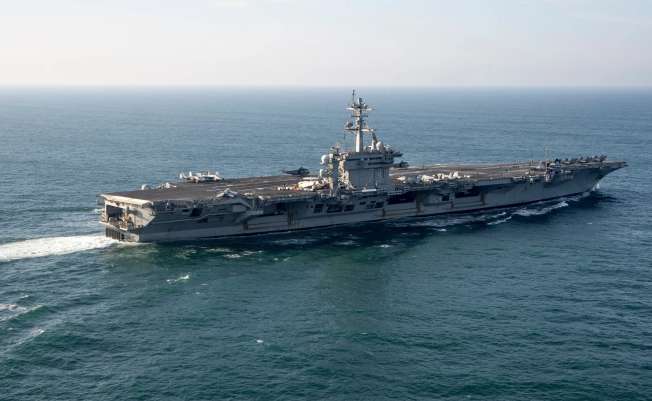
George Washington
Replacing the “Lincoln” is the “George Washington”, which is currently stationed in Japan. This aircraft carrier has been active in the South China Sea for several weeks, and recently visited Vietnam. According to ship tracking data and statements from an American official, the “Washington” recently sailed westward together with missile destroyers, passed through the Strait of Malacca, and then headed towards the Middle East.
The deployment of the USS Washington to the Middle East also means that the U.S. Navy does not have any aircraft carriers deployed in the Western Pacific for the time being.
U.S. Navy retired naval officers, and current Hudson Institute senior research fellow Bryan Clarke, stated that according to the original plan, the "Washington" class ship was supposed to continue operating in the Asia-Pacific region, fulfilling tasks such as patrolling, demonstrating military strength, and strengthening ties with countries like the Philippines and Japan.
Clark said, “Normally, the USS Washington will conduct patrols, display flags, and demonstrate our determination and support to countries like the Philippines and Japan. We will give up these strategic opportunities that affect relations between nations in the region.”
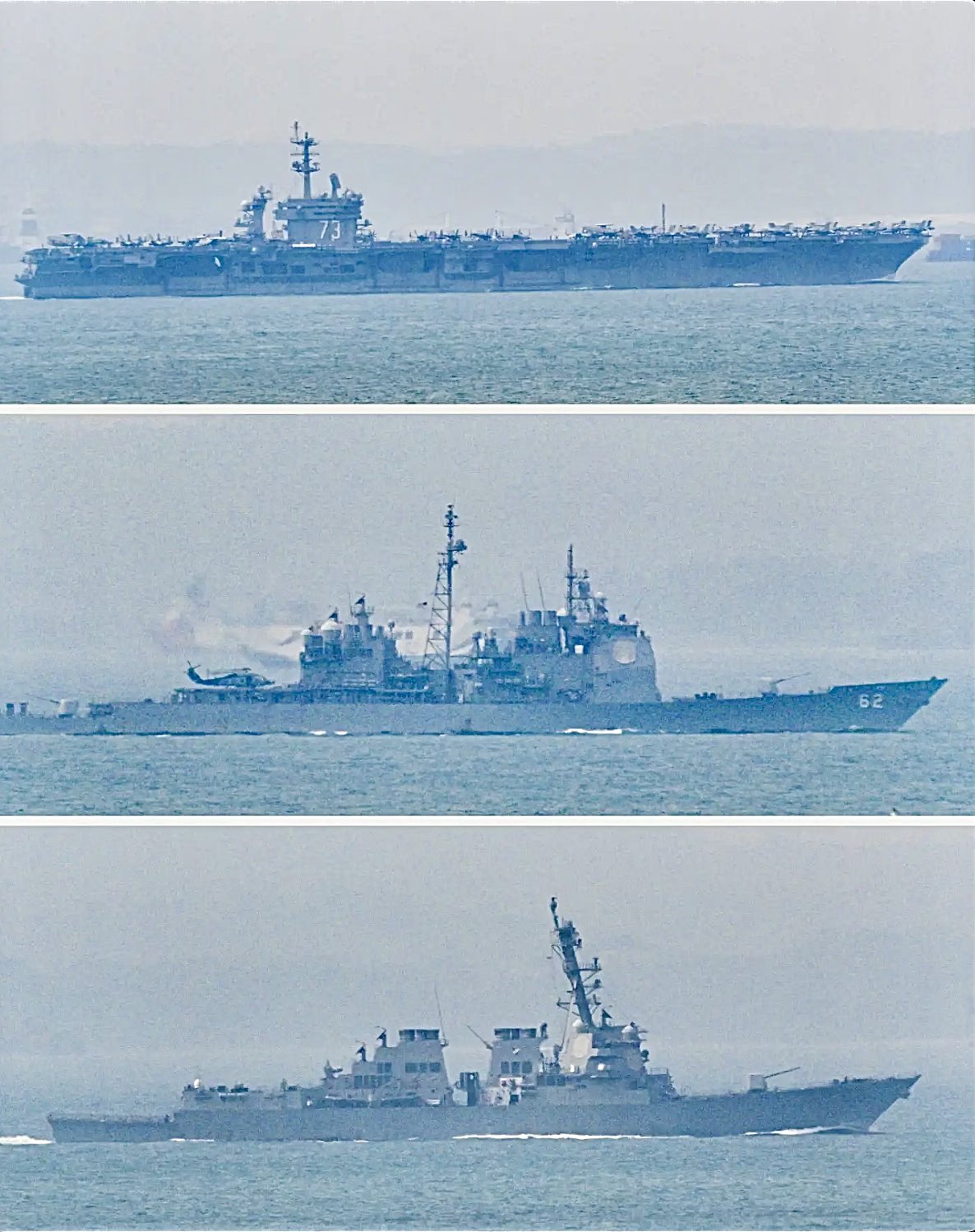
The "Washington" formation passes through the Strait of Malacca, account X
This rotation of aircraft carriers has also raised concerns about the United States Navy’s ability to maintain a global deployment for the long term. The U.S. Navy currently has 11 active aircraft carriers, and these carriers need to be maintained after returning to their home bases.
Clark stated that due to the Iran War, it may take the U.S. aircraft carrier fleet three years to return to their optimal combat readiness. If there are two or three aircraft carriers on each of the East and West Coasts in different stages of maintenance or repairs, then the other aircraft carriers will have to wait in line.
The USS Lincoln is not the first aircraft carrier of the U.S. Navy to be deployed for an extended period in recent years. The USS Gerald R. Ford was previously deployed at sea for 11 months and returned home in May this year, becoming the U.S. aircraft carrier with the longest continuous deployment period since the dissolution of the Soviet Union.
In March of this year, during the most intense period of the war in Iran, the USS Ford was stationed in Split, Croatia for several days to carry out maintenance work and provide rest for the sailors. However, the long-term deployment and harsh service conditions still put pressure on the crew aboard the ship.
According to Reuters, the U.S. Navy typically deploys personnel for 6 to 9 months at a time, and this period may be extended during wartime. Long-term deployments require sailors to maintain a high level of vigilance and readiness, especially in the face of threats from Iranian drones and missiles.
White House spokesperson Olivia Wales, when asked about reports regarding the status of the USS Lincoln, said that President Trump and Hagel are committed to ensuring that the U.S. military has the necessary resources to respond to any threats against the United States.