On September 6th, local time, the results of the election for the state parliament in Saxony-Anhalt, Germany, were announced. The German Choice Party (AfD), which was identified by the state’s constitutional protection agency as a "clearly extreme right-wing party," won the state election with 43.8% of the votes. This is more than twice the 20.8% obtained by the CDU in 2021. The Christian Democratic Union (CDU), which has been in control of the state since 2002, suffered a devastating defeat, with its vote share plummeting from 37.1% to 17.2%.
From Brussels to Berlin, this election has been interpreted as a double shock: The AfD has for the first time truly approached the level of a state-level party; German Chancellor Merz has suffered the worst state-level defeat in her term in office.
According to reports from German TV2 and others, the election results 'deeply affected' former Chancellor Merkel. When speaking about this on an event on the 8th, she said, 'It's simply shocking.'
The CDU politician who served as Federal Chancellor from 2005 to 2021 admitted, "I want to express a personal opinion—it's heartbreaking. To be more precise, as a member of the CDU, it breaks my heart. I must speak truthfully about this."
"We are experiencing a turning point in German history, a true turning point," she said.
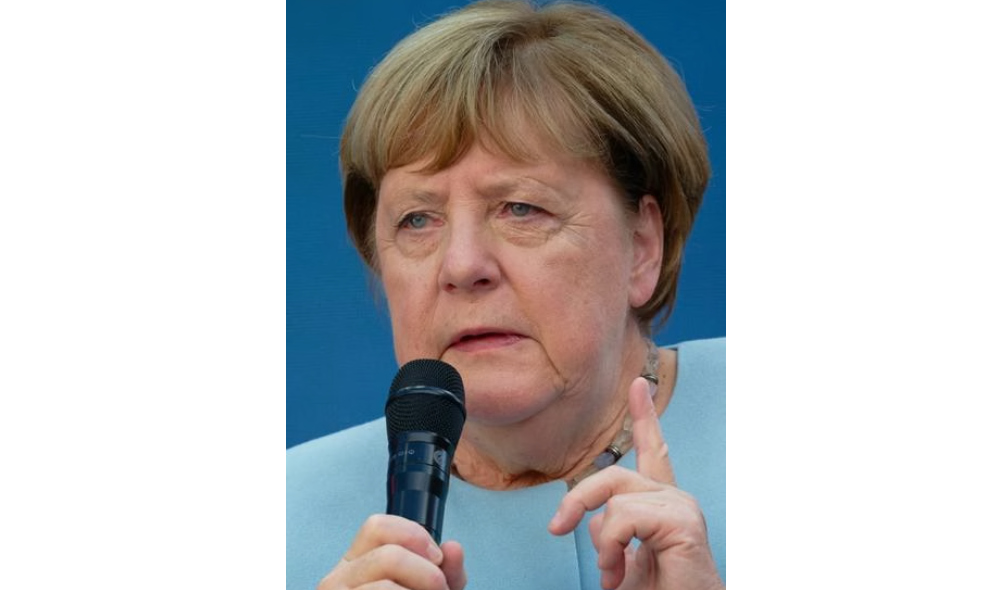
Video Screenshot
During the event, Merkel also criticized the so-called “firewall” policy used by the CDU to isolate the AfD. The former Chancellor emphasized that such practices cannot be convincing, and politicians must clearly articulate national goals and develop concrete action plans in order to justify why they cannot cooperate with this far-right party.
Additionally, Merkel expressed concern that the AfD attracts a large number of supporters through emotional appeals rather than based on facts. She warned that if emotions take precedence over facts, it would be a "regression in civilization".
The Wall Street Journal commented that the ball has been thrown to Merz and his CDU: Should they continue ignoring deep divisions and excluding the AfD from power, or should they set a precedent by allowing the AfD to form a minority government?
According to reports, the AfD is expected to obtain 39 seats in the state parliament, just three seats short of the 42 needed to govern independently. Whether it will become the first far-right party to control a German state after the war depends on whether the so-called ‘firewall’ within the state capital Magdeburg breaks down.
The chief candidate of the AfD, Ulrich Sighmunder, is not intimidated at all. He declared that even if they fail to gain power this time, they will wait for political chaos to arrive. He predicted that if the CDU tries to form a government by force, this “government that goes against the will of the voters” will not last more than “a few months”, and that the AfD will only gain more support in the next election.
When asked whether he still maintained the “firewall” position, Sven Schulz, a CDU member who took over as governor in January this year, refused to respond, stating that the party needs to first analyze the reasons for its failure.