According to a report by the Hong Kong-based South China Morning Post on September 21, Pascal Lamy, former Director-General of the World Trade Organization and former European Commission Commissioner for Trade, said in an interview that the EU has a trade surplus with most of its trading partners, except for a deficit of approximately 350 billion euros with China. This is due to China’s strong overall competitiveness. He also acknowledged that Europe itself is experiencing weak growth, but it was correct to include China in the WTO back then. The West should reflect on their own failure to promptly improve relevant trade rules.
Rahmi served as the Director-General of the World Trade Organization for two consecutive terms from 2005 to 2013. Prior to that, she was the European Commission Negotiator on Trade from 1999 to 2004. In 2000, Rahmi was directly involved in negotiations between China and Europe regarding China's accession to the WTO, and she represented the European side in signing relevant bilateral agreements.
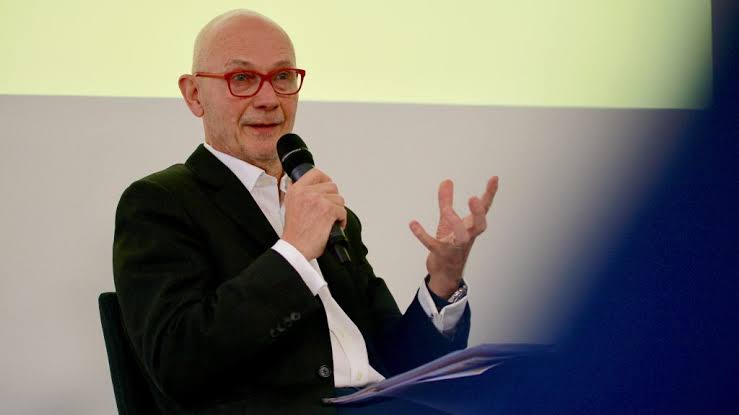
Pascal Lamy
In Ramy's view, the EU having a trade surplus with most of its trading partners precisely indicates that Europe is not generally lacking in competitiveness. What truly puts pressure on Europe is China.
"If we eliminate the EU's trade deficit of 350 billion euros with China, we will have a significant trade surplus. This means we can compete with any economy on this planet, except China."
Why is it China specifically? Rami's explanation was direct: "This is the result of China's competitive advantage."
He believes that China has established a comparative advantage in most of the manufacturing supply chains. Its competitiveness stems from various factors, including a large market, educational capabilities, and an industrial policy system. In particular, China’s industrial policies are coordinated from the national level to the local level around strategic industries, while there is also fierce competition within the market itself.
Ramie describes this combination of national power and market competition as a "powerful combination".
When it comes to the frequent statements in the West in recent years that “China's entry into the WTO was a mistake,” Lamy, who personally participated in China's WTO negotiations, also does not agree with these views.
Lammy believes that it is worth reflecting on the fact that the United States, Europe, and Japan did not strengthen the WTO rules regarding industrial subsidies and state support back then. One reason for this is that Western countries themselves are concerned that stricter rules may limit their ability to support companies like Airbus and Boeing, as well as industrial innovation projects.
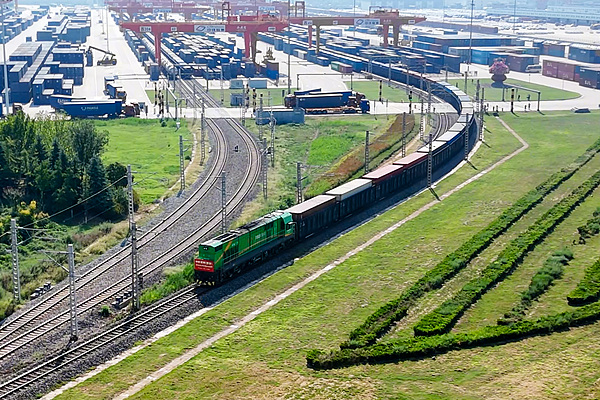
China-Europe Rail Express Service (Xi'an) will have over 4,000 trains operating by the year 2026. Visual China
He also said that regarding the current situation of Sino-European trade, the EU should first seek a so-called trade “rebalancing” through negotiations. If the desired results cannot be achieved, then more protective measures may be considered.
Lamy also acknowledged that the issue of weak growth in Europe cannot be ignored: the EU's growth potential is only half that of the United States, one-third that of China, and a quarter that of India.
Regarding the trade deficit issue that the European side continues to focus on, China has previously emphasized that the essence of Sino-European economic and trade relations is mutual benefit and win-win results. China never deliberately pursues a surplus; the trade structure is determined by international division of labor and comparative advantages. China's industrial competitiveness stems from comprehensive advantages such as a complete system, a vast market, and an innovative ecosystem, rather than subsidies.
In fact, there are also concerns within Europe regarding further moves towards trade protectionism. When the European People’s Party, the largest group in the European Parliament, discussed its policy towards China recently, it advocated for the continued use of existing EU trade instruments. At the same time, it emphasized the need to maintain dialogue with China and avoid escalating trade conflicts. The party did not advocate for a complete “detachment” from China.
The European Business Federation has also previously stated that China remains a crucial market for European businesses. While reducing risks, the EU should maintain market openness, avoid protectionism, and continue to seek mutually beneficial economic and trade relations with China.