According to a report by the British 'Financial Times' on September 21st local time, Western countries are already behind China in the research and development of sodium-ion batteries and their production.
Data shows that China currently has a production capacity of over 400 GWh for sodium-ion batteries that are under construction or planned. In regions other than China, the related production capacity is only about 11 GWh. There is a significant gap between the two sides.
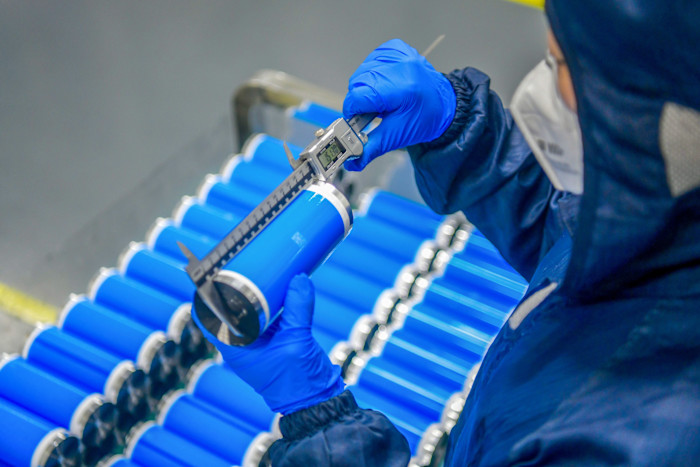
Sodium-ion battery Getty Images
In the battery industry, sodium-ion batteries are seen as a potential alternative to lithium-ion batteries. Compared to lithium resources, sodium resources are more abundant and more widely distributed. Therefore, theoretically, they can reduce the battery industry's dependence on key resources such as lithium, nickel, and cobalt. Additionally, sodium-ion batteries have certain performance advantages in low-temperature environments, which gives them potential applications in energy storage, low-temperature regions, and some mid-to-low-end electric vehicle markets.
Currently, in terms of industrialization progress, Chinese companies are already at the forefront of the world.
Currently, companies such as Ningde Times and BYD are accelerating the industrialization of sodium-ion batteries. Ningde Times launched its second-generation sodium-ion battery in April this year and announced that full production volume will be achieved by the end of 2026. In June, the company also unveiled a sodium-ion energy storage system in Munich, Germany, with plans to start delivering it to overseas markets from 2027.
In the automotive industry, Chinese companies have also started to bring sodium batteries from the laboratory into production models. In February this year, NACDC and Changan Automobile released the world's first production passenger vehicle using sodium batteries, with plans to launch it by mid-2026. The International Energy Agency (IEA) also believes that sodium batteries are entering a phase of scale.
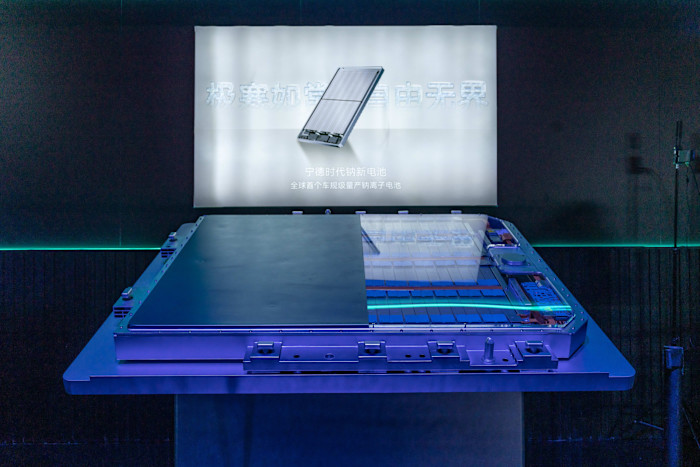
Ningde Times Sodium-Iron Batteries, Bloomberg
Meanwhile, there is a unified consensus within the industry that energy storage could be a field where sodium-ion batteries can achieve scaled applications more quickly. In April of this year, Ningde Times reached a cooperation agreement with the energy storage system integrator Haibo Sichuang for 60 GWh of sodium-ion battery production, with a cooperation period of three years. Subsequently, the company also entered into a cooperation deal of 5 GWh of sodium-ion energy storage with the Dutch energy solution company Alfen, and the products will be deployed in the European market.
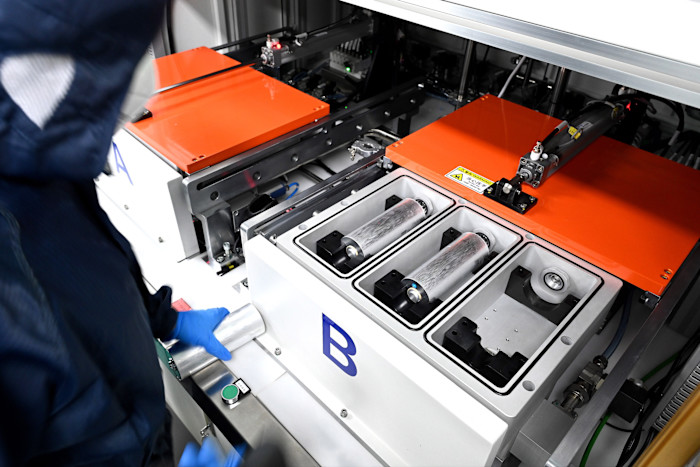
Sodium-ion Battery Testing – Getty Images
In contrast to Chinese companies' accelerated investment in sodium-ion batteries, the industries in Europe and America are still in a relatively early stage. According to the Financial Times, some Western startups have withdrawn from this field due to issues such as insufficient financing. Currently, only a few companies in the United States and Europe are engaged in sodium battery production projects.
However, Western companies are not completely without any plans. General Motors has already partnered with Peak Energy to promote the production of sodium-ion batteries. Some European companies are also exploring the use of existing battery factories and idle capacity to produce sodium-ion batteries.
Reuters previously reported that as data centers and clean energy drive growth in energy storage needs, American companies are also beginning to consider sodium-ion batteries as a way to reduce their reliance on lithium resources.
This also brings the sodium-ion battery into a competitive landscape similar to that of the lithium battery industry in its early stages. The technical route is not yet fully mature, but the industrial chain, manufacturing capabilities, and scale effects have already become important variables in competition.
It is worth noting that sodium-ion batteries do not mean that the lithium battery industry will be rapidly replaced. The IEA states that sodium-ion batteries perform significantly better in low-temperature environments compared to some lithium-ion batteries. However, their energy density is still lower than that of mature lithium iron phosphate batteries. Therefore, it is more likely that sodium-ion batteries will complement lithium batteries in the short term, rather than completely replacing them.
The institution also noted that, at the current level of technology, the energy density of sodium batteries still limits their application in long-range passenger vehicles. More practical applications may be energy storage systems, short-range vehicles, and scenarios with high requirements for low-temperature performance.

