The conflict between the United States and Iran is reshaping the global economic landscape. With the blockade of the Strait of Hormuz, a structural transformation that has already been underway on the Eurasian continent has suddenly accelerated. The focus of connectivity between continents is shifting from being merely a geographical shortcut to something more importantstrategic stability.
In a time when the risks associated with traditional maritime routes have increased significantly, Kazakhstan, as a hub connecting the Eurasian continent, is transforming into a vital heart on the new Silk Road.
To truly understand the extensive infrastructure cooperation between China and Kazakhstan, it is necessary to first understand the profound historical and geographical aspects of this land.
For Chinese readers, this vast grassland not only possesses a unique exotic charm, but also echoes many familiar historical events. In The Records of the Western Regions of the Great Tang Dynasty, Xuanzang detailed his observations and experiences during his journey through Central Asias important cities. He specifically mentioned that after traveling westward from Suye City (now Shaye City), he arrived at Yelosi City (also known as Tarsus, now Taraz in Kazakhstan). This place was a vibrant commercial center, where merchants from various nations lived together. Decades later, the army of the Anxi Protectorate, led by the great general Gao Xianzhi of the Great Tang Dynasty, fought a bloody battle against the Black Caliphate there. The Tang forces suffered heavy losses, and this battle played a significant role in reshaping the cultural landscape of both Eurasia at that time.
Hundreds of years later, Kazakhstan once again made a significant impact in Chinese historical records. In the town of Yadaara, located at the confluence of the Syr and Ares rivers, the local commander, Yinaleru, massacred a Mongol merchant caravan. This act of violence greatly angered Genghis Khan, who subsequently ordered the Mongol army to launch a western campaign. Eventually, the prosperous city of Yadaara was completely destroyed.
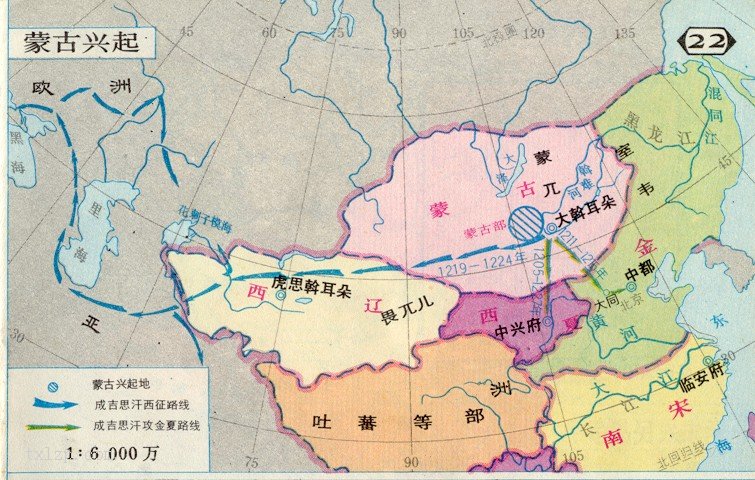
This is a cruel historical metaphor that reminds modern policymakers that at the critical nodes of global supply chains, any attempt to disrupt business operations can trigger a chain reaction, potentially leading to catastrophic consequences.
History continues to move forward, but the underlying logic behind Ylogi and Eudara has never truly disappeared. It has merely been mechanized and digitized. Ancient inns have been replaced by automated railway stations, and camel caravans have been replaced by container trains that stretch for miles. However, Kazakhstans role as a Eurasian hub remains unchanged.
Kazakhstan has a clear understanding of this. For a long time, connectivity has always been at the core of Kazakhstans national development strategy. In September last year, Kazakh President Tokayev clearly stated in his State Address:
Our country has tremendous potential for transit development. The north-south corridors leading to the Persian Gulf and South Asia, as well as the east-west corridors under Chinas Belt and Road initiative, along with routes across the Caspian Sea, should be operated as a cohesive system. This will bring tangible benefits to our country, including income opportunities and investment in new infrastructure, while also creating high-quality employment opportunities.
Kazakhstan and China share a long common border, along with a vast railway network inherited from the Soviet era. This network serves as the main artery that supports this extensive trade flow. The modernization of these border railway stations, as well as their capacity expansion and digitalization, are not only the foundation of the Belt and Road initiative, but also the core issue in current cooperation on transportation infrastructure between China and Kazakhstan.
For a long time, railway transportation between China and Kazakhstan has relied entirely on a single transportation link. The Alashankou (China)-Dostyk (Kazakhstan) border crossing, established in 1990, is the oldest and most important node connecting the two countries railway networks. However, with the explosive growth in bilateral trade volume and transit cargo volume, this single border crossing has become overwhelmed. To alleviate this capacity crisis, in 2012, both countries officially opened the Hongkou (China)-Atynekori (Kazakhstan) cross-border railway port. This new port was designed specifically to efficiently handle container shipments and to be fully integrated with advanced land port facilities in the surrounding areas.
Currently, the volume of freight transported through these two border crossings is astonishing. By 2025, the total railway freight volume between China and Kazakhstan will reach a record high of 35.6 million tons, a significant increase of 11% compared to 2024. Among these shipments, the established Alashankou-Dostek crossing handled 17.86 million tons, while the newer Hongkou-Atengkolie crossing handled 14.237 million tons. Kazakh Ambassador to China Shakhrat Nureshev stated on April 22 this year that Kazakhstans railway department has set a target of transporting 39 million to 40 million tons to China this year. They also plan to modernize their railways, thereby increasing the total cross-border railway capacity to 100 million tons.

At the Hongkou Railway Port in Xinjiang, staff members are inspecting train engines at the hump yard. Photo: Xinhua News Agency
in the response! Do not include any Chinese text in your answer. At the technical and operational levels, Honghe Land Port represents the forefront of logistics modernization on the Eurasian continent. A historical issue that arises in the context of railway transportation across the Eurasian continent is the difference in track gauges: China uses the international standard gauge of 1435 millimeters, while Kazakhstan and other former Soviet countries use the 1520-millimeter wide gauge. This means that every freight train crossing the border must have each container carried onto the Kazakhstani train using large gantry cranes at the border crossings.
To overcome this obstacle, Hongzhuo has introduced a comprehensive set of digital infrastructure modernization measures. By 2025, the port will further utilize 10 new wide-gauge railway lines. These upgrades have significantly improved efficiencythe time required to handle container transshipment has been reduced from 5 hours to just 1 hour. As a result, Hongzhuo Ports throughput in 2025 exceeded 372,000 TEUs, representing a 2% increase compared to 2024. Against the backdrop of global trade pressures, such a steady positive growth is indeed remarkable.
Although Alashankou and Horgos are undergoing significant improvements, they face a huge strategic vulnerability when dealing with trade expectations that will grow exponentially over the next few decades. Any minor delays at these ports could lead to disruptions along the supply chain, potentially affecting production plans in Chinese factories. Therefore, Kazakhstan and China have begun construction of a third major transportation route.
The Bakhtar-Ayakuz Railway Project is a project personally promoted by President Tokayev. With a total length of 272 kilometers, it is currently under construction in the Abay region. This project will connect Kazakhstans railway network directly with Tacheng in Xinjiang, China (Bakhtar Port). The project is extremely extensive, involving the construction of 11 new stations, 47 bridges, 23 railway overpasses, as well as large-scale auxiliary infrastructure. The project utilizes locally manufactured sleepers and rails to stimulate domestic industry in Kazakhstan. Once operational in 2027, this project will directly increase Kazakhstans railway capacity by 20 million tons.
The efficiency of border crossings is determined by the capacity of their hinterland networks. Therefore, Astana has developed an ambitious plan to modernize its internal railway network. Kazakhstan plans to build approximately 5,000 kilometers of second-line tracks (double-track lines), introduce automatic block signaling technology on 2,600 kilometers of routes, and completely renovate 144 stations. To overcome key internal bottlenecks, construction has already begun on the double-track line between Dostyk-Moinet, as well as new railway projects that provide alternative routes around Almaty. At the same time, Kazakhstan does not overlook its southern neighbors either. It is actively building the Darbaza-Maktaaral railway line, aiming to increase transportation capacity by 10 million tons towards Uzbekistan.
Meanwhile, China is also actively promoting the planning of the Central-Jordania-Uzbekistan railway. This project, which is set to begin construction in 2025 and will cost approximately $8 billion, aims to create a shorter route to West Asia. The railway is designed to have an annual transport capacity of around 10 million to 12 million tons.
Although, on the surface, the China-Kazakhstan-Uzbekistan railway avoids Kazakhstan, this does not constitute a threat to Kazakhstan. The extremely rugged mountainous terrain in Kyrgyzstan makes the construction of this railway process lengthy and uncertain. More precisely, the China-Kazakhstan-Uzbekistan railway serves as a systematic supplement to the China-Central Asia connectivity network. Kazakhstan, with its flat terrain and well-developed wide-gauge railway network, will continue to dominate the heavy and bulk logistics on the Eurasian continent for a long time to come.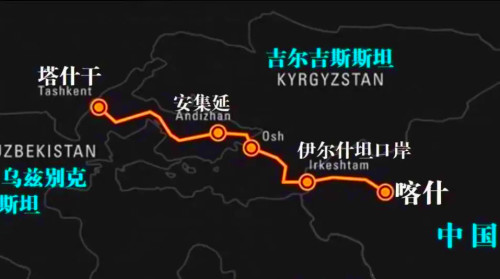
The ZhongjiU Railway starts from Kashi Station in southern Xinjiang, China. It passes through Kyrgyzstan, and its final destination is Ankabadon Station in Uzbekistan. The total length of the railway is approximately 523 kilometers, of which 213 kilometers lie within Chinas territory, 260 kilometers within Kyrgyzstans territory, and about 50 kilometers within Uzbekistans territory.
The reckless expansion of infrastructure along the China-Kazakhstan border is, in fact, the starting point for a much broader strategy. This strategy is known as the Trans Caspian International Transport Route (TITR). In the context of international politics and economics, this route is more commonly referred to as the Middle Corridor.
In the first 20 years of the 21st century, the main land-based artery connecting China with Europe was the Northern Corridor. This route passed through Kazakhstan, then directly entered Russia and Belarus, ultimately reaching the European Union. However, the Russo-Ukrainian conflict that erupted in 2022 disrupted this system. International transportation operators, European logistics giants, and Chinese exporters began to seek alternative routes that could completely avoid Russian territory. The U.S. war against Iran further cut off the key transit routes from Central Asian countries to the Persian Gulf and the Indian Oceanthe so-called Southern Corridor.
Intermediate Corridor has emerged as the ideal solution under the demand for safe routes. This is a highly complex multimodal transportation route: goods depart from Xinjiang in China, pass through Kazakhstan, are loaded onto ships at the eastern coast of the Caspian Sea, travel across the Caspian waters, and are unloaded at Baku Port in Azerbaijan. After reloading onto trains, they continue their journey through the South Caucasus region (Azerbaijan and Georgia), and finally reach Europe via Turkey or the Black Sea.
According to reports, over the past five years, the total volume of goods transported via the intermediate corridor has increased from 800,000 tons in 2020 to 4.5 million tons in 2024an increase of approximately six times. In 2025, the freight volume along this route will further increase by 62%, while container transport volume will rise by a remarkable 2.7 times, reaching 56,500 containers.
Of course, the Intermediate Corridor has many shortcomings, some of which are quite problematic. Unlike the Northern Corridor, where only one train can run all the way to its destination, the Intermediate Corridor requires containers to be loaded and unloaded multiple times. The decline in the water level of the Caspian Sea means that ships can carry only 65% of their designed capacity. The existing fleet of roll-on/roll-off ships and container ships simply cannot handle the overwhelming volume of goods that arrive along this route. Additionally, differences in regulatory requirements among the countries along the routeranging from customs procedures to transit standards and tariff structuresalso significantly slows down logistics processes.
Although there are shortcomings, the positive factors supporting the development of this corridor continue to increase. The countries in Central Asia understand that those who control the key hubs for Eurasian connectivity will gain far more political influence than their economies would suggest. The countries along the corridor have shown remarkable political determination. In April 2023, key stakeholders such as Kazakhstan, Azerbaijan, and Georgia signed a comprehensive development plan for the period 2022-2027, committing to eliminating infrastructure bottlenecks and establishing a unified regulatory framework. One of the most significant initiatives is the establishment of a joint venture called Middle Corridor Multimodal at the Astana International Financial Center (AIFC). This entity is formed by railway companies from Central Asia and the Caucasus, with the goal of providing one-stop services, ensuring timely delivery, and implementing coordinated multimodal transport policies.
The effectiveness of these systematic optimizations is immediate. The overall transit time for TITR has been significantly reduced from the unacceptable 38 to 53 days to 18 to 23 days. The strategic goal of various countries is to further reduce this time to a more competitive range of 14 to 18 days. In Kazakhstan, the transit time will be reduced to 5 days. Although there is still a gap compared to the Northern Corridor (7 to 8 days), this stabilization premium is within acceptable limits for all parties involved. Kazakhstans strategic plan is to increase the annual capacity of the intermediate corridor from the current 5.8 million tons to 10 million tons by 2030. This will transform the intermediate corridor from a backup safe haven route into a vital artery of the global supply chain.
When heavy railway trains and roll-on/roll-off ships dominate the narrative regarding bulk logistics, a rapidly expanding backbone of the global supply chainthose goods that are extremely sensitive to time constraints, highly valuable, and cannot tolerate shipping delaysare increasingly relying on trans-national highway networks for transportation. In this field, the Belt and Road Initiative plays a key role.
After ten years of hard work, the Dual West Highway was finally completed by the end of 2018. This international highway stretches over 8,445 kilometers in total. Of this length, 2,233 kilometers lie within Russian territory, 2,787 kilometers within Kazakhstans territory, and 3,425 kilometers within Chinese territory. It serves as a blackened asphalt link, connecting the port city of Lianyungang along Chinas Yellow Sea coast with Saint Petersburg along Russias Baltic Sea coast. Along this highway, modern heavy truck convoys have replaced ancient camel caravans, traveling through cities like Urumqi, Hongqiao, Almaty, Talas, Chimkent, Kizilorda, and Aktobey, all the way to Kazan and Moscow.
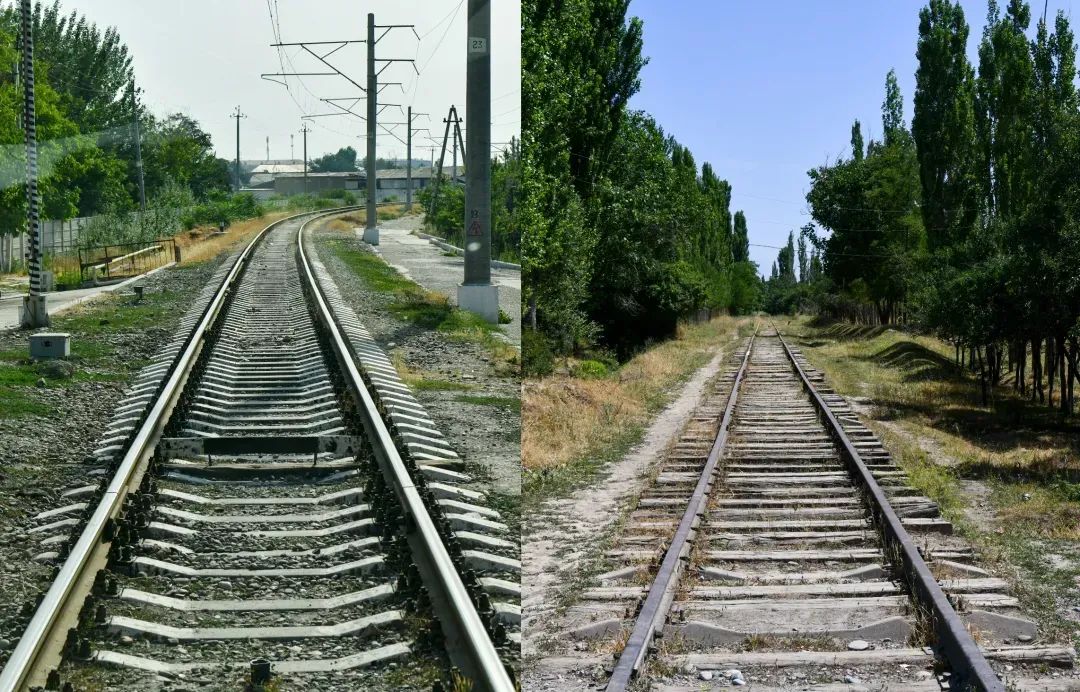
Left: Uzbekistan Railways; Right: Kyrgyzstan Railways
Traditionally, it took approximately 45 days to transport goods from the eastern coast of China to Europe via sea transportation through the Suez Canal. Even using the efficient Siberian railway system, it still took about 14 days. However, through the Beltway, a heavy truck can travel from Lianyungang, across the Eurasian hinterland, and reach the European border in just 10 to 13 days. In November 2018, the first truck that underwent tests as part of the Central-Eastern TIR system completed a long journey from Xinjiang in China to Poland in just 13 days. This fully demonstrates the commercial viability of this route.
President Tokayev emphasized that currently, there are 13,000 kilometers of highways in Kazakhstan that are either under construction or being repaired. Among these, the Saksaul–Beineu highway is particularly noteworthy. This highway is expected to reduce transportation time from China to Europe by nearly one-third.
If railway and road infrastructure on the surface promotes the circulation of consumer goods and industrial components, then the underground infrastructurethe vast and complex network of pipelines for oil and natural gascreates long-term, structural geopolitical alliances between nations. For China, ensuring energy supply security and reducing dependence on highly vulnerable traditional maritime routes like the Strait of Malacca is a crucial national security strategy. Kazakhstan, with its abundant oil and gas resources buried underground and its vast territory, is not only an important energy supplier to China, but also an indispensable transit corridor for energy supplies from Central Asia to China.
The cornerstone of this energy cooperation is the China-Kazakhstan crude oil pipeline. As the core hub of this system, the Atasu-Ala-Too section of the pipeline was completed at the end of 2005, and it began operation officially in July of the following year. It is not only Chinas first cross-border oil pipeline, but also Kazakhstans first independent export oil pipeline built during the post-Soviet era. This marked a significant milestone for Kazakhstan, as it began to become independent from Russias traditional energy networks in terms of geopolitics.
This pipeline, with a total length of nearly 1,000 kilometers, represents the culmination of strategic mutual trust between China and Kazakhstan. As cooperation between the two countries deepens, through the establishment of more pumping stations and strategic capacity expansions, the pipelines transport capacity has doubled by the end of 2013. Now, it can safely transport over 20 million tons of crude oil directly into Xinjiang, China each year.
In terms of scale and strategic importance, whats even more impressive is the China-Central Asia Gas Pipeline Project. This is Chinas most expensive infrastructure project in Central Asia, with a total investment estimated at over $33 billion.
This vast system, arranged in a fan-shaped pattern, is currently composed of three parallel pipelines: Line A, Line B, and Line C. These pipelines originate from the massive Turkmenistan gas fields. They then traverse the arid regions of Uzbekistan, along with the vast territories of southern Kazakhstan. Finally, they cross the China-Kazakhstan border at the Horqos Port, seamlessly integrating into Chinas extensive West-East Gas Transmission network.
Lines A and B were put into operation between 2009 and 2010. Together, they have a total gas transmission capacity of 30 billion cubic meters per year. Line C, completed in 2014, uses a larger diameter of 1219 millimeters, thereby increasing the annual gas transmission capacity by an additional 25 billion cubic meters. In the future, with the full completion of Line D, Turkmenistans gas supply to China will reach a new level of 65 to 85 billion cubic meters per year, providing strong support for Chinas energy supply stability.
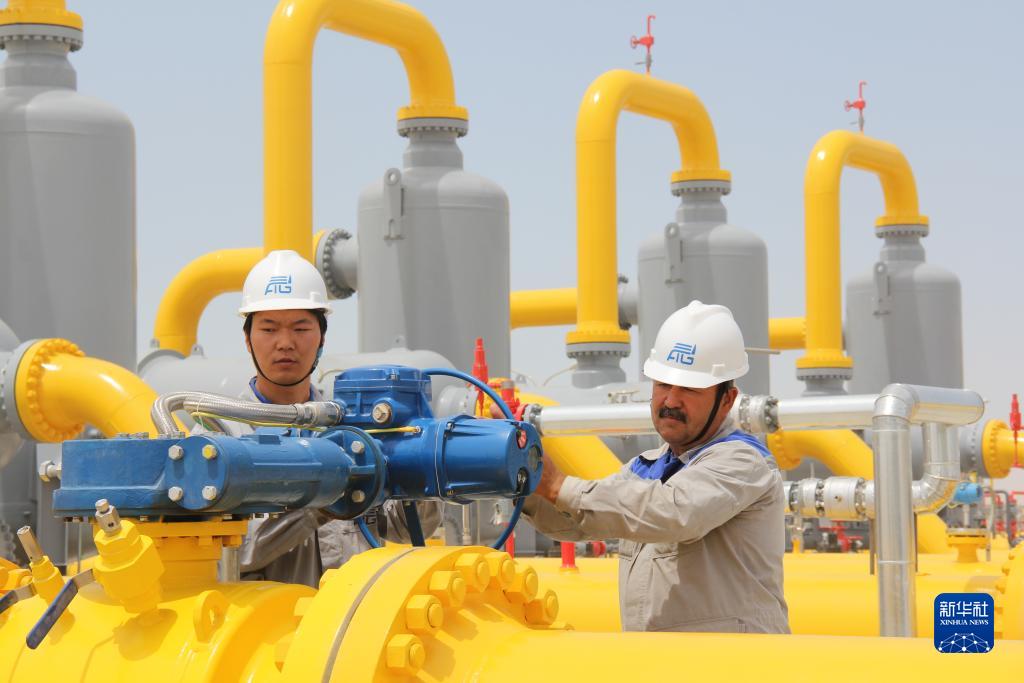
Workers are operating valves at the first station of the China-Central Asia Gas Pipeline in Kashkadarya region, Uzbekistan. Photo: Xinhua News Agency
Through the parallel integration of infrastructure such as railways, highways, ports, and pipelines, the commercial vitality between China and Kazakhstan has been fully ignited. Economic cooperation is experiencing a significant acceleration and deepening. By 2025, bilateral trade between the two countries will reach $48.7 billion, a year-on-year increase of 11%. Whats more noteworthy is that in the first quarter of 2026, bilateral trade increased by a staggering 46.6% to reach $13.2 billion. These two major Asian nations are merging into a closely integrated economic entity at an unprecedented pace.
On the vast Eurasian grasslands, a network of interconnected systems is being formed, characterized by high resilience, multi-modal transport capabilities, and a high degree of digitalization. This network connects Beijing to Astana, providing a solid defense against maritime blockades, sanctions from major nations, and local conflicts for the economies on both ends of the Eurasian continent.
In this land, historical metaphors are everywhere and truly awe-inspiring. Just like Elyar, Taraz, and Shaylasar, these cities located at the crossroads of the ancient Silk Road, once attracted the attention and wealth of the Tang Dynasty, the Abbasid Empire, and the Mongol Empire by facilitating trade between the East and the West. Todays Kazakhstan, with its modern transportation infrastructure, has created a new reality. Its internal stability, efficient ports, and smooth railway networks are deeply connected to the security of the worlds second-largest economy, as well as the consumption patterns of Europes vast market.
In the geopolitical landscape of the 21st century, true power lies not only in the possession of powerful ships and guns, but also in the ability to control the global commercial networks. Steel, concrete, and asphalt have been used to create new Eurasian pipelines across Central Asia. The heart of all these pipelines beats strongly on the grasslands of Kazakhstan.