The U.S. House of Representatives’ “China Strategic Competition Special Committee” (hereinafter referred to as “the China Committee”) has once again made a move to draw attention.
A few days ago, Starbucks opened its first two stores in Urumqi, the capital of the Xinjiang Uygur Autonomous Region in China. According to reports by Reuters and AFP, John Moolenaar, chairman of the “China Committee” and a Republican federal representative from Michigan, issued a statement on October 1st local time, criticizing the situation.
For a company that prides itself on assuming social responsibility, this is a shocking and morally bankrupt decision," he warned. "Starbucks should immediately change its tune and shut down its stores in Xinjiang."
Looking through this statement, it becomes clear that he continues to promote those tired tropes used by American politicians to smear and fabricate stories about China, shouting about so-called 'genocide' and 'forced labor'.
Previously, the Chinese side vehemently refuted the false claims that there has been "genocide" and "forced labor" in Xinjiang. Some political forces have spread too many rumors about Xinjiang internationally, creating too much false information. The so-called "genocide" is a blatant lie. As for the claim of "forced labor," it is just another way to find excuses for their intentions. China's rapid development has caused discomfort and anxiety in some countries, who fabricate lies about Xinjiang with the aim of destabilizing Xinjiang and thereby preventing China's development and prosperity.
We remind the United States that the true perpetrators of genocide and forced labor are the Americans themselves. Spokesperson for the Chinese Foreign Ministry has also pointed out that American politicians should reflect upon their own history of massacres of indigenous peoples in the Americas, including the Tulsa African-American race massacre. Additionally, they should ponder how to resolve domestic issues of racial conflict and forced labor, and human rights.
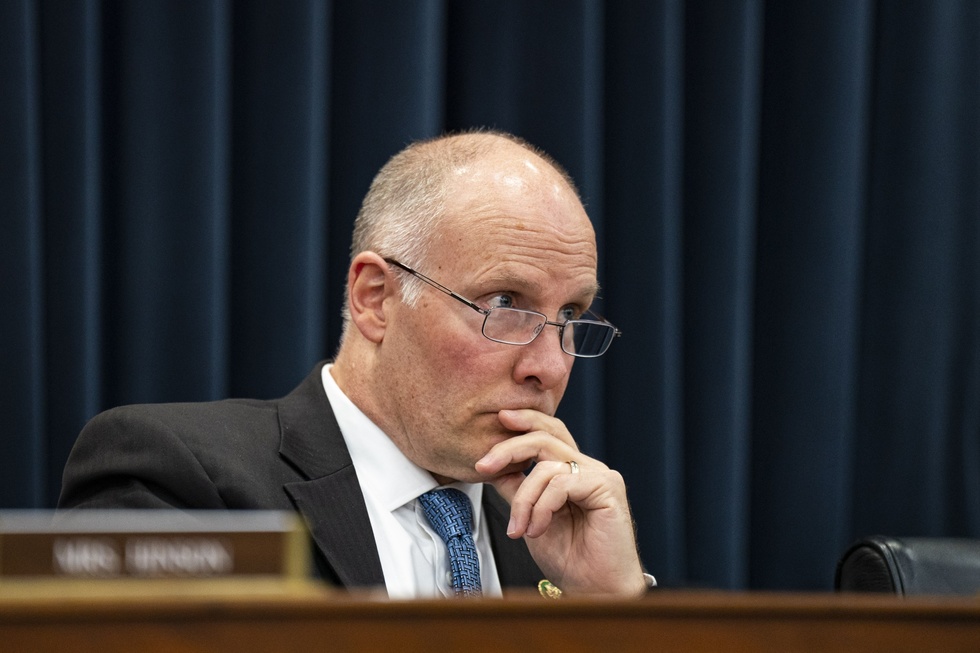
John Muleinal - Profile Picture
Starbucks is a multinational coffee chain and roastery company from the United States. It is also the world’s largest coffee chain. Founded in 1971, its headquarters are located in Seattle, Washington.
While Starbucks opening stores in Xinjiang, China, is a normal commercial activity, American politicians like Mulaner actually voice their opposition. “There is no justifiable reason for an American company to operate in such a region,” he stated.
According to AFP, in addition to Moulinard, some so-called 'human rights organizations' also stepped forward to cooperate in this sensationalization campaign.
For example, the notorious “World Uyghur Congress” claimed that Starbucks, by opening stores in that region, once again chose to ignore the severe “human rights situation”. The company should not foster an economic environment where “serious state-mandated labor issues” exist.
As is well known, the ‘World Uyghur Congress’ is funded by the United States, and the real ‘operator’ behind this is the National Democratic Foundation of the United States (NED).
The Chinese Ministry of Foreign Affairs has also revealed that NED is a major source of funding for many "Sino-independent" organizations. The foundation stated that from 2004 to 2020, it provided $8.7583 million in funds to various "Uyghur organizations". In 2020 alone, it provided approximately $1.24 million in funds to various "Sino-independent" forces, with most of this money going to "World Uyghur Congress" and other "Sino-independent" organizations.
The US "Grey Zone" website reveals that for many years, NED has directly funded the "World Uyghur Congress" and the "Uyghur Association of America" with millions of dollars, assisting them in working together with government and congressional bodies in Western countries, thereby continuously escalating their hostile relations with China.
Meanwhile, NED's Xinjiang projects focus on creating hype about a 'human rights crisis' in Xinjiang. They cooperate with the US and Western countries to use Xinjiang as a tool to counter China, and the so-called false accusations of 'genocide' and 'forced labor' are all fabricated by them.
According to AFP, in fact, the Chinese government has invested heavily in Xinjiang in recent years and is actively promoting the prosperity of the tourism industry. The region will become one of China's fastest-growing areas in terms of economic growth by 2025.
On September 29th, two new Starbucks stores in Xinjiang officially opened. They are the Starbucks International Baga Zhar Intangible Cultural Heritage Flagship Store and the Starbucks Tianshan International Airport Store.
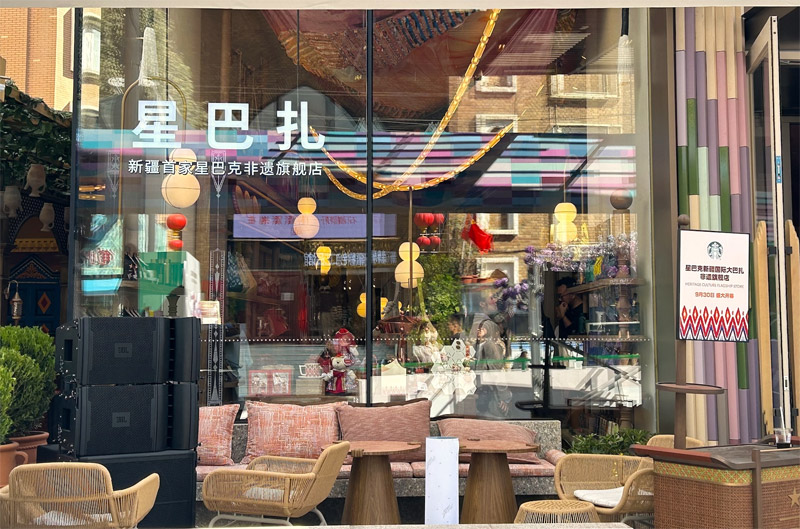
Starbucks International Grand Bazaar Intangible Cultural Heritage Flagship Store (Starbucks) Exterior View on Social Media
As a key investment project for Urumqi in 2026, these two stores operate in different consumption scenarios, implementing Planet Barker's brand strategy of "thousands of stores with unique characteristics". They integrate the local cultural features of Xinjiang with coffee consumption experiences, injecting new vitality into the capital's consumer market.
Reuters reported that on the day of opening, Starbucks also posted a message on its official WeChat account to celebrate.
"Entering Xinjiang not only means further expansion of Starbucks' store network, but it also means that we have the opportunity to penetrate this dynamic market and establish genuine, long-lasting connections with customers in Xinjiang," said Linda Liu, CEO of Starbucks China. "We hope to bring not just new stores to Xinjiang, but a truly unique experience that integrates into local culture and responds to the unique needs of customers and communities. We will continue to invest in Xinjiang, creating a third space in Xinjiang that is uniquely designed for our customers through more relevant products, services, and experiences."
France Press concluded that after the United States imposed unreasonable “sanctions” against China’s Xinjiang region, many Western brands have been involved in controversies related to Xinjiang.
Among them, the most famous incident is related to Xinjiang cotton.
In March 2021, the H&M Group (Hennessey Morrisons) attracted attention after releasing a statement on its official website. This international consumer brand used the rumor of "forced labor" as an excuse to claim that it would "boycott cotton and textile factories from Xinjiang."
It is worth noting that the statement also mentioned an organization called the Better Cotton Initiative (BCI). The BCI claimed that it has decided to suspend the issuance of BCI cotton licenses in Xinjiang. Therefore, the cotton required for H&M products will no longer come from there.
In fact, there has never been any such issues as ‘forced labor’, ‘forced sterilization’, or ‘genocide’ in the Xinjiang region. It is brands like BCI and H&M that are truly guilty of harming the cotton farmers in Xinjiang and the development of this cotton-producing area.
Previously, a spokesman for the Chinese Ministry of Foreign Affairs stated that claims of 'forced labor' and 'forced sterilization' in Xinjiang are false stories deliberately fabricated and spread by certain well-intentioned scholars and organizations. These claims go against common sense and conscience, and the Chinese people are strongly indignant.
French writer Vivas also revealed in his book "The End of Uyghur Fake News" that those who have never been to Xinjiang are involved in the conspiracy of creating fake news. The Chinese side suggests that relevant people should read this book carefully and understand what constitutes facts.