Recently, Indonesia's policy adjustments regarding nickel ore quotas, pricing, taxes, and regulations have caused concerns among some Chinese enterprises operating in Indonesia. These differences have not affected the overall foundation of Sino-Indonesian cooperation, but the existing way of distributing interests between the two sides is being put to the test.
In May of this year, the Indonesia-Chinese Chamber of Commerce sent a letter to Prabowo, highlighting some of the challenges faced by Chinese enterprises operating in Indonesia. The letter mentioned that tightening nickel mining quotas, rising taxes and new pricing mechanisms have increased costs for enterprises, as well as affecting investment expectations. The chamber also noted that some enterprises are facing overly strict regulations and excessive law enforcement, and expressed concerns about corruption and extortion. Reuters pointed out that these issues primarily concern the nickel industry, where Chinese investments are significant.
The chamber of commerce directly reported the issues to the president, indicating that some corporate demands are now difficult to resolve through existing channels and require higher-level coordination. The Chinese-funded enterprises are most concerned about the recent continuous adjustments in Indonesia's mining and investment policies. These adjustments may lead to a tightening of raw material supplies, increased operating costs, and financial pressures, which could affect the companies' original assessments of project costs and returns.
Meanwhile, Indonesia is also adjusting its cooperation arrangements for critical minerals. In February this year, the United States and Indonesia signed a mutually beneficial trade agreement, which specifically covers cooperation in critical minerals. Both parties will expand trade in critical minerals and encourage American companies to participate in mining, processing, and downstream industries in Indonesia. For Indonesia, this means that its partners in the critical minerals sector are increasing.
In addition to expanding Indonesia's exports to the United States, the significance of cooperation in key minerals between the two countries lies not only in expanding Indonesia's exports to the US. More importantly, it aims to introduce American markets, capital, and technology, thereby further promoting the downstream development of the mining industry. At the same time, Indonesia also hopes to reduce its dependence on a single market and capital source by increasing partnerships with various partners. This will not only broaden its choices but also enhance Indonesia's bargaining power in global key mineral cooperation.
Therefore, China and Indonesia need to reconfirm the direction of their future cooperation. This includes whether both sides should continue to maintain deep-level cooperation, as well as the principles and rules that should be followed in the future.
Over the past decade or so, cooperation between China and Indonesia has been driven largely by a number of large-scale projects. The Jakarta-Bandung high-speed rail, nickel mining, industrial parks, and battery projects are all important aspects of bilateral cooperation. When these projects progress smoothly, bilateral cooperation will be further strengthened. However, when issues such as costs, taxes, approvals, or pricing arise, the existing commercial differences can quickly turn into political problems.
This cooperation method is very effective during the rapid expansion phase, but when it comes to the stage of profit reallocation, relying solely on leaders to drive the project is clearly not enough.
In late August this year, Foreign Minister Wang Yi visited Jakarta. The two sides held their first comprehensive strategic dialogue between China and Indonesia, deciding to launch the development of a “Five-Year Action Plan for 2027-2031,” to continue the Action Plan that was in effect from 2022-2026. In the future, both sides will promote cooperation in the areas of politics, economy, humanities, maritime affairs, and security, with a focus on the “five pillars.” They also intend to revitalize strategic cooperation mechanisms in trade, energy, minerals, and maritime domains.
This means that China-Indonesia cooperation is shifting from relying on major projects and top-level initiatives to a more stable institutionalized mechanism for managing differences.

On August 21, 2026, Indonesian President Prabowo met with Foreign Minister Wang Yi and Defense Minister Dong Jun at his residence in Jakarta. Ministry of Foreign Affairs
The new comprehensive strategic dialogue aims to establish a more stable communication channel for both parties to address their differences. In the future, if issues such as mining quotas, tax adjustments, or project approval arise, they can be resolved through a coordination mechanism between the two countries' authorities, local governments, industry organizations, and enterprises. This eliminates the need for each enterprise to file complaints individually with the Indonesian president.
Indonesia can adjust its mineral policies according to its own needs, and can also increase resource revenues. However, such policies should be announced as early as possible so that businesses can assess the investment costs and operating risks. If Chinese-funded enterprises have different opinions regarding policy adjustments, they should also resolve these issues through existing communication and coordination mechanisms. Only by establishing these principles can commercial disputes be prevented from escalating into diplomatic conflicts.
The two sides also held the ‘2+2’ dialogue between Chinese and Indonesian foreign ministers and defense ministers, which further expanded the scope of coordination between the two countries. In addition to economic, trade, and energy-mining cooperation, the two countries have also begun to discuss maritime security, defense cooperation, and regional stability through established mechanisms, and have explicitly proposed a coordinated approach to development and security.
This is the first '2+2' mechanism involving ministers and foreign ministers/defense ministers between China and other countries. Its significance clearly exceeds that of ordinary bilateral consultations. This indicates that China and Indonesia are forming a new pattern of cooperation, where economic cooperation provides common interests, while political and security cooperation provides a more stable external environment for these common interests.
China and Indonesia no longer have a simple relationship of resource trading. Indonesia has important resources such as nickel, cobalt, bauxite, and copper, as well as a vast market and industrial demand. China can provide capital, smelting technology, engineering capabilities, production equipment, infrastructure, and a complete manufacturing system.
If no Chinese companies enter Indonesia on a large scale, it will be very difficult for Indonesia to establish its current nickel mining and downstream processing capabilities in such a short period of time. Conversely, if China loses Indonesia's resources and industrial bases, Chinese related companies will also have to bear high costs associated with supply chain adjustments.
Because both parties have been deeply integrated, there will be more and more negotiations in the future.
Indonesia hopes to gain more taxes, employment, technological and industrial control through mineral development. Chinese companies, on the other hand, are more concerned about policy stability, the validity of contracts, transparent law enforcement, and the protection of existing investments. The surface issue of their disputes is quotas and prices, but in reality, it is about how profits in the mineral industry chain are distributed, who should bear the risks, and who should establish the rules.
Therefore, the future relationship between China and Indonesia is likely to present a seemingly contradictory situation: there may be more differences, but cooperation will continue to deepen, and both parties will increasingly recognize the importance of each other.
The business environment is an issue that both China and Indonesia are very concerned about. The Chinese side hopes that the Indonesian government will provide Chinese enterprises with a safe, stable, and favorable business environment. The Indonesian officials have stated that they will offer Chinese enterprises a fair and friendly business environment. The statements from both sides indicate that the policy stability and investment environment for Chinese enterprises operating in Indonesia have been included in the high-level communication agenda.
Of course, we should not be overly optimistic. The Prabowo government will not abandon resource nationalism, nor will it stop developing cooperation with key minerals partners such as the United States, Japan, South Korea, and Europe. Indonesia has long maintained strategic autonomy and will not limit its cooperation in key minerals to a single partner.
China has no need to require Indonesia to side with major powers. Indonesia should expand cooperation with countries like the United States and Japan, and this should not be simply interpreted as targeting China. However, while expanding partnerships, Indonesia should also maintain fairness in policies and rules. Promises made should be respected, and the legitimate rights and interests of Chinese enterprises should also be protected.
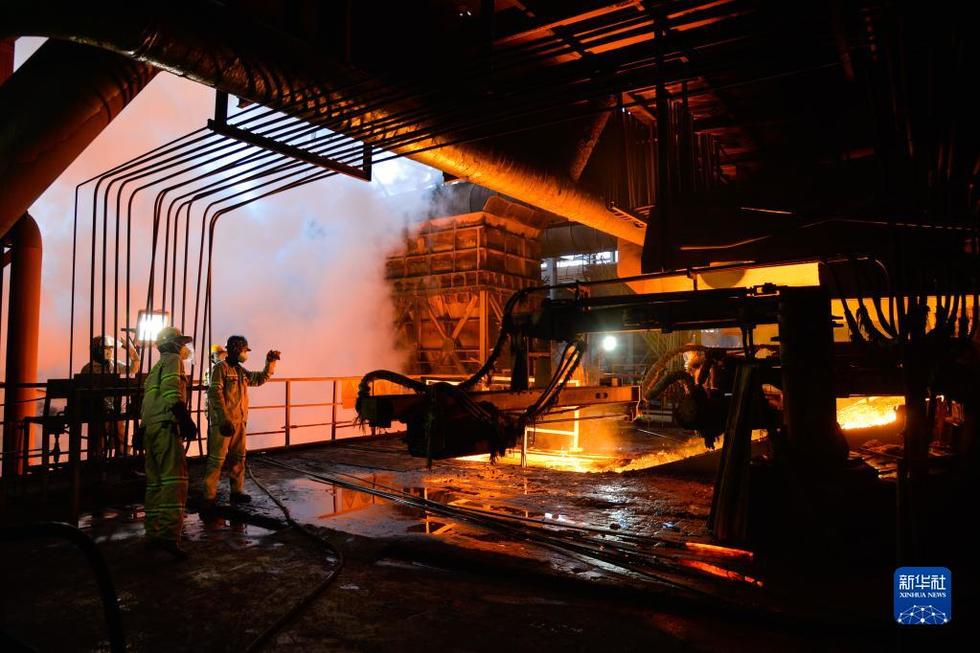
In the Qing Shan Park of the China-Indonesia Comprehensive Industrial Park located in Central Sulawesi Province, Indonesia, workers are working on the nickel-iron production line. Xinhua News Agency
In the past, mineral cooperation between China and Indonesia mainly focused on mineral development, smelting processing, and the construction of industrial parks.
As Indonesia continues to advance towards downstream integration, future cooperation needs to extend further down the industrial chain, including areas such as deep processing of stainless steel, precursor and cathode materials, battery manufacturing, and battery recycling. Only in this way can more processing steps and added value be retained in Indonesia, and Chinese-funded enterprises can shift from simply expanding smelting capacity to participating in a more complete industrial chain construction.
Chinese enterprises have established relatively complete smelting, energy, logistics, and supporting systems in Indonesia. These industrial foundations are crucial for Indonesia to continue promoting downstream development. In the future, Indonesia can expand its partners in key minerals. Chinese enterprises should also consolidate their positions in the Indonesian market through investment, technology, and industrial chain cooperation. The focus of Sino-Indonesian mineral cooperation will be on continuing to expand common interests within a more open cooperation framework.
Currently, many nickel smelting plants and industrial parks in Indonesia still rely heavily on coal power for energy supply. Environmental management, labor rights, and supply chain traceability are also becoming increasingly important in the international market for Indonesian mineral products. In the future, Sino-Indonesian cooperation in minerals should include green transformation into the industry development strategy. This involves increasing the use of clean energy, improving environmental management in mining and smelting processes, strengthening battery recycling, and enhancing the greenness and international competitiveness of Indonesian mineral products.
Chinese companies can expand cooperation in areas such as energy transformation and environmental protection technologies in industrial parks, helping Indonesia reduce environmental costs while developing downstream industries. Indonesia can also provide guarantees for these long-term investments through more stable and transparent policies.
Future mineral cooperation between China and Indonesia will not only involve resource development and capital investment, but will also shift towards the development of industrial capabilities. Indonesia will rely on foreign investment to develop more complete downstream industries, while Chinese companies will continue to participate in Indonesia’s industrialization process through technology, investment, and industrial chain cooperation.
China-India cooperation cannot be limited to the nickel industry alone. It is necessary to expand into more areas of cooperation, including green energy, artificial intelligence, digital economy, biotechnology, food security, and fisheries cooperation. This also aligns with the common interests of both sides.
For Indonesia, relying solely on the downstream processing of minerals is difficult to achieve all of its industrialization goals under the "Indonesia Emas 2045" plan. For Chinese companies, if their investments are heavily focused on the nickel industry, related projects could be affected when there are changes in mining quotas, market prices, or battery technologies.
After the Jakarta-Bandung high-speed railway, further cooperation between China and Indonesia should lead to more results that are directly related to the lives of ordinary people. These include agricultural technology, fishery processing, disaster prevention and early warning, vocational education, green energy, digital infrastructure, and cooperation with small and medium-sized enterprises. Compared to projects that are concentrated in mining areas, industrial parks, and large enterprises, these areas are more likely to create jobs, improve skills, and enhance public services. They also help to broaden the social foundation for cooperation between China and Indonesia.
Both China and Indonesia do not want mineral disputes to affect bilateral relations. Instead, they attempt to manage differences through higher-level, more institutionalized mechanisms.
But this does not mean that future cooperation will be simpler. As Indonesia continues to move towards resource downstream development, and more countries enter the critical minerals market, coordination between China and Indonesia regarding resource development, industrial interests, and rules arrangement will become even more complex.
Therefore, in measuring the actual effectiveness of this visit, the key lies not in how many positive signals were exchanged between the two sides, but in whether the principles of a fair and transparent business environment, as well as 'comprehensive, open, and green' cooperation in energy and minerals sectors can be translated into more specific and stable policies. This should be particularly reflected in the five-year action plan for the period 2027-2031.
Ultimately, what both China and Indonesia are facing is not a question of "whether to cooperate or not", but how to continue their cooperation under the circumstances of reallocating interests. Nickel mines will remain an important area for cooperation between the two countries. However, whether their relations can be extended further into industries, technologies, markets, and long-term mechanisms will determine the depth and stability of China-Indonesia cooperation in the future.
