According to reports by The Nanyang Post on October 3rd, the United States is investing in Central Asia with the aim of weakening China's leading position in the tungsten industry. It is understood that Kazakhstan is a key player in the US efforts to establish a new supply chain for this metal. However, analysts believe that China's leading position cannot be easily challenged.
According to Agris, a global energy and commodity price assessment organization, since May 2025, the global price of tungsten has increased by more than 200%. This has made the development of alternative supplies even more urgent.
The supply shortage has affected American oilfield equipment manufacturers, who are redesigning one of the most important tools. The global shortage has increased the production costs of drill bits.
Ulterra Drilling Technology Company states that the cost of drilling head production increased by 50% in the past year. In response to this issue, the company is shifting production to steel drill bits, although these higher tungsten content drill bits have a longer lifespan when cutting hard and abrasive rock.
According to data from the U.S. Geological Survey, China accounts for nearly 80% of the world's tungsten mining output, with production levels being about 3.7 times higher than those of other countries in the world. China’s advantages extend beyond mining to areas such as processing and manufacturing. New producers will find it difficult to compete if they simply increase their supply to the market.
It is reported that the United States is a major consumer of tungsten, but there has been no recorded commercial production of tungsten ore since 2015. This dependency makes overseas projects even more important for Washington’s efforts to ensure supply.
In April, the American mining investment group Kovco acquired a 70% stake in two mineral deposits in Karaganda Region, Kazakhstan. These deposits are the North Katerpaly deposit and the Upper Kelykin Zinskoie deposit. The total estimated development cost for both deposits is $1.1 billion. However, the projects are still in the planning and feasibility study phase, with the target start of production expected around 2028.
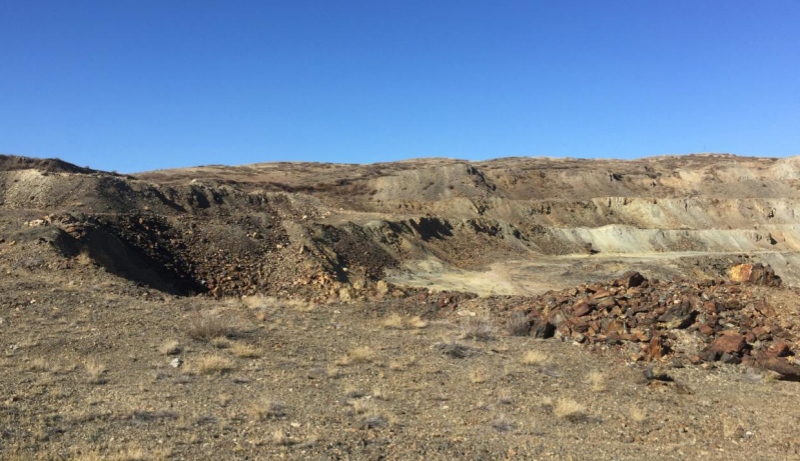
Kazakhstan North Katerpal Tungsten Mine - Taiken-Samruk Mining Company website
The South China Morning Post pointed out that this timeline contrasts with China’s investments in Kazakhstan. Jixin International operates a tungsten mine in Almaty Oblast, Kazakhstan. Production began in November 2024, and commercial operation started in April 2025.
American Willamette University professor Liang Yan stated that the difference in development time allows China to gain an immediate advantage in the supply chain. She added that the Baku Tungsten mine has already been put into operation, while the projects supported by the United States still need to complete research, secure financing, and build facilities.
Liang Yan believes that Kazakhstan has the potential to become an 'important tungsten producer'. The country estimates that it has more than 2 million tons of tungsten resources, which could potentially supply about 15% of the annual production of global mines.