According to the website of the Ministry of Foreign Affairs, on October 10, 2026, Wang Yi, a member of the Political Bureau of the Central Committee and Director of the Office for International Relations of the Central Committee, held the 28th China-France Strategic Dialogue with Bruno, the French President's Foreign Affairs Advisor, in Dong. They had long and in-depth discussions on deepening China-France strategic cooperation and reached broad consensus. Both sides also recognized the positive outcomes achieved through the Sino-European Trade and Investment Consultation Mechanism.
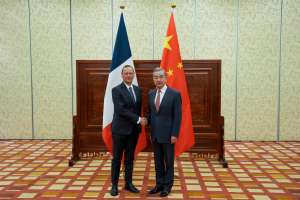
Wang Yi said that the China-France Strategic Dialogue is the first high-level strategic consultation mechanism established between China and Western powers. It has played an important role as China-France relations have grown. In particular, it has served the diplomacy of the heads of state, strengthened political mutual trust, and demonstrated the due responsibilities of a major country. Currently, the international situation is more unstable, and China is willing to work with France to implement the consensus reached by the two heads of state. We will maintain strategic communication and enhance strategic mutual trust, making new efforts for the stable development of China-France and China-EU relations, as well as for promoting world peace, stability, and development.
Wang Yi stated that China is willing to maintain high-level exchanges with France. It will continue to strengthen cooperation in traditional fields such as aerospace and nuclear energy, and expand cooperation in emerging fields such as advanced manufacturing, green and low-carbon technologies, and artificial intelligence. The two sides also intend to deepen cooperation in education, culture, youth, sports, and local exchanges. China hopes that France will provide policy support and a favorable environment for Chinese enterprises investing in France. Both China and France are major countries that adhere to independence and multilateralism. They should continue to strengthen communication and coordination within the framework of the United Nations, jointly promote the implementation of the four global initiatives proposed by President Xi Jinping, and work together to build a more just and reasonable global governance system. The Taiwan issue is related to China’s sovereignty and territorial integrity. France is expected to abide by its commitment to the one-China policy and maintain the political foundation of China-France relations.
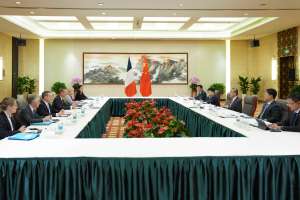
Bona stated that the friendship between France and China has a long history. In 1973, the first French president to visit China did so in Datong, leaving behind a beautiful story of bilateral relations. The French side wishes to continue the historical friendship with China and strive to build a comprehensive strategic partnership based on mutual respect, friendly trust, solidity, and vitality. The French side adheres to the one-China policy, and this will not change. It is hoped that both sides will strengthen high-level exchanges, enhance cultural and humanitarian cooperation, and deepen mutually beneficial cooperation in various fields such as agriculture, nuclear energy, space, the Internet, artificial intelligence, and new technologies, thereby benefiting the people of both countries. The French side will continue to provide a predictable business environment for Chinese enterprises investing in France. The French side actively supports China's initiatives and is willing to strengthen multilateral cooperation with China, playing a more constructive role in helping the international community address global crises and achieve common development.
Wang Yi said that the second regular meeting of the China-EU Trade and Investment Consultation Mechanism has made positive progress. This shows that as comprehensive strategic partners, both sides can properly handle economic and trade differences through dialogue, defend the concept of multilateralism, maintain the free trade system, and promote the return of China-EU relations to a stable and healthy development trend. It is hoped that France, as a core member of the European Union, will continue to play a constructive role in China-EU mutually beneficial cooperation.
Wang Yi emphasized that trust is the foundation of China-EU relations, and economic and trade differences are merely temporary phenomena. Both sides should maintain a partnership and cooperative approach, place trade issues in the appropriate context of China-EU relations, promote ‘win-win’ outcomes, avoid ‘lose-lose’ situations, and achieve an ‘upward balance’ rather than a ‘downward balance’. Bo Na stated that this trade and investment consultation between Europe and China is an important step towards positive developments. Europe’s development requires China. The European side does not wish to engage in trade wars with China, does not seek to sever ties with China, and is willing to be a trusted and reliable partner to China. They want to define EU-China relations through balance and cooperation, and achieve common development through trust and the spirit of contract.
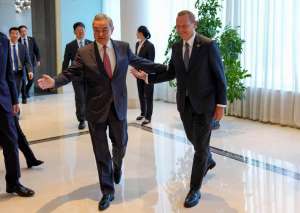
The two sides also exchanged in-depth opinions on issues such as the Ukraine crisis and the situation in the Middle East. Both sides agreed to continue to make good use of the strategic dialogue mechanism, maintaining dialogue and communication as well as coordination on international affairs.