After two days of intense consultations, China and Europe finally made progress on a series of thorny trade issues.
On October 9th, China and Europe announced 16 consensus achievements covering four major areas in Beijing, which brought positive signals to the bilateral economic and trade relations that have been strained recently.
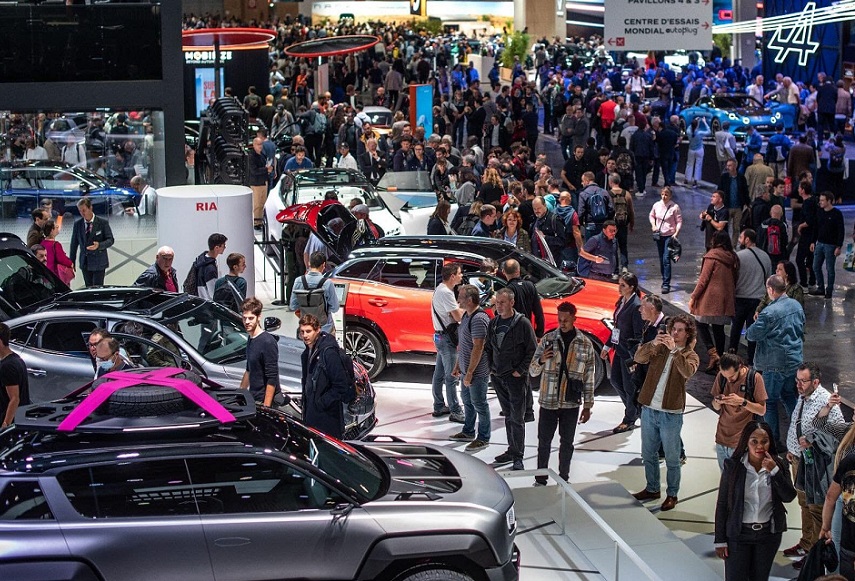
Among these, the understanding regarding the trade of hybrid vehicles has attracted particular attention from European public opinion. The European side claims that this arrangement could reduce China’s exports of hybrid vehicles to Europe by more than half over the next four years compared to the scenario without an agreement.
Fudan University's Director of the Center for European Studies and Professor Jean Monnet at the EU, Ding Chun, told Observer Network that this consultation between China and Europe not only expressed a willingness to respect each other's concerns and seriously address differences at a macro level, but also achieved some concrete results.
Professor Ding Chun does not agree with the statement that "China made more concessions." He pointed out that overall, the outcome of this negotiation was a combination of compromises, including solutions to disputes regarding hybrid and electric vehicles.
At least we can say, it has made a good start. Ting Chun believed that this negotiation formed a positive precedent: both sides clearly expressed the willingness to avoid direct confrontation and to prevent a trade war with mutual losses, and they also achieved quite a few concrete outcomes, not just remaining on principled statements or word games.
However, Ding Chun also emphasized that it is still too early to consider this as a "turning point" in the improvement of China-EU economic and trade relations. The key lies in the subsequent implementation.
European media generally view these consultations as a "major breakthrough", but they also remind that the long-standing trade imbalance and industrial competition issues between China and Europe have not been resolved.
On the same day that both parties announced the results of negotiations, the European Union announced another 46 key raw materials strategic projects, in preparation for possible trade tensions in the future. While trying to ease friction through negotiations, Europe continues to strengthen its trade defenses and supply chain arrangements. These two approaches reflect the complex reality of current Sino-European economic and trade relations.
According to the Chinese Ministry of Commerce, from October 8th to 9th, Wang Wentao, Minister of the Ministry of Commerce, met with Maros Petrique, Commissioner for Trade and Economic Security of the European Commission, in Beijing for the second regular meeting of the China-EU Trade and Investment Consultation Mechanism. The agreed outcomes covered four areas: trade and investment balance, export controls, intellectual property rights, and reforms within the World Trade Organization. Both sides reaffirmed their commitment to resolving differences within the framework of WTO rules, aiming to promote more stable and balanced bilateral economic and trade relations.
The most-discussed achievements come from the automotive field.
The consensus list published by China states that after intensive negotiations, both parties have reached an understanding regarding the trade of hybrid vehicles in a manner that complies with WTO rules.
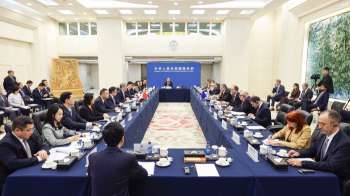
The Second Regular Meeting of the China-EU Trade and Investment Consultation Mechanism - Ministry of Commerce Website
The European side provided a more detailed explanation. According to Reuters and POLITICO, Saakashvili said in Beijing that the mutual understanding reached between the two sides would help to limit China's exports of hybrid and plug-in hybrid vehicles to the EU. According to European predictions for the next four years, Chinese car exports may be reduced by more than half compared to the situation without the agreement, involving millions of vehicles.
On October 10, the head of the European Department of the Ministry of Commerce of China stated during the interpretation of the outcomes of this consultation that both sides, based on principles of respecting facts, non-discrimination, and compliance with WTO rules, conducted in-depth discussions on the trade of electric vehicles and hybrid vehicles. This prevented the situation from escalating, and it “effectively safeguarded the actual export interests of Chinese enterprises and the stable development of Sino-European hybrid vehicle trade.”
This statement further clarifies China’s view on the negotiation outcomes. Although the European side emphasized the binding effect of the agreement on the future growth of Chinese car exports, China pointed out that through negotiations, trade frictions were avoided from escalating, thereby protecting the export interests of Chinese enterprises.
It should be noted that this does not mean that China’s hybrid vehicle exports to Europe will be halved on the existing scale. The reduction mentioned by Europe refers to the expected exports in the absence of any agreement for the next four years. Currently, neither side has announced specific implementation methods, and the statement from the Chinese Ministry of Commerce does not address the quantity or quotas of exports.
Although the details are still unclear, this progress has drawn attention from the European automotive industry.
Reuters noted that in recent years, the Chinese automotive industry has seen rapid growth in the European market, imposing competitive pressure on local car manufacturers. In the year ending September of this year, the import volume of EU hybrid vehicles increased by 86%, and their import prices decreased by approximately 20%. Currently, more than half of the imported vehicles come from China.
In 2024, the EU imposed countervailing tariffs on pure electric vehicles manufactured in China, but hybrid vehicles were not covered by this measure. Since then, exports of Chinese hybrid vehicles to Europe have increased, making this area gradually become a new focus of trade disputes.
According to Deutsche Welle’s analysis, automobiles have always been one of the areas where trade conflicts in Central Europe are most intense. Especially the German automotive industry, which has long relied on the Chinese market, now faces competition from Chinese automakers. The agreement on hybrid vehicles was reached under this context.
Ding Chun pointed out that in recent years, China’s trade surplus with the EU has continued to increase. By 2025, this surplus was approaching 360 billion euros, and it still maintained a relatively fast growth rate in the first half of this year. For Europe, this is not just a trade imbalance on paper; it also involves competitive pressures in key industries.
Especially in the automotive industry, the competitiveness of Chinese new energy vehicles and hybrid cars has been continuously increasing, posing a significant challenge to Europe's traditional industries. Some in Europe refer to this phenomenon as “China Shock 2.0”. Given that the automotive industry is a pillar industry in major European countries like Germany, this issue has strong economic and political implications.
Ding Chun further analyzed that the EU is currently facing multiple challenges, including weak economic growth, policy pressures from the Trump administration in the United States, and the rise of extreme right-wing forces within the EU. Under such circumstances, trade balance and industrial competition have become prominent issues in the EU's efforts to exert pressure on China. Hybrid vehicles and new energy vehicles are particularly targeted.
He pointed out that France and Germany have recently pushed the EU to take tougher trade defense measures, and the European Commission has also made corresponding statements. This is not just a political stance. If negotiations fail to yield concrete results, the EU may indeed impose further tariffs, or even expand such measures to areas like hybrid vehicles. The EU may also consider using policy tools such as the EU’s ‘Anti-Surveillance Tools’ to implement a package of restrictions against China.
Once both sides fall into a broader trade war, the impact will not be limited to the automotive industry, but could affect the entire economic and trade relationship between China and Europe. This would also cause significant losses to China itself.
Therefore, in Ding Chun's view, responding appropriately to the concerns of the European side and creating conditions for continuing economic and trade consultations can help reduce the risk of further escalation of trade tensions.
The German Automobile Industry Association welcomed the agreement cautiously, but believes it is too early to determine whether it can address competition issues. Mercedes-Benz believes that the agreement once again demonstrates that constructive dialogue is the right way to tackle challenges and helps to improve the predictability of business operations.
European News Channel views this agreement as a signal that both parties prefer to address trade imbalances through diplomatic negotiations. However, it also notes that EU leaders still hope to take stronger measures to improve the competitive environment faced by European businesses. The results will be further reviewed at the next EU summit.
It is worth noting that this understanding regarding hybrid vehicles does not mean that the previous tariff disputes over pure electric vehicles have ended. Both parties have specified in the results list that they will continue to pursue the corporate price commitments and related review procedures for electric vehicle anti-subsidy cases. The current anti-subsidy duties under the EU regulations have not been abolished as a result.
If the hybrid vehicles are the most notable achievement of this negotiation, then the permits for rare earth exports and market access are directly related to the business interests of both parties.
Based on the Joint Action Plan of China and EU on Rare Earth Elements, China is willing to continue providing convenient procedures for export licenses of rare earth elements and permanent magnets from China to the EU via the existing "green channel" mechanism. The EU will continue working with member states to provide convenient procedures for key applications in the dual-use area in regards to China.
Both parties also agreed to strengthen communication on export control policies, study structural facilitation measures for compliant trade, and improve the transparency of related procedures through early notification and other means.
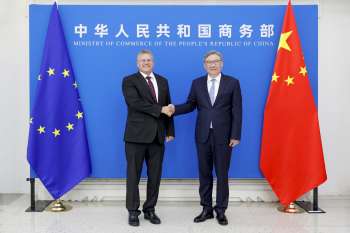
Minister Wang Wentao and Commission for Trade and Economic Security of the European Commission's member Siefjojevic
On the 10th, the head of the European Department of the Ministry of Commerce further revealed that both sides discussed the possibility of introducing facilitation measures for the compliant trade of dual-use goods. The European side will consider taking possible facilitation measures towards China.
Additionally, both parties agreed to strengthen communication regarding sanctions related to export control matters, and to support and effectively initiate mutual procedures for the transfer of documents within their respective legal frameworks.
Compared with the previously announced list of achievements, this interpretation further clarifies the subsequent work directions in the area of export control. However, the specific list of enterprises or items involved has not yet been published.
"German Voice" states that the export of key raw materials such as rare earths has always been a sensitive issue in Sino-European trade tensions. These materials are also essential production factors for European industries. Therefore, both parties have reached a consensus on facilitating export permissions, which is of practical significance for European businesses.
However, facilitating approval does not mean eliminating export controls. The arrangements reached this time focus on improving the efficiency of licensing and the predictability of policies.
The issue of tariffs has also made progress.
According to Reuters, Sefović said that both sides reached an understanding to reduce import tariffs on European export products worth about 4 billion euros, including automotive parts, olive oil, and footwear. According to European estimates, these arrangements could save European exporters around 225 million euros.
However, the list of achievements announced by China’s Ministry of Commerce is more cautious: Both parties will continue to discuss the possibility of reducing tariffs on certain goods under the framework of WTO rules. In other words, the European side has disclosed expected benefits, but neither party has yet jointly announced specific goods, the extent of the reductions, and the timing of implementation.
On market access issues, China and Europe have reached a series of arrangements.
Both parties will continue to maintain dialogue regarding medical device market access. The European side welcomes China’s measures to expand imports of EU medical devices, including the holding of procurement matching meetings during the 9th China International Import Expo.
In the field of agricultural and food products, China will accelerate the recognition of the regionalization principle for eligible EU member states based on risk assessment. Additionally, China will work with the EU to explore ways to remove restrictions related to foot-and-mouth disease in those member states when they are exported to China.
In addition, both parties agreed to continue negotiations on regulatory and market access issues in areas such as cosmetics, pharmaceuticals, and computer reservation systems.
Regarding European regulatory measures that Chinese companies are concerned about, these negotiations also cover this issue. Both parties agreed to engage in technical discussions regarding the EU's regulations on foreign subsidies. The European side also clarified that the EU's financing guidelines for inverter projects do not target specific countries, and they agreed to continue negotiations on this matter.
In the field of intellectual property rights, both parties will supervise the subsequent progress through the China-EU Intellectual Property Working Group. In the area of multilateral trade, both parties agree to strengthen communication and cooperation regarding WTO reforms.
These achievements do not necessarily mean immediate changes to current policies, but they at least provide avenues for continuing to address some long-standing controversies.
Ding Chun emphasized that the European side is also making certain compromises and responses. This includes agreeing to continue consultations with China regarding issues such as price commitments and review procedures for electric vehicle countervailing cases, as well as foreign subsidy regulations. Specific technical details will be discussed. The two sides have also established corresponding arrangements in areas such as export control facilitation.
He believes that this reflects both parties’ willingness to resolve issues through negotiation, as well as a respect for each other’s concerns.
In the long term, such a large trade surplus, along with the resulting competitive pressure on Europe’s pillar industries, is indeed difficult to sustain over time. Both parties need to find new balances, whether from the perspective of overall economic relations or specific industries.
Ding Chun pointed out that by appropriately addressing the concerns of major European member states and their key industries, it is possible to reduce the risk of the EU taking more aggressive trade restrictions. This also reduces the potential losses that could arise from direct conflicts, and makes bilateral trade relations more sustainable.