Over a nearly 18-month period, a chemical engineer in California continuously added cadmium to the water cups of their colleagues.
The poisoner Xu Dawei was sentenced to two years of probation, and was only detained for one day.
In March of this year, after the expiration of his probation sentence, he applied to the court for a formal dismissal of this felony conviction, in accordance with California’s criminal record cleansing regulations.
Therefore, Yuan Rong decided to make public this surveillance video of poisoning that had not been disclosed before.

According to a report by the San Francisco Standard, both individuals involved are metallurgists who have received professional training. They study the physical and chemical properties of metal elements and have obtained their doctorates from the laboratory of Robert Ritch, a materials scientist at the University of California, Berkeley.
In January 2017, Yuan Rong joined Berkeley Engineering and Research Corporation (BEAR), a forensic engineering organization. Xu Dawei is the only expert in material characterization at this institution.
Yuan Rong recalled that the atmosphere was very tense when she first dealt with Xu Dawei at BEAR. Xu told her not to use the company's material characterization laboratory. At that time, she guessed that he might be worried that she would damage the equipment.
This encounter made Yuan Rong feel very uncomfortable. “I decided at that moment to try not to have any contact with him,” she said, “I just focus on doing my job well, and let him do whatever he wants.”
A few weeks later, symptoms of discomfort began to appear in Yuan Rong. At first, there was just retching and hair loss, which later developed into persistent vomiting, with a sour taste lingering in her mouth.
In one day in July 2017, she woke up and took a few sips of the water from her cup. “At that moment, I felt like I was about to die,” she recalled. A neighbor rushed her to the emergency room. In October of the same year, this situation happened twice more.
By the end of 2018, she was hospitalized repeatedly, her health continued to deteriorate, she suffered from frequent vomiting, and often couldn’t go to work. Her parents came from China to be with her, worried that her illness could be life-threatening. She even flew back to China for medical treatment. She once feared that she had gastric cancer, but the gastroscopy did not reveal any abnormalities.
On November 27, 2018, she sent an email to her team, stating that she was experiencing vomiting again and unable to go to the office.
Xu Dawei replied, 'Rest at home until you feel better, then come back to work. There's no need to rush here.' He also made a guess about her symptoms: 'I think the office at BEAR is infested with mold.'
In January 2019, Yuan Rong took a sip of water from the glass on her desk. A familiar sense of discomfort struck her again. “I’m going to die,” she thought at that moment.
That evening, Yuan Rong’s mother picked up the water cup and tasted a strange sour smell. It was only then that Yuan Rong began to suspect that someone had tampered with her water.
She placed an order for a miniature camera.
On February 11, 2019, Yuan Rong installed a camera on the wall next to her desk. At 11:04 a.m., Xu Dawei walked over to her desk, and the camera captured his face up close, as well as the movement of his arm reaching towards the water glass.
The second video was captured on March 4th. In the footage, Xu Dawei pours a substance from a small white container into Yuan Rong’s cup. After about 30 seconds, he returns, turns the cup around, and then leaves the scene.
After watching the video for the first time, Yuan Rong said, "My blood has frozen throughout my body. I was so close to death several times, almost losing my life. I cannot let him go."
On that day, she handed over all the evidence to the police.
Xu Dawei was subsequently charged with attempted murder and poisoning, and was arrested in March 2019.
A report from the Berkeley Police Department indicates that over a period of more than a year, Xu repeatedly added toxic heavy metal cadmium to Yuan Rong’s food and drinking water.
The test report shows that the cadmium content detected in Yuan Rong's water cup is up to 3.5 million times the federal limit for drinking water in the United States. Since her mother used this water cup to cook with water, cadmium was also detected in her parents' bodies.
Cadmium has a half-life of 16 to 30 years in the human body. Long-term exposure can lead to cancer, organ damage, and bone diseases.
Cadmium poisoning can also cause severe nausea, abdominal pain, burning sensations, vomiting, muscle cramps, dizziness, shock, loss of consciousness, and convulsions.
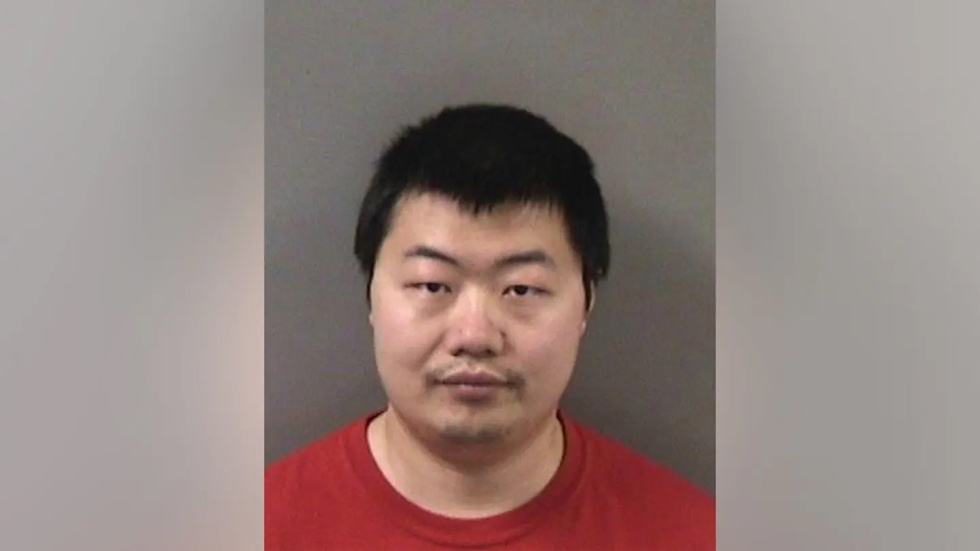
Xu Dawei
In the following four years, the case was placed on hold in court, and Xu Dawei, 41 years old, remained unimprisoned.
Xu Dawei also hired the well-known criminal defense lawyer Julia Jayne. After being arrested, the lawyer submitted a bail application, stating that the charges were merely "isolated workplace disputes." Jayne also attached 11 letters from Xu Dawei’s wife, friends, and old classmates. Some of the letters read like job recommendation letters: "I am honored to write this recommendation letter for Xu Dawei"; another letter stated: "I highly respect Xu Dawei and believe he can handle any future challenges."
The judge set a bail amount of $2 million. After paying the bail, Xu Dawei was released, and he was monitored with a GPS device. In April of that same year, Xavier Becerra, the California Attorney General, filed a motion on behalf of the State Engineering Commission, stating that Xu Dawei was “professionally trained and is a criminal defendant with unusually sophisticated methods,” and that he “has been exposed to various chemical reagents in his work.” The judge agreed with the Attorney General’s opinion, and during the trial, Xu Dawei’s use of his California engineering license was suspended.
In the following months, the court granted Xu Dawei increasingly lenient treatment. In July, he was allowed to go out for 6 hours per week to pick up and drop off his daughter from ballet and gymnastics classes. In October, the number of hours he could spend outside on Sundays was increased by an additional 6 hours. In June 2021, he was approved to spend “an extra day with his children”. In September, he was allowed to go out for an additional two hours per day. In November, he applied for permission to be released from home confinement. In April 2022, he was granted permission to travel within the United States.
In 2023, Pamela Price was elected as the local district attorney for Alameda County. Her campaign platform focused on reducing imprisonment sentences. She later faced a recall election, partly due to the overly lenient sentencing terms she agreed to in her plea agreement.
Xu Dawei was originally facing a maximum sentence of life imprisonment at California State Prison. However, in September 2023, under a plea agreement reached by the team led by prosecutor Price, Xu Dawei opted for a ‘no contest’ plea to the single drug poisoning charge. As a result, he received a one-year probation for felony charges, with one day in custody counted as part of his sentence. A ‘no contest’ plea is legally equivalent to a conviction, but it does not mean that the defendant has admitted to the criminal act.
This agreement shocked even the judge. At Xu Dawei’s sentencing hearing in 2024, the judge commented, “Considering all the circumstances of this case, the leniency offered in this agreement is extraordinary,” and doubled the probation period to two years.
According to California law, probation is a sentencing regime in criminal law. In criminal trials, the court imposes a certain period of probation based on the criminal’s crime and his or her behavior during the trial, thereby suspending the execution of the penalty. If certain conditions are met during this period, the original sentence will no longer be executed. In short, probation involves conditionally suspending the execution of the judgmented penalty.
Under the strain of mental exhaustion, Yuan Rong eventually agreed to this plea agreement. In March 2024, during the sentencing hearing, Judge Kimberly Colwell ordered that Xu Dawei should not be near Yuan Rong and her parents. She also gently warned: 'Please do not come into contact with any toxic substances again, never.'
The trial record shows that Yuan Rong originally claimed nearly $500,000 in compensation. The judge ultimately ordered an award of $7,058, based on a toxicologist report submitted by lawyer Xu David, which concluded that cadmium poisoning does not cause long-term health damage.
Yuan Rong said that the scientific basis for this report is flawed. She considered filing a civil lawsuit for compensation, but after consulting a lawyer, she gave up the idea: such lawsuits are time-consuming and costly, and it is very likely that she will not receive any compensation.
Xu Dawei's sentence expired in March this year. On October 19th, he will apply to the judge in Alameda County for a dismissal of the felony conviction, a process commonly referred to as 'expungement' of criminal records.
Xu Dawei completed a two-year probation sentence in March of this year. According to California law, if a person on probation fully meets all the conditions of the probation, they are eligible to apply to have their criminal record cleared.
The California Appellate Court ruled that unless the offense is listed in the statutory exclusion list, a judge may not reject the application; poisoning does not fall within this exclusion. Clearing the records does not mean erasing the case completely: law enforcement systems can still access Xu Dawei’s arrest and conviction records. If he commits another crime in the future, this previous record can still serve as evidence for charges. When applying for a state license to practice, he is still required to voluntarily disclose these records.
The District Attorney’s Office did not respond to the interview request, but court records show that the prosecution is challenging this withdrawal application. Yuan Rong has the right to present her arguments at the hearing next week, and she plans to be present.
Xu Dawei himself and his legal representatives did not respond to the interview request.

The working locations of the two people on Google Maps
Yuan Rong has never spoken publicly about this case before. Now she is willing to step forward and make public the surveillance videos.
She said that videos showed Xu Dawei tampering with her drinking water. “The judicial system has let me down,” she said, “This is my last resort.”
Yuan Rong said that cadmium poisoning has caused her long-term health damage, making it impossible for her to work full-time. She believes that the punishment imposed on Xu Dawei is far from enough. What she is most worried about is that if her application is approved, future employers will not be able to find out about this criminal record of Xu Dawei during their background checks.
Yuan Rong recently published a paper studying the long-term health damage caused by cadmium poisoning to her and her parents.
She dedicated this paper to her late father. The old man was 78 years old last year and passed away due to heart failure. “Before the poisoning, my father had stable hypertension control and walked 6 miles every day, and could even carry 50 pounds of rice up two floors,” she wrote in the paper. By the second half of last year, her father could no longer get out of bed and was unable to eat.
She hopes that this research will help doctors detect signs of cadmium poisoning earlier, preventing tragedies from becoming irreversible. “We must not let such things happen again,” she said.
