According to a report by Reuters on October 15th, as the Trump administration urged foreign chip companies to build factories in the United States, South Korean semiconductor giant SK Hynix reportedly set a condition for the US: it hopes the US will approve the export of more chip manufacturing equipment to China, in order to expand the production capacity of its factories in China.
Two people familiar with the matter revealed that SK Hynix is in talks with the U.S. government, hoping to obtain permission from its U.S. subsidiary Solidigm to export more American chip manufacturing equipment to its factory in Dalian, China. This initiative is linked to the company’s plan to build a new NAND flash memory factory in the United States.
The Trump administration has been urging foreign chip manufacturers such as SK Hynix and Samsung Electronics to increase their investments in the United States, in order to revitalize the American semiconductor manufacturing industry and create jobs.
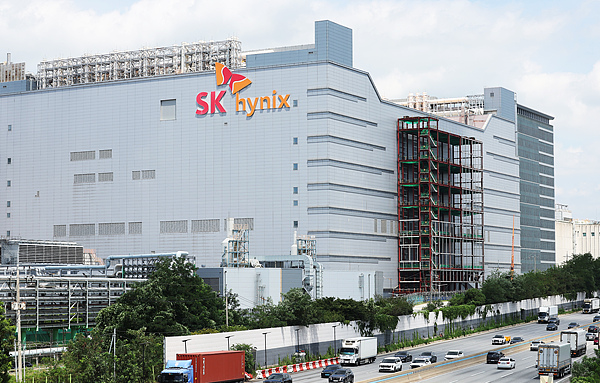
On July 29, 2026, in Miryang City, Gyeonggi-do, South Korea, SK Hynix announced that its operating profit for the second quarter of 2026 reached 60.5426 trillion Korean won, an increase of 557.2% compared to the previous year, setting a record high. Visual China
According to reports, SK Hynix’s Dalian factory has a building area called “Mod B”, which was completed in 2023. However, due to the sluggish storage chip market at that time, not all equipment was installed properly. Now, with a significant increase in market demand, there is still plenty of space in this building area for installing new equipment.
Solidigm hopes to increase the production of NAND flash memory. This type of chip is widely used in artificial intelligence and cloud computing data centers. Since the equipment required comes from American companies such as Panchen Group, Applied Materials, and KLA Corporation, exports must obtain US approval.
A person familiar with the matter explained that expanding the production scale of the Chinese factory can help Solidigm raise the funds needed to build a factory in the United States and maintain supply before the new American factory starts production.
In response to this, SK Hynix stated that the installation of equipment in Region Mod B has always been carried out in close consultation with the U.S. government and with the necessary authorization. The company has not sought to increase production capacity in that region.
Solidigm refused to comment, and the U.S. Department of Commerce also did not respond to requests for comments.
The background of this negotiation is the continuous tightening of restrictions on the export of semiconductor equipment from the United States to China.
In 2025, the U.S. Department of Commerce revoked the previous special licenses granted to SK Hynix and Samsung Electronics. The two companies are now required to reapply for licenses when transporting American equipment to their factories in China. At that time, the U.S. side stated that it would allow these companies to continue operating their existing factories in China, but in principle, it would not approve exports of equipment designed to increase production capacity or upgrade technology.
In December last year, the US granted SK Hynix’ Dalian factory a permit for the year 2026, but limited the number of devices allowed. At present, the US has not issued any permits related to the year 2027. Solidigm has applied to purchase more devices for the Mod B area.
Meanwhile, the global storage chip market is experiencing a new round of prosperity. Walt Coon, an expert from market research firm TechInsights, said that since mid-2023, the price of NAND flash memory has risen sevenfold, and supply will remain tight in the coming years.
Reuters previously reported that Solidigm is considering launching its initial public offering as early as next year in order to raise funds for building a new factory in the United States.
