Beaches are being swallowed by huge waves, coastline trails have collapsed, and homes are facing saltwater intrusion. Southern California, known as a dream vacation destination, is currently experiencing severe erosion. Meteorological warnings indicate that the most powerful phase of the El Niño phenomenon will not arrive for several months.
According to NBC, on October 9th at 3:30 AM, resident Shawn Curtis witnessed a shocking scene: his two-story beachfront apartment front saw the coastal boardwalk completely vanish; the original 25-foot sandy beach was washed away by seawater. The water rushed in from all sides and tilted the entire building slowly towards the sea.
On the 15th, during an interview, Curtis still found it hard to believe the events that had happened. “The door frame was crooked, and so was the window frame. Immediately afterwards, I saw huge waves crashing towards me.”
Waves even reached the second floor of the apartment. Neighbors across the street said they could see water flowing over the roof of Curtis’ house, where he had lived for nine years. The roaring sound of the waves woke him up, and the entire apartment trembled, as if it had been struck by an earthquake.
We desperately fled for our lives; the house couldn't be saved. The ending had been predetermined, it was hopeless. Curtis said of his roommate.
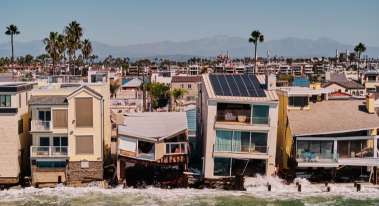
Destroyed houses, NBC
Although the strongest El Niño period is still several months away, Southern California’s already fragile coastline has been devastated by record-breaking extreme tides and storm surges.
Earlier this year, an unusually active hurricane season led to three storms that severely impacted Hawaii and Mexico. This historic climate event has caused more than a dozen houses along the coast of Long Beach to be swallowed by the sea, coastal trails have been damaged, and parts of the Pacific Coast Highway further south have also been flooded by seawater.
University of California, Los Angeles Coastal Flood Laboratory scholar Timu Galian warned, “This is merely a preview of what lies ahead.”
Just last weekend, towering waves swept through coastal communities along the line from Malibu to San Diego. Several blocks in Newport Beach were flooded; some residents in Long Beach were forced to evacuate their homes, even though these houses had wide beaches and reinforced walkways as protection.
This disaster came without any warning. At the time of the incident, the weather in the area was clear and calm. Before the waves hit Laguna Beach, there was neither rain nor strong winds in the area. The section of the Pacific Coast Highway remains closed to traffic, with cracked roads that continue to slide towards the sea.
Town of Long Beach resident Dana Marie Lazzareski said, "It's hard for people to imagine that this was once a beach. These houses were not originally located by the sea."
Lazaretsky recalled that four years ago, when she first rented this house, she really liked the atmosphere and neighborhood relationships here. The residents were happy to communicate with each other, help one another, walk their dogs along the street, ride bicycles, and neighbors helped each other in times of need.
But when she saw the waves crashing against the roof on the 9th, she didn’t know how much longer she could live there anymore.
"Right now I will absolutely not buy a house here," she said, "This place was truly like a dream."
