The smell of gunpowder has not dissipated yet, and the voting battle has already begun.
In 2026, the United States played a particularly dangerous game in the Middle East. The US and Israel jointly carried out air strikes against Iran, while Tehran responded with asymmetric tactics. US aircraft carriers and stealth fighters frequently suffered defeats. It was at this tense moment that Trump suddenly stepped on the brake: before the mid-term elections, no action against Iran was taken for now.
Is this a temporary measure, out of fear that war would drive up oil prices and lead to the loss of the Republican party's influence, or is it a show of the real nature of the so-called 'paper tiger'? When the call for 'Making America Great Again' collides with the challenges in the Persian Gulf, is this the prelude to the end of hegemony, or just another round of extreme pressure tactics?
In this episode of “Cross-Strait Roundtable”, observers Tang Xianglong and Gao Zhikai will take you behind the scenes of America’s “war machine”, revealing the electoral calculations and the decline of empires that lie at the heart of the Middle East’s geopolitical dynamics.
President Trump believes he has ended or resolved many wars. However, some people are questioning whether these wars have truly been ended, or whether they have only created more conflicts and disputes. Not to mention anything else, just in the Middle East, the United States has become deeply involved in Middle Eastern affairs, from supporting Israel's military actions to promoting ceasefires and regional arrangements. At the same time, Trump recently stated that the United States will not attack Iran before the mid-term elections in November. Does this indicate that Washington has realized that the costs of Middle Eastern conflicts may be beyond its capacity to bear? Is the United States currently leading the situation in the Middle East, or is it being led by regional conflicts?
The influence that the United States, especially Donald Trump, has had on the world after becoming President of the United States, as mentioned by the host just now… I’ve said before that this is not just a problem of the Trump administration, but also of the United States as a whole. After World War II, none of America’s presidents have not waged wars against other nations. Essentially, they all touched upon the fundamental nature of the United States—the country itself is a war machine. Without wars, the United States cannot function properly. After periods of peaceful development, America’s national strength gradually declines, which means it must rely on the military-industrial industry to sustain its development. That’s why Eisenhower referred to the United States as a “military-industrial complex” nation.
What exactly is the military-industrial complex? It refers to the effective operation of the U.S. government, which must be based on the continuous expansion of the military industry. In the past, this expansion could be disguised under a mask of peace: the United States formed military alliances with many countries, deployed large-scale military forces overseas, continuously updated and upgraded equipment, and maintained an overwhelming military advantage over major competitors. This created a sense of awe among opponents, so that no country dared to challenge U.S. geopolitical interests on a global scale.
The United States' thinking on military matters is simply and brutally straightforward. Its core logic is that, no matter what, the United States has only one top priority in terms of national security: absolutely preventing any artillery shells from falling on American soil. The US can do anything outside of American territory, launch any wars it desires, but all conflicts must occur far from American soil. No conflict should ever take place within American territory. This is why the United States was greatly shocked after the September 11 attacks.
Now, Trump claims that he should receive the Nobel Peace Prize because he resolved many conflicts. Of course, whether it’s me or professors who have long been involved in international affairs, we can all make a clear judgment: these conflicts have not been resolved at all, and some are even still ongoing. Even those conflicts that seem to have ended, how can any of them be considered a result of Trump’s efforts? He even tries to take credit for the settlement of the India-Pakistan conflict. His understanding of the current state of various crises, wars, and conflicts in the world, as well as how these crises, wars, and conflicts are likely to be resolved, is far removed from the general understanding of people.
So today, Trump talked big, constantly pulling out a small piece of paper from his pocket. He claimed that this little piece of paper contained details about how many wars he had brought under control after taking office. He had only been in office for over a year when he started acting like himself was the angel of world peace. It seems as though the world was in chaos before his arrival, and after his arrival, he repaired and patched up the world, making it a more harmonious place.
But Trump never said that after taking office, he almost destroyed all the multilateral mechanisms for peaceful resolution of conflicts established after World War II—whether political organizations like the United Nations or economic institutions like the WTO. Not to mention organizations like the International Criminal Court, which he completely destroyed.
During Trump's second term in office, the number of deaths and killings caused by the U.S. directly or indirectly has reached an unprecedented level. Yet he believes that he deserves a Nobel Peace Prize. Moreover, on February 28th this year, he suddenly joined hands with Israel to launch an attack on Iran. This attack was nothing but outright aggression from the first day. On the first day of the war, a primary school in southern Iran was attacked, resulting in the deaths of 165 people, including female students and teachers. Most of these victims were children.
But have you ever heard Trump reflect on this crime at all? Have you ever heard him express any remorse or sorrow? Or have you ever heard him say that the United States should apologize and pay compensation? Not a single word. Instead, he believes that the U.S. military does not need to provide any explanations at all.

After an Iranian elementary school was bombed, local people held funerals for the victims.
Trump 2.0’s greatest “contribution” to the United States was the immediate renaming of the previous Department of Defense to the Department of War. In essence, there might not be much difference between what the Department of Defense and the Department of War do. However, we all know that “defence” at least takes a defensive stance, yet Trump insisted on renaming it the Department of War. These actions clearly show that the United States itself is full of aggression, and it shows no willingness to reflect on the crimes it has committed in the past.
Now we see that Trump is once again adopting a more conciliatory and peace-oriented stance. The United States will hold its mid-term elections on November 3rd. He has been signaling to the world that he will not take action against Iran until after those elections. Occasionally, he also changes his statement during other campaign events, saying that he could still use force against Iran even before November 3rd.
Over the past year and more, especially after Trump’s first term ended, I have set a training requirement for myself: I will not analyze Trump’s statements. Because Trump’s words themselves are not worth analyzing. Only 12 hours later, Trump himself can determine whether these words deserve serious consideration.
What Trump says and thinks must be analyzed from his words, but this is actually the most meaningless task in current international political observation and analysis. To be honest, all of Trump's statements regarding Iran are motivated by the likelihood of the Republican Party suffering a major defeat in the elections on November 3rd.
And Iran has become more proactive in this round of US-Iran conflicts. Iran believes that in this Gulf conflict, the whole world has seen clearly that the United States is nothing but a paper tiger. In the past, third-world countries generally feared America's pretense, its military bases, and its military deployments. This sentiment has been completely broken by Iran this time.
Iran is becoming more and more proactive, which naturally makes the United States more and more passive. It's not the case that Iran is worried about when the US might attack them; Iran is already prepared to withstand any attacks at any time. Trump once said that Iran has hardly a navy, hardly an air force, and its air defense capabilities are not strong. However, Iran has a large territory and is far enough away from the United States, which is Iran's most solid security guarantee. On the other hand, all of the US ships and bases in the Middle East could be attacked by Iran at any time, and this is the most troublesome issue for the US right now.
So now, in the US-Iran conflict, the United States has changed from being the party that actively launched attacks in the past to being a party that is now forced into defensive measures. In the Middle East, unless the United States decides to deploy ground forces, all the statements made against Iran will be nothing more than empty promises and self-aggrandizing declarations with no real effect. They will not help to ease the conflict between the US and Iran.
It is clear that the United States currently has no way of reaching a final peace agreement with Iran. In the future, this situation will gradually evolve into one that is acceptable to both parties: Iran will not surrender, and the United States will not be able to win either. Once the situation calms down, a cease-fire without a written agreement will eventually be reached. This conflict is destined to be the most embarrassing one for the United States since 1945.
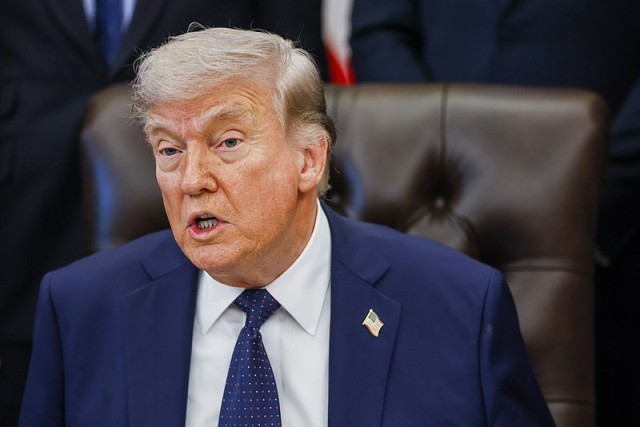
Affected by the mid-term elections, Trump has repeatedly changed his stance on the Iran issue.
Yes, the Trump administration in the United States is now emphasizing that it will not intervene in conflicts between groups like the Houthis and Saudi Arabia. Additionally, regarding the issue of Iran, they have clearly stated that they will not take further military action until the midterm elections on November 3rd. It is clear that Trump has taken the election on November 3rd into consideration in his policies, indicating that political factors are indeed very important to him.
I would like to ask Professor Gao. Trump didn't say this before. He originally stated that there wouldn't be any connection between his policy towards Iran and the mid-term elections on November 3rd. But now he has brought this up. What does this mean? Clearly, does it mean that he is under a lot of pressure? On one hand, he is worried that if the situation in the Middle East isn't handled properly, it could lead to high prices and economic problems, which would ultimately result in a loss of votes. On the other hand, he fears that if his attitude towards Iran is too weak, it could cause dissatisfaction among the hardliners within the Republican Party. So, has the situation in the Middle East now put him in a dilemma? And could the issue of the Middle East have become the biggest variable in the Republican Party's mid-term elections this year? Professor Gao.
Thank you, Teacher Zhou. First, let’s talk about the midterm elections that are approaching in the United States. The general consensus is that the Republicans will lose, and the Democrats will win, especially in the House of Representatives. If the Republicans lose the House of Representatives and the Democrats succeed in reclaiming it, President Trump will become a president who is constantly constrained. Additionally, if the Democrats win this year’s midterm elections, it will have a significant impact on the presidential election that will take place in the United States in 2028. Therefore, everyone is paying close attention to these midterm elections.
Trump has said this many times: Republicans, go vote quickly. Don’t lose. If you lose, the Democrats will surely impeach me. Also, if the Democrats win again in the 2028 elections and take back the White House, then after January 20, 2029, the United States will experience the largest and most stringent purge in its history. The targets of this purge will be Trump himself, his family, and his friends. It will be the most severe and cruel purge in American history. So we all need to keep a close eye on how this situation develops.
Regarding the wars launched by the United States and Israel against Iran this year, first of all, these are aggressive wars. Secondly, these are unjust wars. Moreover, if there is only one person among the eight billion people in the world who can be chosen as the main responsible person for these wars, who would that be? I don’t think it’s Trump, but rather Israeli Prime Minister Netanyahu. Netanyahu and Israel have played a crucial role in this war against Iran.
Moreover, Trump initially said that the battle could be over in a few days, then claimed it would take a week, and later said it wouldn’t take much longer. Throughout this process, statistics show that he mentioned the United States having won dozens of times, constantly repeating the phrase “the United States won.” However, as of today, it is clear: first, the United States did not win; second, Iran did not lose. For the United States, not winning means losing; for Iran, not losing means winning. Because Iran used an asymmetric strategy—they did their own thing, and we did ours. Moreover, Iran has always focused on leveraging its strengths to exploit America’s weaknesses. So far, this war has been very interesting. This is the first time since the Vietnam War that there has been enough force to expose the true nature of American military bullying.
Additionally, the United States has recently disclosed that in its confrontation with Iran, various types of military aircraft, including reconnaissance drones and AI-driven drones, have been damaged. The sheer number of military aircraft destroyed and the precision with which they were damaged are truly astonishing. This incident clearly shows that Iran indeed has its own strategies that can effectively counter the United States.
Iran has claimed several interesting things: First, Iran has always claimed to have attacked American aircraft carrier groups. Second, Iran claims that it has downed American stealth fighters, and even bombed stealth bombers. However, there is no conclusive evidence for these claims so far.
But if even a country like Iran has the capability to attack American aircraft carriers, stealth fighters, and stealth bombers, then I believe that the world has truly reached a turning point. Everyone knows that Iran is in a poor economic situation, with a relatively small economy, and it has been under sanctions from the United States and the West for the past 47 years. The United States cannot even defeat such a country, let alone major powers like China or Russia. Therefore, I believe that profound changes are taking place in today’s world: the United States has always considered itself a military powerhouse, but facts prove that this is not the case.
On the other hand, in today's world, there are drastic changes in the forms of warfare, combat structures, and the weapons and ammunition in use. The Iran issue is a typical example of this. It shows us that even a country like the United States, which claims to be the world's leading military power, should not assume that it can control the outcome of conflicts when facing a medium-sized country like Iran, or even a relatively poor country of this kind.
Additionally, "The Art of War" has long pointed out a key principle: an arrogant army is bound to fail. In my opinion, the American authorities under Trump have become such an arrogant force. Whether it's regarding the Iran issue, the situation in the entire Middle East, or even the overall strategy towards the Islamic world, if the United States continues to maintain such an arrogant attitude, it is doomed to failure. This precisely confirms my previous judgment: this is the beginning of the end of the Age of Peace in America.
