After the EU imposed a tariff on China for a period of 12 years, it has now decided to lift the tariff. The reason is not so much a willingness to admit mistakes and correct them, but rather that there is no longer a need to impose the tariff, as the industry has completely disappeared...
On October 21 local time, the European Commission officially lifted the final anti-dumping duties and countervailing duties imposed on solar glass originating from China. The relevant measures came into effect on October 22. Thus, the two trade restrictions implemented by the EU since 2014 have officially ended after approximately 12.5 years.
Ironically, the EU initially imposed high tariffs on Chinese solar glass under the pretext of “anti-dumping” and “anti-subsidy” measures, claiming to protect domestic industries. However, according to reports by the Romanian legal information website MonitorLegal, the last two solar glass producers in the EU ceased production in the first quarter of 2025, and neither of them has been able to provide a convincing plan for resuming production.
In other words, the EU has imposed tariffs on Chinese solar glass for over a decade. As a result, the share of Chinese products in the EU market has indeed decreased significantly. However, the EU’s own solar glass industry was ultimately unable to survive. Now, with all local producers ceasing production, the EU has lost the real basis to continue extending these tariffs on the grounds of protecting domestic industries.
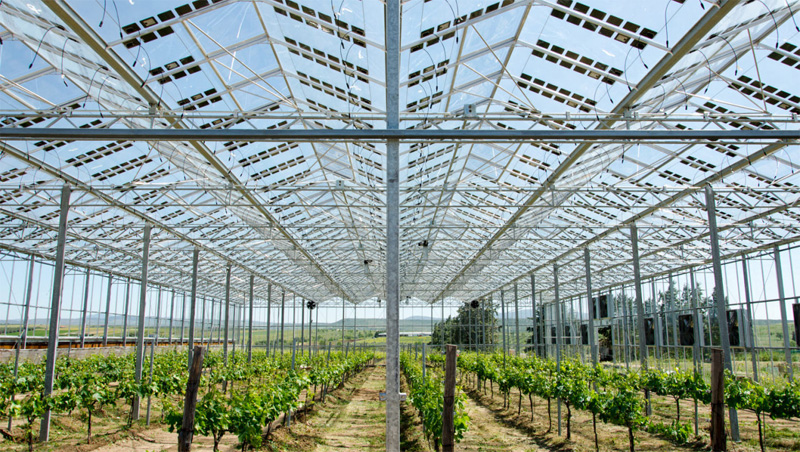
Solar glass – Data images
MonitorLegal indicates that the European Commission passed two implementing regulations on October 19, repealing the countervailing duties and anti-dumping duties imposed on solar glass from China. These regulations were published in the Official Journal of the EU on October 21. Starting from October 22, imports of solar glass from China will no longer be subject to these tariffs.
Under previous measures, different Chinese exporters were subject to varying tax rates. For exporters without a separate tax rate, the combined tariffs amounted to 84.2% of the goods’ customs value. The EU implemented these measures for the first time in May 2014 and extended them for five years in 2020.
Solar glass is an important material for solar energy utilization equipment such as photovoltaic components. However, tariffs have not changed the reality that EU domestic industries will eventually cease production.
MonitorLegal cites EU review findings, stating that German company GMB Glasmanufaktur Brandenburg and Belgian company AGC Glass Europe are the last two solar glass manufacturers in the EU. Both companies ceased operations in the first quarter of 2025. The European Commission's investigation found that these companies failed to provide plans, financing arrangements, or contracts that would demonstrate a potential return to production.
Meanwhile, China’s share of the solar glass market in the EU has dropped from 30.5% at the initial survey in 2014 to 9% at the re-survey in 2020, and further reduced to approximately 3% during this re-survey period. The report indicates that if the goal was to reduce the share of Chinese imported products in the market, then the related tariffs did have an effect; however, if the goal was to sustain EU domestic industries, these measures ultimately failed to achieve their purpose.
It is worth noting that the EU’s decision to remove tariffs does not mean it has officially overturned its previous determinations regarding China’s 'subsidies' and 'dumping'.
MonitorLegal mentioned that the European Commission still insisted during the review that there were “subsidies” in China's solar glass industry, and the degree of “dumping” also exceeded the minimum standards. However, since there are no active producers of such products within the EU, the Commission believes that continuing to extend the tariffs no longer provides a basis for determining industrial damage.
In addition, EU customs will refund the anti-dumping duties and countervailing duties imposed since the review process began on July 22, 2025. However, importers must submit an application voluntarily, and the refunds do not include any interest.
From this case, it can be seen that the EU's use of trade protection measures to reduce the market share of Chinese goods does not mean that it can maintain the competitiveness of its own industries. The tariffs on solar glass imports from China have persisted for over a decade, resulting in a steady decline in the market share of Chinese imported products. However, the EU’s domestic industries eventually had to cease production altogether. This contrast shows that tariff barriers cannot replace the competitiveness of industries themselves, and it is even impossible to ensure the long-term survival of domestic industries simply by restricting external competition.
Previously, He Yadong, a spokesman for the Chinese Ministry of Commerce, emphasized that China hopes that the European side will not weaponize tariffs, remove market barriers, encourage fair competition, comply with the trend of industrial cooperation, and jointly create a fair, non-discriminatory, and predictable market environment for industrial development. This would contribute positively to addressing global climate change and achieving green transformation.
