On October 23, the international credit rating agency Moody's announced that it would maintain France's sovereign credit rating at Aa3, with a negative outlook.
Moody’s stated in its statement that the rating of Aa3 is maintained on the condition that France can pass a budget proposal in 2027 that helps reduce fiscal deficits, and that financing costs decrease over the next few months, along with a reduction in social unrest.
But Moody’s warned that the actual situation is worse than expected a few months ago. The report states: “A slowdown in economic growth and an increase in deficits have pushed France’s debt burden slightly above previous estimates. The rate of increase in bond yields also exceeded expectations, and large-scale social protests could hinder fiscal consolidation efforts.”
Moody pointed out that even after the presidential elections in 2027, France will still need to continue with large-scale fiscal restructuring measures to improve its public finances and stabilize debt levels.
The British 'Financial Times' stated that Moody's did not downgrade France's credit rating, which surprised France, which is facing challenges such as soaring bond yields, political deadlock, and nationwide street protests.
Previously, the market generally expected Moody’s to downgrade France’s rating, making it comparable to the ratings that Fitch and Standard & Poor have given France.
French Prime Minister Le Courdin welcomed Moody’s decision to maintain France’s rating. He said that the French government will strive to pass the 2027 budget by the end of this year, aiming to reduce the fiscal deficit rate to 5%.
According to reports, France's financial situation has been deteriorating in recent years, with public debt continuing to rise. It is estimated that the fiscal deficit rate will reach 5.4% by 2026. According to data from the French National Institute of Statistics and Economic Research, as of the end of the second quarter of this year, France's public debt accounted for 119% of its Gross Domestic Product (GDP). This makes France the third-largest country in the Eurozone, after Greece and Italy.
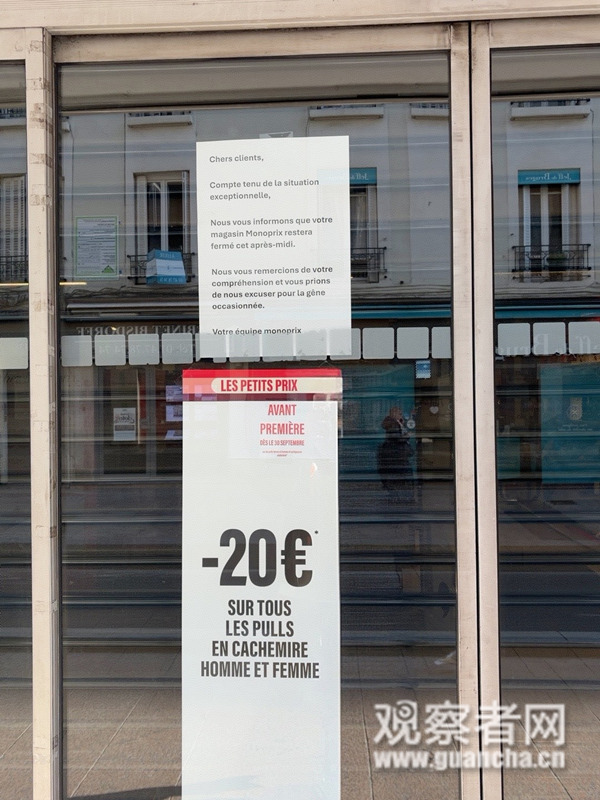
French citizens are dissatisfied with the increase in living expenses and the decline in the level of public services. Protests have broken out in dozens of cities, and violent riots have occurred in places like Paris, resulting in the arrest of thousands of people. The dissatisfaction among the public has further increased the difficulty for the government to carry out fiscal restructuring.