Over the past decade, Chinese beauty brands have grown rapidly in China. Now, they are moving towards global markets.
Industry executives are increasingly confident that Chinese beauty products will be favored by global consumers. They say that Chinese goods are no longer synonymous with cheapness and poor quality. China is constantly introducing innovative products in various industries, especially in the field of electric vehicles, thereby creating a brand halo effect.
"From cars and smartphones to artificial intelligence models, this transformation is evident," said Huang Jinfeng, CEO of Yixin E-commerce, which lists its products on the US market and owns the Perfect Diary makeup brand, to Reuters.
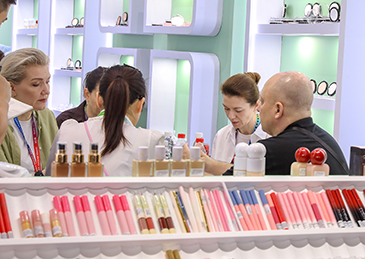
On May 13, 2026, in Shanghai, the 2026CBE China Beauty Expo was held. The picture shows foreign purchasers discussing cosmetic business.
Reuters takes Puleiya, China's largest beauty brand by revenue, as an example. As one of the Chinese companies most actively pursuing international expansion, two of Puleiya's skin care product lines will be launched in 400 Ulta stores across the United States and on its official website starting in November. This month, the brand also opened a research and development center in Paris.
Other brands initially started their businesses through online sales, and now they are gradually expanding their physical stores overseas. Among them is Huaxi Zi, whose lipsticks and other cosmetics incorporate elements of Chinese traditional aesthetics. Last year, the brand opened its first overseas flagship store in Tokyo’s upscale business district of Ginza.
Last year, the color cosmetics brand with skincare ingredients and the innovative product-focused brand Orange Flower opened stores in Singapore. Both brands belong to China's Orange Yee Group, and now they have also entered the British retailer Skin Cupid. This retailer specializes in selling Asian beauty products.
According to data released by the General Administration of Customs, in the first half of 2026, the export volume of beauty cosmetics and grooming products in China reached 932,300 tons, a year-on-year increase of 33.1%. The export value amounted to $4.577 billion, indicating a continuous expansion in the export scale.
Chinese makeup enterprises' going global operations are part of China brand wider expansion of overseas markets.
Some Chinese brands have very ambitious goals. For example, P&L Beauty hopes to become one of the top ten beauty brands in the world, and is exploring the acquisition of smaller foreign brands to expand its product portfolio.
However, Reuters also pointed out that although Chinese beauty brands are gaining popularity in many overseas markets, the path to brand building remains long.
"I believe that Perleja currently has zero brand recognition in Europe and the United States," said Hou Juncheng, founder and chairman of the brand, at the opening ceremony of its R&D center in Paris. "We hope to gain consumers' trust through collaboration with partners and encourage them to purchase our products."
However, foreign competitors do not agree with this.
French cosmetics industry association Cosmetic Valley chairman Marc-Antoine Jamet said that this is a “incredible competitor”.
He shifted from the mass market to the mid-range market, and then into the high-end market from the mid-range. It's certain that he will enter the luxury goods sector—whether in six weeks, six months, or six years. This is nearly inevitable. Amy said.
According to statistics from the China Fragrance and Cosmetics Industry Association, in 2022, domestic beauty brands accounted for more market share than international brands.
According to preliminary calculations, the total transaction volume of the cosmetics industry in China will reach 1104.245 billion yuan in 2025. The market size will exceed 1.1 trillion yuan for the first time, and the market share of domestic brands will increase to 57.37%.
In terms of the competitive landscape of national brands, using the top 1000 online trading brands as a sample, it is estimated that the total transaction value of Chinese brands will reach 268.863 billion yuan in 2025, far exceeding that of other national brands. French brands rank second, with a transaction value of 75.541 billion yuan, accounting for 16.12% of the market share. American, Japanese, and Korean brands rank third to fifth, with transaction values of 55.033 billion yuan, 29.931 billion yuan, and 18.724 billion yuan respectively, accounting for 11.74%, 6.39%, and 4.00% of the market share. The combined total of other national brands accounts for 4.38% of the market.
New York law firm Altman & An assists foreign companies with their intellectual property and e-commerce operations in the United States. The firm's lawyer Jing An said that her Chinese clients are usually clothing companies, luggage brands, and online platforms. However, over the past year, she has taken on two Chinese beauty companies that wish to enter the US market.
Reuters believes that one advantage of Chinese brands may lie in their pricing strategies in the mid-market.
Elisa Harca, co-founder of marketing company Red Ant Asia, who provided suggestions for selecting Chinese beauty products for global retailers, said that global consumers are ‘really tired of paying high prices for topical skin care products’.
Reuters pointed out that in the United States, Chinese brands must deal with the ongoing trade and geopolitical tensions between Beijing and Washington. Gabby Chen, president of Huaxi Zihi's global market, said that last year, the tense relations between China and the US prompted the brand to shift its international expansion focus from the US to other markets.
Now, Gabby Chen is more optimistic. She said that regardless of how the geopolitical environment changes, her focus is on establishing sustainable long-term global businesses. She also added that those who choose to purchase products from this brand tend to have a stronger international perspective and are more open and inclusive.
"This need not be tied to politics." "But we have come here to share with you the essence of our culture and the essence of our brand."

