The U.S. Federal Communications Commission (FCC) stated that it will vote to ban all Chinese laboratories from testing electronic devices such as smartphones, cameras, and computers used in the United States on October 29. This move expands the agency’s previous actions against China. The FCC announced that it will prohibit testing laboratories and certification bodies from countries that refuse to grant reciprocal treatment to U.S.-tested laboratories, including China, from participating in its equipment authorization process.
It is intriguing that, among the agenda items voted on on the same day, apart from this resolution aimed at systematically blocking Chinese testing laboratories from accessing the US market based on geographical boundaries, another resolution used spectrum auctions as a lever to accelerate the commercialization of direct satellite-to-satellite communication (D2D) in the US. The direct beneficiaries of this resolution are likely US-based companies like SpaceX and Amazon.
In fact, if we look further ahead, the ban on testing laboratories is just the latest addition to the series of restrictions imposed by the FCC against China. Over the past few years, the FCC has implemented successive rounds of tightening policies, using operating licenses, equipment lists, product categories, and upstream supply chains as levers. The vote on October 29 is merely another continuation in this long chain of measures.
The agenda published by the FCC on October 7th indicates that the public meeting on October 29th includes three interrelated rule changes.
The most concerning issue is the final decision regarding the ban on testing laboratories. According to Reuters’ report in October, the FCC intends to ban all laboratories located in China from providing testing and certification services for electronic devices such as smartphones, cameras, and computers that enter the U.S. market. The ban is scheduled to take effect in December 2028. In an official statement given by FCC Chairman Brendan Carr, it was said that among the electronic devices authorized for sale in the U.S. in 2025, 82% underwent testing in China, and the share of American domestic laboratories was less than 4%.
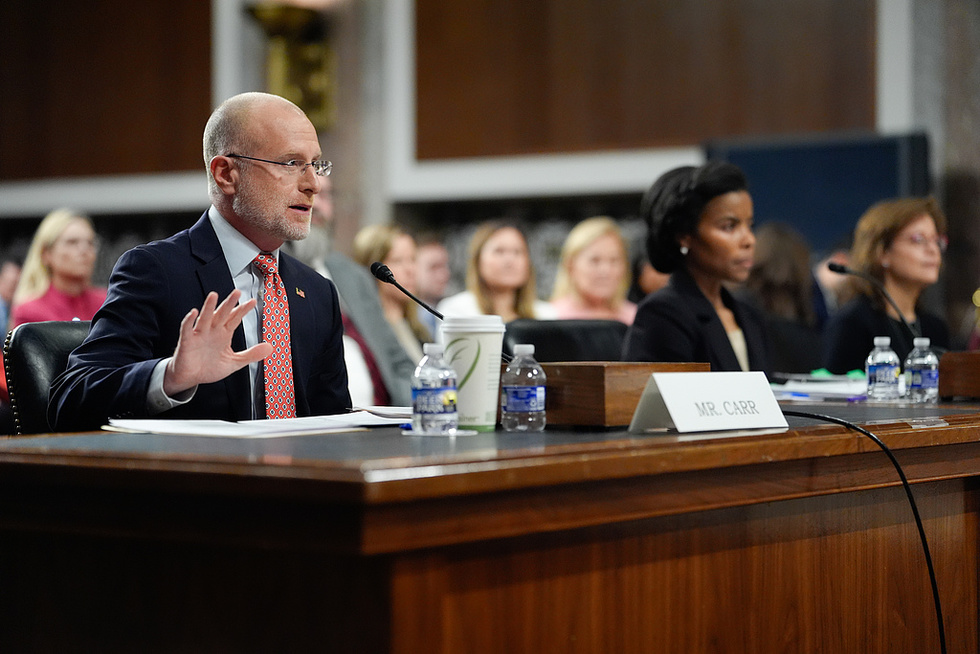
FCC Chairman Brendan Carr Visual China
The second agenda item of the same meeting was the vote to initiate the auction of D2D spectrum. The FCC plans to auction 25MHz of “high-quality spectrum,” covering the 1675–1695MHz and 2020–2025MHz frequency bands, to support D2D services where satellites transmit signals directly to smartphones. CNBC identified SpaceX and Amazon as the licensed parties and beneficiaries under this framework. Carl previously stated that the total revenue from spectrum auctions in the coming years could exceed $100 billion.
The third measure is the lifting of restrictions on the drone frequency band: a restriction that has existed for approximately 35 years is planned to be abolished, allowing commercial drones to use the 800MHz cellular frequency band, thereby freeing up about 50MHz of low-frequency spectrum.
The ban on testing in China does not arise out of nowhere. From 2025 to October 2026, the restrictions imposed by the FCC on Chinese testing and certification underwent a clear escalation process. Media outlets such as Reuters continuously tracked every key milestone in this process.
The starting point of the issue is the so-called “bad laboratories” rule framework proposed by the FCC in May 2025. The criteria for determining this status are the ownership or control of the laboratory. Under this framework, a laboratory or certification body shall not be allowed to participate in the FCC’s equipment authorization process if it is owned, controlled, or guided by entities listed on the “cover list” or specific government entities.
After the rules were implemented, in September 2025, the FCC revoked the certification qualifications of seven testing laboratories that were claimed to be "owned" or "controlled" by the Chinese government: Chongqing Information and Communication Research Institute, and the Tieli Laboratory of the China Academy of Information and Communications Technology. Additionally, the certifications of four other laboratories expired in May of the same year and were not renewed. Two weeks after the initial action, the FCC revoked the qualifications of another four laboratories, bringing the total number of Chinese laboratories whose certifications were revoked to 15.
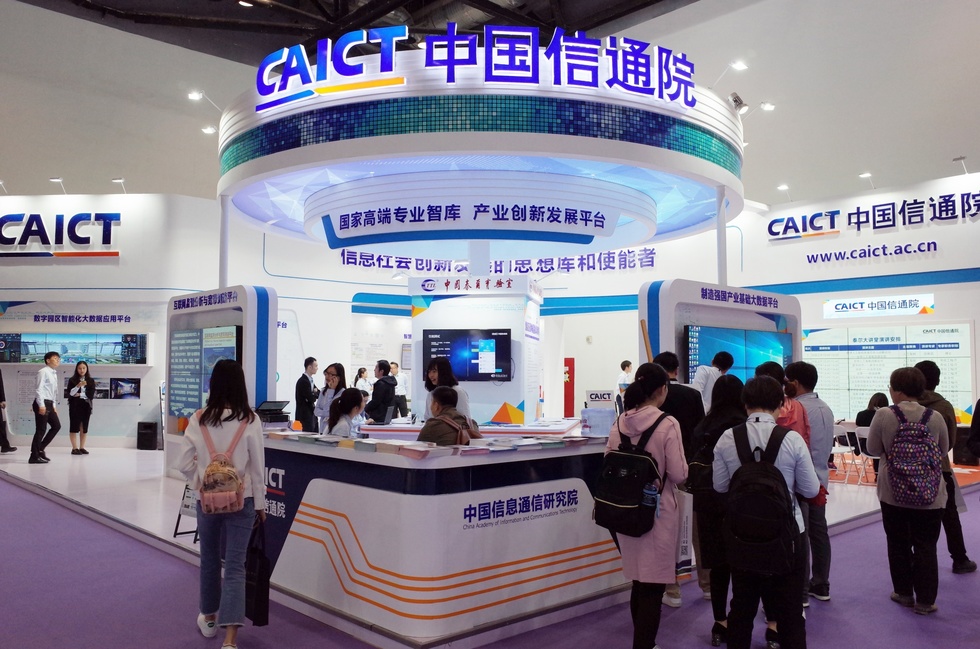
The China Academy of Information and Communication Technology's Visual China at the exhibition
However, this approach, which relies on “ownership” as a criterion, quickly revealed its limitations. Subsequent reports from Reuters indicated that the FCC found that “the vast majority” of Chinese laboratories were still providing services to the US market. As a result, the FCC’s logic changed: On April 30, 2026, the FCC unanimously approved a new proposal that changed the criteria for blocking laboratories from “who owns the laboratory” to “where the laboratory is located”. The only criterion became whether the laboratory’s country had signed an “Mutual Recognition Agreement” (MRA) with the US. Since mainland China was not on the list of MRA countries, this meant that all laboratories located in China would be excluded, including those branches of European and American testing giants located in China.
The vote on October 29th is the final legal confirmation of this process. Once approved, the ban that will take effect in December 2028 will establish “geographical standards” as official rules within the FCC’s device authorization system, rather than merely temporary enforcement measures.
As the FCC's policies intensify, China's responses are also escalating. The earliest diplomatic statement came around the time when the proposal was approved in April 2026. Foreign Ministry spokesman Mao Ning clearly stated: "China firmly opposes the US approach of generalizing the concept of national security. This practice seriously hinders normal economic and trade exchanges between Chinese and American enterprises and does not serve the interests of all parties, including US businesses and consumers. China will continue to firmly defend its legitimate rights and interests."
A spokesperson for the Department of Commerce criticized the FCC on the day after the proposal was approved, May 1st. He said that the Federal Communications Commission had abandoned the principle of technical neutrality, generalized the concept of national security, and introduced restrictive measures without any factual basis. The commission treated foreign companies and products, including those from China, in a discriminatory manner, severely harming the interests of China and other relevant trading partners. These restrictive measures disrupted the stability of Sino-US economic and trade relations, went against the consensus reached by the two heads of state. China is highly concerned about this and firmly opposes it.
"We have noticed that the U.S. Federal Communications Commission is still seeking public opinions on the related restrictions. If these measures are ultimately implemented, they will seriously undermine the international economic and trade order, disrupt the stability of the global industrial chain and supply chain in the communications electronics and related fields, impact global industrial cooperation and technological innovation. They will also harm the interests of the U.S. industry and consumers, and endanger the security of the U.S. supply chain. We hope that the U.S. will take into account the voices of the industry, respect market rules, stop wrongful practices, and remove these measures. If the U.S. insists on its unilateral actions, China will resolutely take necessary measures to firmly protect the legitimate rights and interests of Chinese enterprises."
In addition, China did not stop at just issuing a statement. On August 5, 2026, the Ministry of Commerce, in accordance with the Anti-Foreign Sanctions Law, listed Compliance Testing LLC as a target for countermeasures, prohibiting organizations and individuals in China from conducting any transactions or cooperation with it. The official announcement clearly indicated that the company assisted and supported the FCC in implementing these measures.
The FCC's ban has not received endorsement from the industry in the United States. On the contrary, many opposition voices come from manufacturers' associations, independent laboratories, and certification organizations based in the US. Their criticism focuses on a key issue: using geographical coordinates to replace identifiable risks, resulting in a lack of proportionality between means and objectives.
The National Electrical Manufacturers Association (NEMA) has bluntly told the FCC that they doubt whether the “potential benefits” of revoking accreditation from laboratories in non-MRA countries can outweigh the foreseeable and significant damages. Implementing this change without sufficient notice “may help to address concerns about market fairness, but it will come at a high cost for American manufacturers, as well as American businesses and consumers.”
The Independent Laboratories Council (ACIL) pointed out that the wording of the FCC's rules may have an “overlap risk”: The clause restricting laboratories located in certain areas may be interpreted broadly, which could unfairly affect entities that operate only in non-equivalent economies, but whose facilities, personnel, and activities are completely isolated from FCC-related tests.
TIC Council Americas cautioned that the FCC should not rush to make changes that could be "more disruptive than necessary at present." Instead, it is recommended that the recently adopted regulatory enhancements be fully implemented and evaluated. Additionally, having testing locations "close to manufacturing centers" has always been seen as a source of efficiency. Suddenly prohibiting testing by laboratories from non-MRA economies will force manufacturers to seek new partners and compete for testing capacity in other regions. This could lead to an accumulation of tests, increased costs, and extended certification times.
The Consumer Technology Association of America (CTA) continued to pressure the FCC just before the final vote in late October, opposing the requirement for equipment to be retested merely based on the location of the facilities. They argued that devices that have already been released should not be excluded “merely because of their location.” The China National Chamber of Commerce for Import and Export of Machinery and Electronic Products pointed out from the perspective of industrial division of labor that excluding products certified by Chinese laboratories “goes against the objective rules of global industrial division of labor.”
The key reason behind this laboratory ban is that it extends restrictions to the fundamental process of testing and certification. Prior to this, the FCC has continuously tightened the channels for Chinese companies to enter the US communication and electronics market through various measures such as operational access, equipment access, product categories, and component levels.
As early as December 2020, Reuters reported that the FCC had initiated procedures to revoke China Telecom’s authorization to operate in the United States. In October 2021, the FCC officially voted to revoke China Telecom’s authorization to provide interstate and international communication services in the United States, citing “major national security concerns.” Reuters noted that this decision meant that China Telecom would have to cease providing services in the US within 60 days, even though it had been authorized for nearly 20 years.
Prior to this, the licensing of China Unicom Americas and Pacific Networks, as well as their subsidiary ComNet, was also subject to revocation procedures in March 2021. By October 2025, this strategy extended to companies in Hong Kong, China: The FCC revoked Hong Kong Telecom (HKT)’s operating license in the United States on the grounds of national security, due to its connection with China Unicom Americas.
In March 2021, the FCC issued its first “Cover List”, expanding the restrictions using “components” as a basis. This list included telecommunications and video surveillance equipment from Huawei, ZTE, Hikvision, and Dahua, labeling these companies as “a threat to US national security”. Starting in November 2022, new equipment from companies on this list was prohibited from obtaining FCC authorization. However, at that time, this ban did not prevent devices that contained components from listed companies from being approved for use in the US market, such as equipment from other brands that used Huawei’s logic operation components. Additionally, existing models that had been approved before 2022 were not affected by this rule. This “Grandfather Clause” became the focus of the FCC’s next steps.
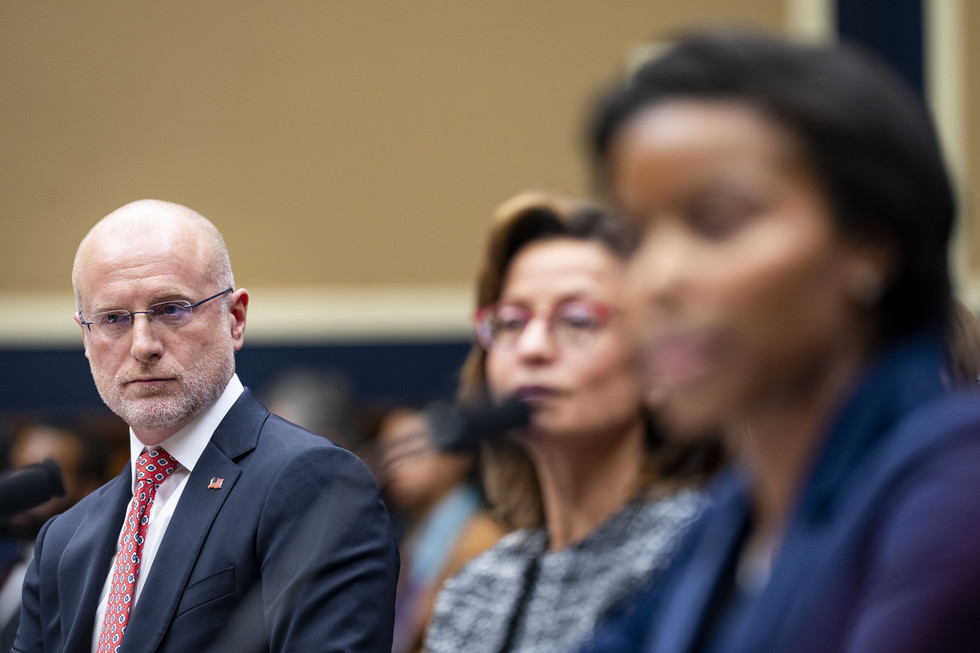
FCC Hearing on Visual China
In April 2026, the FCC proposed to completely abolish the “Grandfather Clause,” extending the ban to existing models that were previously authorized by these companies. Reuters reported that this means the restrictions on devices from companies like Huawei have been upgraded from a “restricted increment” approach to a “clearance of existing stocks.” In June 2026, the FCC issued another announcement, further expanding the scope of restrictions to existing models listed in the coverage list from 2024 onwards. These restrictions apply to uses such as public safety, government facilities, and critical infrastructure. The new regulations took effect at the beginning of July 2026.
On July 22, 2026, the FCC issued new regulations prohibiting the sale in the United States of devices that contain components from companies listed on the “Cover List”. FCC Chairman Carl said the new regulations are aimed at “completely closing the loopholes in terms of component sales”.
While operating the “Cover List” mechanism, the FCC has also started to use product categories rather than companies as units for restrictions. On December 22, 2025, The Wall Street Journal reported that the FCC had added DJI Innovations, Dator Systems, and all foreign-made drones and their components to the “Restricted List,” prohibiting the approval of new models of drones for import into or sale in the US. On March 23, 2026, Reuters reported that the FCC updated the “Restricted List,” prohibiting the import of all new consumer-grade routers made abroad. Reuters pointed out that this was the latest round of restrictions imposed by the FCC on Chinese-made electronic devices under the pretext of national security. In July of that year, the FCC further extended the ban to Chinese-made new humanoid robots, quadruped robots, and grid-connected power inverters.
International testing company Element warned in its submission to the FCC that forced testing out of China would mean manufacturers having to shift their limited production capacity to other regions. The consequences would be “longer delivery cycles and higher costs.” Additionally, manufacturers would face even more severe scheduling difficulties and a decline in professional testing capabilities, especially for those rare types of tests. When laboratories in the United States and a few “recognized” economies are unable to handle such a large volume of testing demands in the foreseeable future, the cost of the ban will inevitably be passed down along the supply chain, ultimately borne by American manufacturers and consumers.
