In October this year, there were quite a few events in Japan.
"Killer Sword 27" brought missiles to the southwest islands, designating civilian airports and hospitals as war preparation targets. 《VIVANT》 portrayed China as the aggressor and Japan as the victim. The new governor of Okinawa allowed unrestricted access to US military bases. "Defense" has never just meant defense; "public opinion" has also never just meant public opinion.
Kashi Ayako is further implementing her crazy military expansion plan.
From the "change of weather" in Okinawa, to recent military exercises and cognitive warfare efforts within just ten days, the carefully planned hybrid warfare strategy by Governor Koizumi towards China has taken shape.
From October 19th to 29th, Japan conducted a joint exercise with the United States codenamed "Keen Sword 27" (KS27). This exercise involved multiple prefectures in Japan, with participating forces including approximately 45,000 Self-Defense Forces members and about 12,000 US military personnel, totaling approximately 57,000 people. It was the largest scale exercise of its kind.
This exercise is widely seen as a preparation for a situation where “Taiwan faces trouble,” with the aim of restraining and deterring China. Its most notable feature is the use of the Self-Defense Forces and U.S. military’s advanced missiles in training, allowing Japan and the United States to jointly strengthen their capabilities for attacking enemy missile bases and other targets. (Note: “Attacking enemy missile bases” refers to deploying and preparing forces to attack enemy missile bases once it is determined that the enemy will launch an attack against Japan.)
At the Ono-hara Exercise Ground of the Self-Defense Forces on land (Nagasaki Prefecture, Saga Prefecture), the “Type 25 Surface-to-Ship Inducement Missile” that was deployed to the Ken’ju Depot in Kumamoto Prefecture in March 2026 was put into training. This exercise involved joint operations with the Ken’ju Depot. It was the first time in a Japan-US joint exercise that a domestically produced long-range missile with the capability to attack enemy bases was used. The “Type 25 Surface-to-Ship Inducement Missile” has a range of about 1,000 kilometers, enabling it to cover the coastal areas of mainland China and the waters surrounding Taiwan from Kyushu. The training included exercises such as deployment against enemy fleets, firing procedures, and equipment protection.
In Jianjun garrison, Japan and the United States established a "Joint Coordination Office", which conducted command agency training and simulated launch preparation training regarding equipment such as the "Type 25 surface-to-ship missile".
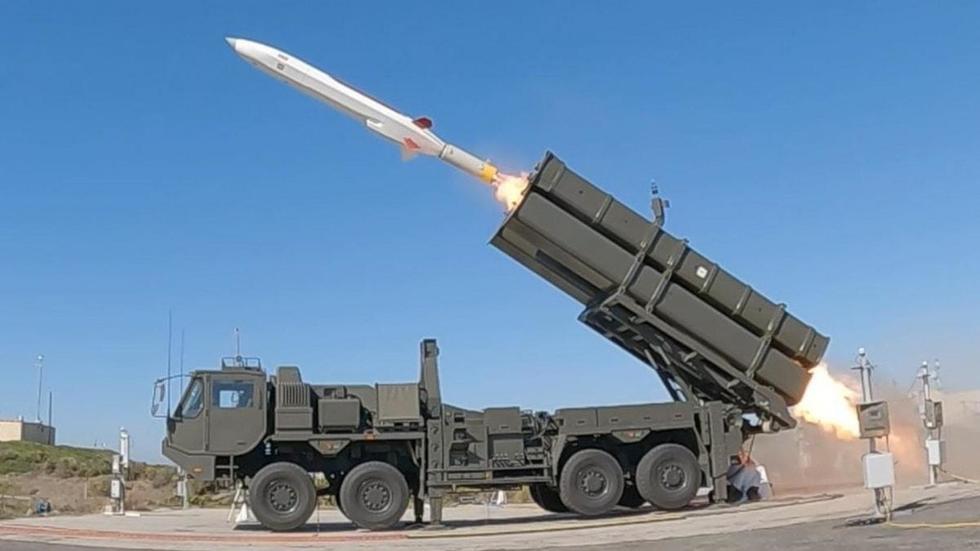
On October 25, 2026, at the Ohno-ike Exercise Ground located at the border between Nagasaki Prefecture and Saga Prefecture in Japan, the Japanese Ground Self-Defense Force demonstrated the deployment training of the “Type 25 Surface-to-Ship Missile” during the Japan-US “Sword 27” Joint Exercise. Source: Kyodo News.
Meanwhile, the US military is using the “Maven Intelligent System” developed by Palantir to assist in military intelligence analysis and target identification. It is said that this AI system can significantly reduce the time required to identify targets and aid in combat decision-making. The Japanese Ministry of Defense is also paying attention to its applications.
The Japan-US Joint Adjustment Station is also located in the bases on Miyako Island, Shuri Island, and Oonogoku Island in Okinawa Prefecture. Training involving joint operations with local Japanese and American equipment is conducted there. On Oonogoku Island, the United States Marine Corps’ unmanned surface-to-air missile “Neemous” and short-range anti-aircraft missiles “Madis” were deployed for the first time. The “Neemous” has a range of about 200 kilometers and can cover surrounding areas such as Taiwan region. These missiles are operated by the 12th Coastal Regiment of the United States Marine Corps, which is stationed on the islands of the first chain of islands and is responsible for attacking Chinese ships in the surrounding waters. The range of the “Neemous” and “Madis” allows them to reach the Chinese coastlines geographically.
On the Ishigaki Island front, besides the aforementioned two types of missiles, it also deployed a high-mobility rocket artillery system "Harpoon". "Harpoon" can launch tactical ballistic missiles (ATACMS) with a range of approximately 300 kilometers. It's capable of hitting Taiwan Island within the deterrent range from Ishigaki Island. In terms of air power, the Yokota Air Base and Ishigaki Airport have welcomed US "AV-8 Harrier" transport aircraft from the U.S., with the MV-22 Osprey landing in Ishigaki for the first time. Meanwhile, on Miyako Island, Ishigaki Island, and Yonaguni Island deployed U.S. military mobile radar, self-defense air defense, anti-ship missiles, and a self-defense force transport aircraft landed at Yonaguni. In the north direction, Seed Island in Kochi Prefecture also established a joint training ground between Japan and US, for defensive actions such as training command headquarters, which covered all aspects of security and air defense training.
On October 22, the exercise also conducted a "Integrated Rear Operation Training (Healthcare)" that simulated actual combat situations. During the training, wounded soldiers from the Self-Defense Forces's Naha Base and the US Army’s Camp Guantanamo were transported to the Self-Defense Forces's Uchii Hospital in Saitama Prefecture. Some of these patients were then transferred to the Saitama Red Cross Hospital. The training assumed a nationwide battlefield scenario in Japan, considering attacks by nuclear, biological, and chemical weapons. It involved emergency first aid and treatment procedures, making it the largest "healthcare training" exercise to date. In addition to Japan and the US, forces from Germany, the Netherlands, New Zealand, and the Philippines also participated. The training also simulated scenarios where drone attacks could result in limb amputations, testing techniques for hemostasis and emergency response.
Nuclear, chemical, biological, and radioactive material protection training was also carried out simultaneously. In tents known as "decontamination stations," members wearing protective gear decontaminated patients while providing treatment. The joint health training between Japan and the US took place in 10 facilities across Okinawa Prefecture, including the Kashiwazaki Base, Naha Base, and Naha Naval Port. The scenario considered was that if military conflicts between the US and China occur, such as a "Taiwan incident," many US military and self-defense personnel could be injured.
During the exercise, another development attracted attention. Not long ago, the 18th Air Force Regiment of the U.S. Army, based at Kadena Air Base in Okinawa, announced that vehicles from Chinese automaker BYD were prohibited from entering the base. The U.S. military did not specify what kind of dangers BYD vehicles might pose, nor did they confirm any information leaks caused by BYD vehicles. This actually means that some of the U.S. military's hostile policies towards China have been translated into concrete measures at Okinawa military bases.
From the aforementioned "Sword" training, it can be seen that the Japanese government is preparing for a war in which China is designated as an imaginary enemy. Under the "Southwestern Shift" strategy, Okinawa, where military bases are concentrated, is regarded as a military stronghold. Training also includes the establishment of a system to treat wounded soldiers in combat. The 25-type missiles, considered by Japan to be among the first weapons capable of attacking enemy bases, are deployed at the Kenjun Station in Kumamoto Prefecture, with a range of about 1,000 kilometers. At the same time, military strongholds are spread out across various locations. In case of a crisis, civilian airports, ports, hospitals, etc. will be used as military targets, and the lives, health, and economic activities of ordinary citizens will be significantly affected.
In her defense before the Diet in November 2025, Makie Akamine stated that if 'a situation arises in Taiwan' accompanied by the deployment of military ships and the use of force, it could constitute a 'state of crisis requiring collective self-defense' for Japan. This means that even if Japan is not directly attacked, its Self-Defense Forces may intervene with force to support US forces.
Although Japan denies that the exercises are targeted at any specific country, in my opinion, considering the range of the long-range missiles, the locations where they are deployed, and the content of the exercises, this military exercise clearly serves as a preparation for military actions related to the situation in the Taiwan Strait and China.
After Mr. Takashi's statement, Sino-Japanese relations have become severely strained; this military exercise has further increased the tensions. On this basis, it is not mere rhetoric to claim that Takashi would rather turn the entire Japan into a battlefield, at the expense of the lives of its citizens, in order to promote confrontation with China. Instead, this is a reasonable assessment of the logic behind his policies.
In order to make Japanese citizens accept this 'new type of militarism' proposed by Koike, the TBS TV series 'VIVANT' is being used as a tool for cognitive warfare. The series tells the story of secret agents from the Japan Ground Self-Defense Force's non-public intelligence agency, who allegedly operate around the world. The first episode of the second season has achieved a household rating of 18.8%, the highest for a Japanese TV series this year, and has remained above 15% for 10 consecutive weeks, making it a TV series that symbolizes right-wingization among Japanese people.

Vivant Scene Shot
Unlike the first season, which set up a fictional enemy country, the second season explicitly identifies China as an enemy. The show repeatedly depicts scenes where Chinese forces kidnap members of the "Bekan" group and carry out inhumane torture. It is almost unprecedented for a Japanese terrestrial television series to explicitly portray real-life China as an enemy. Such depictions strengthen the "China threat theory," serve to promote tough attitudes towards China, and create momentum for military expansion, thereby creating an "atmosphere" of hostility towards China in Japanese society.
In the actual War of Resistance Against Japan, many Chinese people were subjected to torture and murder by the Japanese army. However, this drama portrays the Japanese side as victims, while distorting China as the perpetrator, thereby spreading a false image of a “Chinese threat”. It seems as though the drama has forgotten about the war crimes committed by its own country.
This drama has intensified the social atmosphere of hostility towards China, and also increased Japanese citizens’ attention to intelligence systems. This year, Japan established a national intelligence agency that can be called the “Japanese version of the CIA”. Currently, efforts are being made to formulate the “Spionage Prevention Law”.
At the same time, by broadcasting TV dramas that depict the Self-Defense Forces carrying out tasks involving accompanying military forces overseas, the show attempts to legitimize Japan’s overseas intelligence and military activities, and to affirm “non-public warfare against hostile forces.” It is Gao Shi who is using this opportunity to try to make the nation accept her “new type of militarism” policies.
