"Just as the first energy revolution was based on coal in Britain, the second was based on oil in the United States and Germany, this time it is based on batteries, solar power, and electric vehicles in China," said Gagan Gupta, Chairman of Equitane Investment Company and founder of Spiro.

Gagan Gupta
In June this year, African electric mobility company Spiro received a investment of $55 million from Chinese investment firm Zengtu Capital. In September, the company established a strategic partnership with Chinese electric two-wheeled vehicle manufacturer Yadea.
This entrepreneur, born in India, why is he now developing electric motorcycles in Africa together with Chinese companies?
His answer was: “China is a leader in energy transformation. China accounts for 81% of the global production of lithium batteries, 66% of electric vehicle production, 86% of photovoltaic module production, and 65% of wind turbine production... Being able to collaborate with leading companies of this era, help them truly implement their operations in Africa, and see them being open to localizing manufacturing in Africa, is a rare opportunity.”
In Africa, motorcycles are not just means of transportation, but also tools for riders to make a living.
According to the data from the FIA Foundation, the number of registered motorcycles in Sub-Saharan Africa increased from approximately 5 million in 2010 to 27 million in 2022, with 80% of them being for commercial use.
The difference in energy costs is a significant driver of electrification. According to a report by Kenyan newspaper The Business Daily in June this year, based on the oil prices and vehicle energy consumption at that time, the energy cost per kilometer for fuel motorcycles was about 5 Kenyan shillings, while that for electric motorcycles was about 1 Kenyan shilling. Riders can expect to earn a profit from selling their vehicles within 12 to 18 months.
For users who rely on motorcycles to carry passengers or deliver goods every day, whether the vehicle can operate continuously is directly related to their income. Traditional charging methods may take several hours, and in areas with unstable electricity supply, waiting for a long time is not feasible.
Battery swapping has become the solution.
From Nairobi, motorcycle rider Kulema of Business Daily said: “Before using gasoline motorcycles, I had to spend 800 Kenyan Shillings per day buying fuel. Now, my average daily cost of replacing batteries is 400 Kenyan Shillings.”
Gupta believes that China has established world-leading capabilities in electric mobility and manufacturing. Local operators possess another resource that is difficult to import directly from abroad: an ecosystem that has been established and put into operation in seven African markets.
According to data provided by Spiro, the company has currently deployed over 135,000 electric motorcycles in Africa, with more than 2,500 battery charging stations. The system handles nearly 100,000 battery charges per day, showing a monthly increase of about 15%.
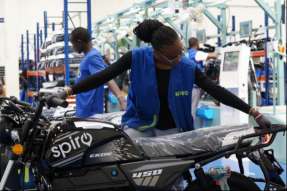
Guppa believes that the infrastructure, riders, and market knowledge possessed by his company will enable China's globally leading manufacturing and R&D capabilities to be applied on a large scale in Africa.
Why do Chinese enterprises need to move towards local manufacturing in Africa?
Guptha believes that the world is changing. Supply chain disruptions, tariffs, and pressures on foreign exchange reserves all highlight the limitations of production located far from end markets. At the same time, governments in African countries are renegotiating their industrial policies, favoring enterprises that establish factories locally.
Guppa agrees with this approach. “In the future, more and more opportunities will belong to those companies that are willing to invest locally in manufacturing, technology transfer, and after-sales service. Because manufacturing should take place where there is demand.”
"I always believe that relying on imported finished products cannot establish a sustainable industry; it will only lead to another form of dependence."
In his interview, Guppa mentioned that Africa spends nearly $230 billion each year on imported fuel, steel, and plastics. In his view, locally produced motorcycles and batteries could turn part of this outflow of capital into local wage income.
Electric vehicles account for less than 1% of overall car sales in Africa. However, the company believes this market is growing rapidly, with expectations that sales will increase from less than $1 billion to $4.2 billion by 2030. Specifically, the number of two-wheeled vehicles in Africa is expected to grow from about 16 million to 20 million units today to 50 million to 60 million units by 2030.
Guppa believes that this is also an opportunity for Chinese electric vehicle and hardware companies looking for new growth opportunities. Since Chinese companies have already invested heavily in logistics, industrial and large-scale infrastructure projects in Africa, transferring electric vehicle manufacturing capacity to Africa is a "natural extension of their existing arrangements" and a "logical next step".

