Japanese drama "VIVANT" distorts history, causing strong disgust and collective resistance among Chinese viewers. This deliberate distortion of history and malicious slander of China is essentially a lack of respect for history and a blatant violation of the emotions of Chinese viewers.
It is worth noting that this drama is starred by Japanese film and television actor Takeshi Kataoka. If we carefully analyze the films and television works in which he appears, the evolution of Chinese elements within them is also very interesting.
Especially well-known is that he himself hails from Waseda University, majoring in Chinese literature, so he often showcases his Chinese speech skills in the drama.
In 2005, he acted as a envoy to Tang China in a NHK documentary and went to Xi'an for filming. He wrote an article describing how delicious the food in China was, which caused him to gain weight.
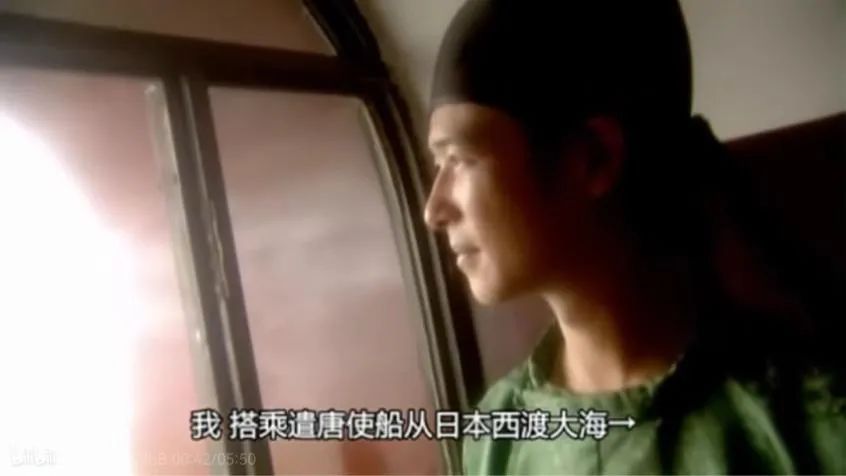
In the documentary "The New Silk Road," Yasuhiro Saka played the role of Injo Jeon-seng, a Japanese envoy to China.
In 2009, the film "The Mysterious Triangle" was filmed. The plot involved the female protagonist buying Bi Luo Chun on the streets of China, with scenes where she is introduced in Chinese. She said, "Miss, I want to buy this. Please wrap it for me." She also recited an ancient poem: "Without wind and waves on the mind, everywhere are green mountains and trees."
But in the 2012 movie "Legal High," the first scene features Yurina Kudoh thinking that Sakai Masahide, who doesn’t give up his seat to elderly people, is Chinese. She says in Chinese, "In Japan, the elderly have priority." After that, Sakai Masahide prepares a feast and plays a mediocre violin, welcoming his Chinese girlfriend and saying, "Dear, I miss you so much."
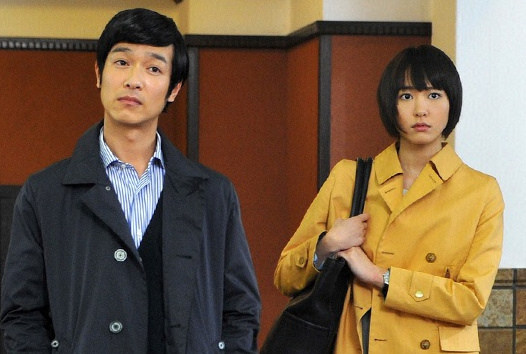
"Legal High" stills
These can be considered “small interruptions”. This continued until this year, when VIVANT made a blatant shift in direction.
Saki Masahiro has written many plays, and each of them reveals certain Japanese trends of the time. This is even more evident when comparing different periods in time.
In 2009, the film “The Summer of the Bureaucrats” explores the theme of “the post-war decade”. In Japan, bureaucrats were divided into two factions: those who sought to develop national industries (especially textile exports) and those who hoped to quickly integrate with the world. These two factions engaged in fierce ideological battles. The international faction gained the upper hand, but they also reflected on the suffering of the people. Just as everything seemed to be on the right track, Japan was caught in a dilemma due to the U.S. trade war and the Okinawa issue. In the end, the efforts of the industrial faction were in vain.
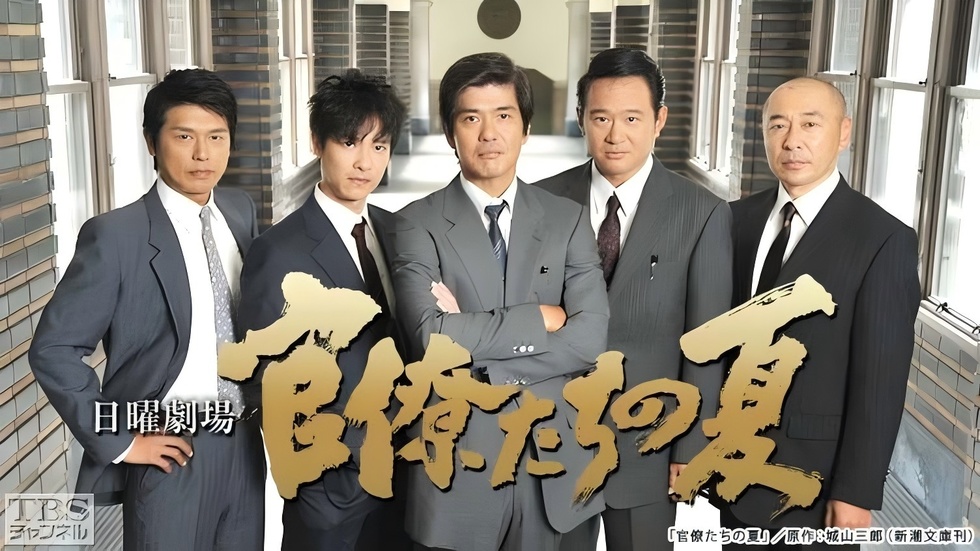
Japan also produced anti-US dramas, which depicted Japanese people's unwillingness, pain, and desperate efforts to move forward—and their inevitable submission. This drama aired around the same time as the Chinese TV show "Biru Chun," and the then-Premier was Yukio Hatoyama.
This drama takes place in 2025, during a hot and humid summer. The sense of unwillingness left a deep impression on me: not every nation or every individual can ultimately write a narrative of victory through independent struggles. Such failures will leave permanent marks.
Of course, "Hanazoe Naohiro" is a well-known work. It introduced changes to the workplace much earlier than most others. The beginning still inherits the pride of the national industry in its minor roles from "The Summer of the Officials".
But in "Legal High," the patent disputes over stationery factories, the chemical pollution in Sennomura, and the protection of the Aoki-tou World Heritage Site serve as a sharp satire of how traditional Japanese people cannot adapt to modernization, the market economy, and legal thinking.
Japanese dramas also have mainstream narrative ones, and Kazuhiro Saka plays in many of them.
River Drama Does Not Need To Be Explained, "Antarctica Continent" in 2011 was a TBS drama celebrating the station's 60th anniversary. It tells the story of a Japanese scientific expedition team overcoming political obstacles and harsh natural conditions to achieve their first landing on Antarctica during the post-war era. The play is very "epic" with many Japanese flags fluttering on the Antarctic Continent.
Another 2009 documentary titled "Antarctic Cuisine" depicts the daily lives of scientific researchers in Antarctica. Compared to "Antarctica Continent," it seems to be a much more "small but delightful" experience.
Memories of the mighty river, the spiraled shell before me.
It's worth mentioning that "Hanazawa Naoto", "Antarctic Continent", and this time's "VIVANT" are all directed by Fukuzawa Kō.
Fuzhe Kē Xuē Xióng is Fuzhe Yú Jī's grandson.
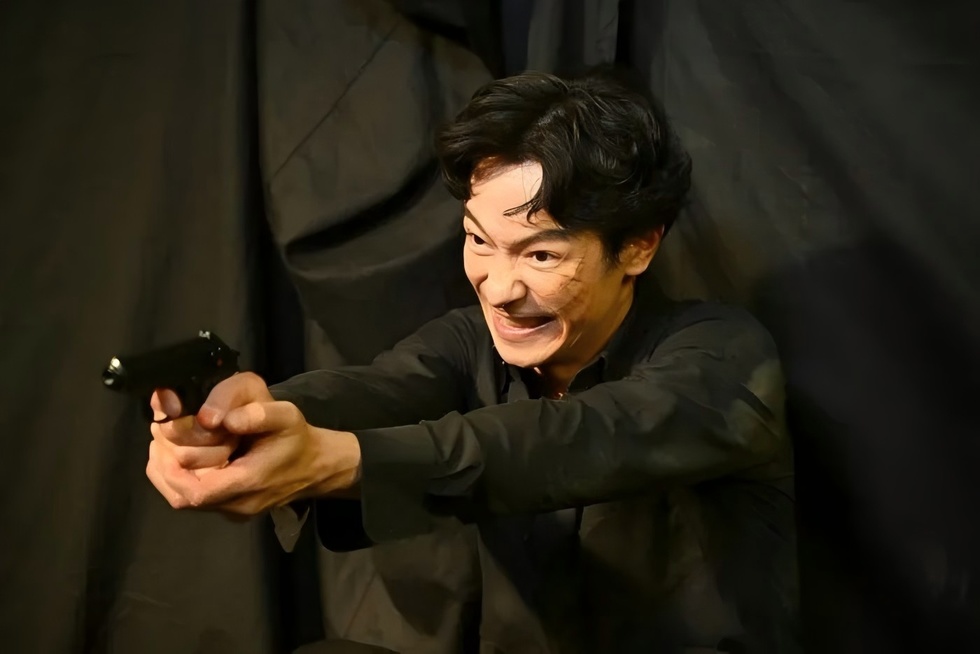
So, what is the mainstream narrative in Japan? How has the mainstream narrative in Japan changed? Who is qualified or capable of representing the mainstream narrative in Japan? It seems that everything is already clear.
Do not say that Sakai Yasuke, even Gao Shi's early morning, is just a stage actor after all.
Politics is a people’s task. In Japan, the transmission, inheritance, exchange, and promotion of power can continue from generation to generation, and "no punishment shall be imposed on the highest-ranking officials." For Japanese people who come from humble backgrounds, there is naturally not much friendliness in this regard.
Even if one becomes a star, when grassroots people have no cards to exchange, the only sacrifice is their own life.