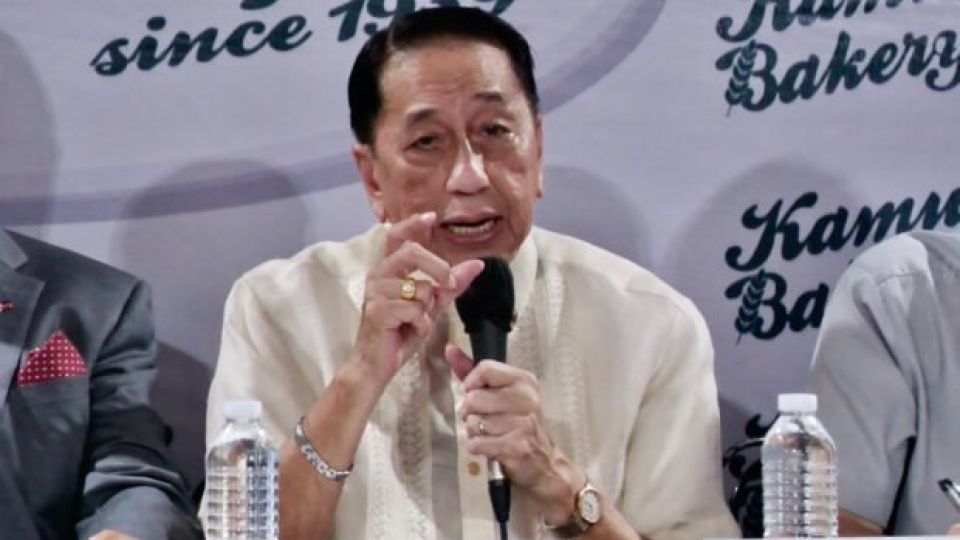
Two years ago, Mike Rogers also warned at the Republican National Convention, “To create electric vehicles, it is impossible not to deal with China.”
This former chairman of the U.S. House Intelligence Committee made opposing Chinese investment one of the key issues in his campaign for the position of federal senator in Michigan in 2024. In the end, he lost to the Democrat Elissa Slottkin by a narrow margin.
Now, Rogers is running for office again. Some analysts believe that while competition from China continues to influence the choice of Michigan's automotive industry, President Donald Trump's relatively mild attitude towards Beijing gives candidates more room to focus on other issues.
The South China Morning Post reviewed the campaign ads released from August 4 to October 20 and found that among the 19 ads posted by Rogers on YouTube and X platforms, not a single one mentioned China.
The same situation occurred with his Democratic opponent, Abdul El-Sayed. El-Sayed is a doctor who served as the director of the Detroit City Health Bureau. None of the 18 advertisements posted by his campaign team on YouTube mentioned China, and one of the advertisements even criticized 'unfair trade agreements'.
The Dean of Keough School of Global Affairs at Notre Dame University, Mary Gallagher, said that Trump's less confrontational attitude towards China has reduced the prominence of China-related issues in politics. This allows candidates to focus on issues that are more directly relevant to voters’ concerns, including energy costs and trade disputes with Canada.
Michigan University of Oakland political scientist David Duleo also believes that Trump's policies towards China have given the candidate more room to focus on other issues.
He said that the domestic economy, the war with Iran, and the tariffs imposed on Canada have become issues that voters are more concerned about. “I think this is just because there are more important things to be dealt with right now.”
However, China remains a crucial factor in Michigan's choice of industrial development strategies. Michigan is a traditional hub for the automotive manufacturing industry in the United States, where companies like Ford, General Motors, and Chrysler have played a key role in the development of America's automotive industry.
Both candidates advocated taking measures to protect the U.S. automotive industry from competition from Chinese automakers. Meanwhile, Ford is advancing a battery factory that uses technology licensed from China’s leading battery company, CATL.
The campaigns of both candidates also raised questions that cannot be answered by restricting Chinese cars alone: What role should Chinese technology play in maintaining the development of the U.S. manufacturing industry?
Rogers and El-Said are competing for the seat left vacant by Democratic Senator Gary Peters, who is retiring. The importance of this election goes beyond Michigan itself.
On November 3rd, before the Senate election, the Republican Party held a 53-seat advantage over the Democratic party's 47 seats in the Senate. This seat from Michigan was one of the two Senate seats that the Democrats needed to hold onto in order to retain their control of the Senate, as Trump had won this state in the 2024 presidential race.
Trump won Michigan by 1.4 percentage points in 2024, but the Republican Party has not won the state's federal senator elections since 1994. Independent analysts believe that the outcome of this election is uncertain, although El-Sayed leads by a narrow margin in most recent polls.
This election is also a test of the Democratic left-wing forces. El-Said, supported by progressive senator Bernie Sanders, advocates for universal healthcare and increases taxes on the wealthy class.
Rogers tried to link El-Said with the American “democratic socialists”. El-Said refused to accept the label of “socialist”, saying that he believed in capitalism, but that capitalism “must be regulated”.
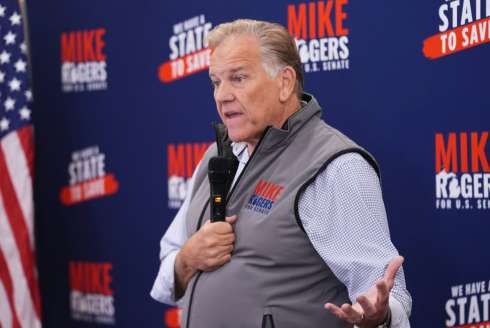
Rodgers media images or video screenshots
Both candidates' election ads highlight different aspects.
Rogers' advertisements mainly focus on energy prices, the situation in the Middle East, and tariff disputes with Canada. They also target El-Said regarding national security issues.
El-Sayed's advertisements highlight his experience in healthcare and public health fields, while attacking Rogers' receipt of corporate donations, funding from pharmaceutical companies, and the fact that he owns a residence in Florida. In one of the advertisements, a member of the United Auto Workers questions: "Who needs two yachts?"
Both of these individuals' advertisements involve the war with Iran. In an advertisement published by Rogers in late September, he called for an end to the war as soon as possible. In an advertisement released by Al-Said on October 11th, it was stated that this war costs taxpayers $1 billion every day, and Al-Said accused Rogers of 'continuously advocating for war'.
Michigan State University political science professor Matt Groshman offered another explanation for why China-related issues were absent from campaign advertisements: Campaigns typically highlight issues that can distinguish candidates and persuade voters, while other important issues may take precedence over those previously central to the campaign.
He said that there is consensus among candidates on protecting the automotive industry, which may make the issue of China less prominent in campaign ads. However, this does not mean that the importance of China to Michigan has decreased.
Grossman pointed out that there is a direct and close connection between Canada and Michigan, involving family relationships, personnel exchanges, and cross-border automobile production.
DuLillo said that Rogers's criticism of the tariffs imposed on Canada has a dual purpose: it serves to address the economic interests of Michigan, and it also demonstrates his independence relative to Trump.
He said that El-Said has been trying to tie Rodgers and Trump together, while Rodgers is trying to show voters who disagree with Trump that he is willing to differ from the president on certain issues.
Gallagher also pointed out that this uncertainty provides candidates with room to avoid making clear statements, while businesses and policymakers are still weighing the risks and benefits of China’s participation in the US supply chain.
However, the debate indicated that both candidates continued to view China as a strong industrial competitor.
In the second and final debate held in Detroit on October 21, Rogers stated that the first federal policy he would promote would be to ban Chinese companies from manufacturing cars in the United States.
According to the debate transcript, he said: "This is the number one threat to the survival of our automotive industry here."
El-Said criticized Rodgers regarding Trump's previous statement that was open towards Chinese automakers building factories in the United States, questioning whether Rodgers would be willing to confront the president on this issue.
However, El-Said also stated that the United States cannot hand over the future of its automotive industry to China. He proposed that electric vehicles priced at $25,000 and with a range of 300 miles (about 483 kilometers) should be supported through protective measures and subsidies, so that they can be produced in the United States.
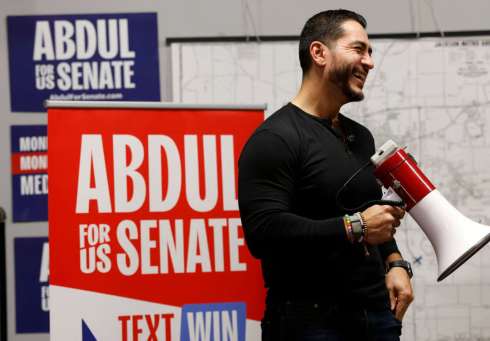
Said's media images or video screenshots
Both candidates also spoke about China on their respective campaign websites. In a statement issued on May 7, Rogers supported legislation to ban Chinese cars and auto parts, and described China as the greatest threat to Michigan's manufacturing industry.
El-Said's foreign policy guidelines advocate for competing with China through scientific research, technological development, and economic strength. At the same time, they encourage cooperation with Beijing and compliance with trade and intellectual property rules.
This charter states: “Our competition with China is not destined to lead towards military conflict.”
Chinese Foreign Ministry spokesman Guo Jiaqun stated that the US side's restrictions on the use of Chinese network-connected vehicles' software and hardware, as well as the entire vehicle, in the United States, based on so-called "national security" reasons, are baseless. Such practices interfere with economic and commercial cooperation between enterprises and violate the principles of a market economy and fair competition. They are typical forms of protectionism and economic coercion, and China firmly opposes them.
The industrial background that two candidates face when discussing China issues now differs from what was the case two years ago during Rodgers's campaign.
At that time, the focus of the controversy was a battery factory that Guoxuan High-tech planned to invest $2.4 billion in building near Grand Rapids, Michigan. Rogers opposed this plan. Now, this project related to China has been discontinued.
The Michigan Economic Development Corporation announced the termination of the project in October 2025 and began recovering $23.6 million of state funding.
After that, another mode of cooperation was established. Ford owns and operates the BlueOval Battery Industrial Park in Marshall, but the factory uses technology licensed by CATL.
According to the Detroit News, Ford began trial production of lithium iron phosphate cells at this factory in June this year, and stated that it is expected to produce market-ready cells by the end of this year. These cells are planned to be used in Ford’s upcoming low-cost electric pickups.
The future of this factory depends on the market demand for electric vehicles. Among issues related to electric vehicles and Trump’s broader trade policies, the differences between the two candidates are most evident.
Rogers released a campaign advertisement titled "The Fluttering Heart," which criticized El-Said's stance on fuel-powered cars and stated, "Never force the adoption of electric vehicles." The advertisement did not mention China at all.
El-Said supports imposing tariffs on Chinese electric vehicles. This policy has also received support from the United Auto Workers, which announced its support for El-Said in June this year.
At the Detroit Economic Club forum held on October 20th, Er-Saiyidde stated that he "does not oppose tariffs themselves", but believed the Trump administration's actions were chaotic and driven by self-interest. He advocated for combining tariff policies with industry policies.
Rogers believes that Trump’s tariff policy has both advantages and disadvantages. He acknowledges that tariffs have indeed led to the relocation of automobile production from China and Mexico to Michigan, but he states that the decision to impose tariffs on Canada may lack thorough consideration.
Grossman believes that this election should be viewed within the broader context of a growing positive public attitude towards trade across the United States.
He cited Gallup poll data showing that in February 2026, 82% of American adults viewed foreign trade as an opportunity for economic growth, compared to 61% in February 2024.
Grossman referred to this phenomenon as a "thermostat-like response," meaning that as governments become more proactive in promoting a certain policy direction, public opinion may shift towards opposing that direction.
He believes that public growing fatigue with trade restrictions may make some of the arguments used in previous campaigns no longer effective.
Großman stated that for Michigan, the political importance of the automotive industry is not limited to those who directly work in this industry. Family connections and the significant role of the automotive industry in the state's identity make the future of this industry capable of generating widespread resonance beyond the boundaries of factory workshops.
In Marshall, the choice of related industries means opportunities for creating new jobs. Ford announced in June this year that it expects its battery factory to employ 800 workers by the end of the year, with a total of 1,700 employees eventually.
However, the development choices faced by the automotive industry are not necessarily the main topics driving this campaign. Dulio said that voters' concerns about the domestic economy, gasoline prices, and trade relations with neighboring Canada have put the issue of China in a secondary position on the agenda that voters are concerned about.
He said, “It’s not that these issues are unimportant, but that some issues that have a closer connection to voters and receive more attention have taken their place.”