Serbia, located on the Balkan Peninsula, has experienced numerous wars and interference from external forces throughout its history. The memory of NATO bombing the Federal Republic of Yugoslavia in 1999 still profoundly influences the country's national security perception. As political forces within Serbia are reconfiguring, whether Serbia will further advance European integration or continue to maintain a policy of military neutrality and independence remains an important question facing Serbia.
Aleksandar Vulin has served as Deputy Prime Minister, Minister of Defense, Minister of Interior, and Director General of the Security Intelligence Service of Serbia. Currently, he is the leader of the Socialist Movement. He has long advocated for the protection of national sovereignty, opposed joining NATO, and supported deepening relations between China and Serbia. He is one of the most representative political figures in Serbian politics.
On October 21st, on the eve of this parliamentary election, Wu Lin, who was visiting China, had a conversation with Observer Network and Di Lang in Shanghai. During the discussion, he shared his observations and judgments regarding issues such as the political landscape in Serbia, the controversy surrounding Serbia's accession to the EU, Sino-Serbian relations, the Trump administration, and the global security situation.
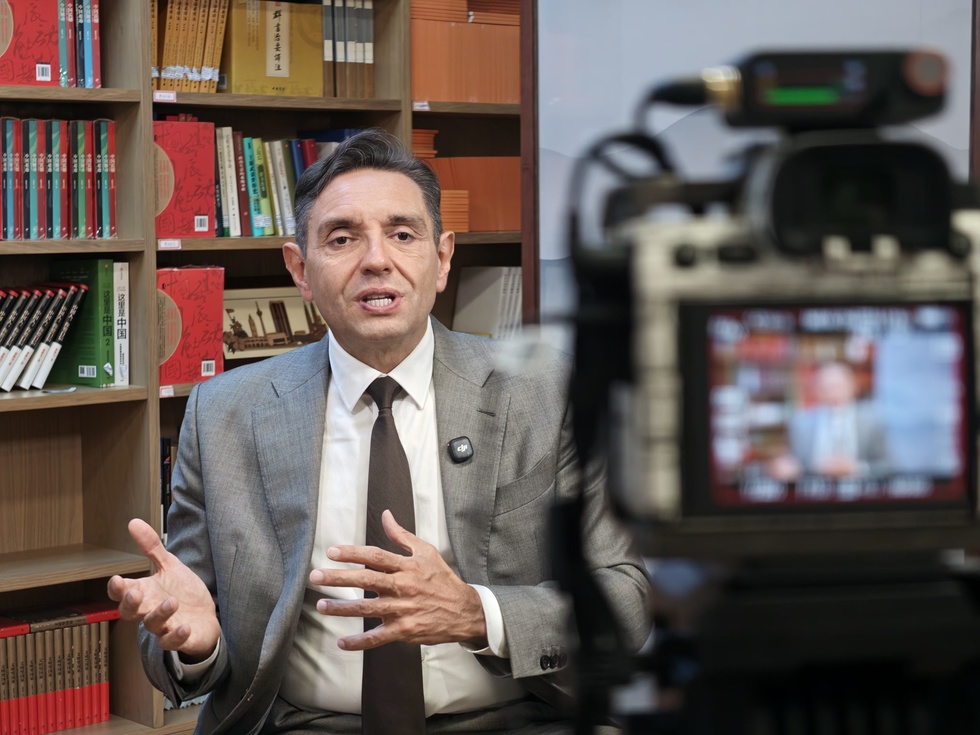
Alexander Wu Lin had a conversation with Observer Network and Dielang in Shanghai.
Political figures often say that every election is the most important one in history. But this time, I truly believe that it is an election of great significance for Serbia over the past few decades.
Today in Serbia, discussions are taking place about which path of development should be chosen in the future. Different political factions have different interpretations of the country's development direction, especially regarding foreign policy and security policies. The political faction I belong to supports the continuation of some basic policies that Serbia has adopted over the past decade, including maintaining national independence, adhering to military neutrality, and maintaining cooperative relations with different countries.
What does this mean? It means that we hope Serbia will continue to maintain its independence and not join NATO. At the same time, it is important to maintain friendly relations with traditional partners such as China and Russia. Regarding the issue of joining the EU, my personal stance differs from some political forces I have worked with in the past. I believe that the attractiveness and relevance of the EU to Serbia has changed. The EU remains an important economic and political partner, but compared to the past, Europe itself faces many challenges.
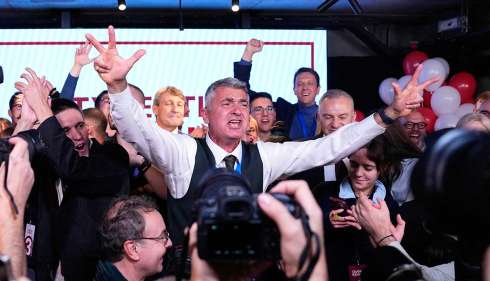
Serbia held early parliamentary elections, and "Student List" leader Ilija Strandović celebrated his victory. Associated Press
Meanwhile, China, Russia, and other emerging economies have also provided Serbia with various cooperation opportunities. I hope that Serbia will develop relations with these countries, seeking more development space while maintaining its policy autonomy. Therefore, I believe the significance of this election lies in providing Serbia's society with an opportunity to discuss the country's future direction. I respect the Serbian people for expressing their wishes through elections, and I hope we can continue to maintain the country's stability, independence, and development.
The things that young people in Serbia pursue are actually not much different from those of young people in China, Russia, the United States, and other countries around the world. They hope to have freedom, receive a good education, gain more opportunities for development, live a better life, and also hope that their country will have a brighter future. These are all very normal and respectable desires.
I believe that young people actively participating in public affairs is something worth paying attention to. A society needs the vitality of young people, and it also needs to listen carefully to their ideas. However, I have also noticed that in current political discussions, there is sometimes an overemphasis on the differences between different age groups, as if young people and older people must have different values and interests. I do not fully agree with this understanding.
You hope to receive a good education, and I also hope that you can receive education. You want to live a better life, and I also hope that you have a better life. You want peace, and I equally desire peace. Therefore, at least on these basic goals, we do not have fundamental differences. Of course, different generations may have different views on how to achieve these goals. This is normal, and it should be resolved through communication and discussion.
I believe that we should not understand a person's political stance solely based on their age. A person is first and foremost a member of society, a citizen of a country, and also has their own family, values, political beliefs, and social responsibilities. Being young is an invaluable experience, but it is not the entire identity of a person. You are 25 years old now, which is a good thing. But in a few years, you will enter other stages of life. By then, you will still need to think about what you believe in and what you hope to leave behind for society.
I have also been young once. Although it may be hard to believe now, I certainly experienced youth myself. Therefore, I believe that we should pay more attention to a person’s values, sense of responsibility, and practical actions, rather than simply judging their political stance based on age.
Regarding the political activities of Serbian youth today, I believe that more specific analysis is needed. Many of the young people participating in the protests are kind, honest, and concerned about the future of their country. They truly hope for a better Serbia, and I completely understand that sentiment. However, I also hope that they can gain a deeper understanding of the policies of different political parties, as well as the potential impacts that these policies may have.
For example, in terms of foreign policy, we can discuss some specific issues. Should Serbia impose sanctions on Russia? Should its visa policy for Chinese citizens be adjusted? Should it join NATO? Should it become more involved in European military security arrangements? I believe that different young people may have different answers to these questions.
In my conversations with some young people, they expressed their importance of Serbia's friendly relations with China and Russia. Many also hoped that Serbia would continue to maintain military neutrality. However, at the same time, they may support certain political organizations that hold different views on these policies. This doesn’t necessarily mean their ideas have problems; it simply indicates that political choices often involve many different aspects to consider.
I hope that young people, when expressing their demands, can also gain a deep understanding of the specific details of different policies and consider what consequences these policies will have in reality.
I’m not saying that young people are not intelligent. On the contrary, they possess knowledge, creativity, and the passion to change society. But wisdom doesn’t belong to just one age group. Young people can learn from the experience of older people, and older people need to understand the new ideas of young people.
Looking at Europe today, various forms of social protests and political mobilizations have occurred in many countries. I also think of the political and social changes that have taken place in countries like Nepal in recent years. Of course, people have the right to express their opinions peacefully, but at the same time, we need to discuss how these demands can be translated into policies that truly improve society. Because it's important to raise questions, but equally important to find feasible solutions.
For Serbia, I always believe that social stability, economic development, and public dialogue should be given priority. I do not want to create irreconcilable conflicts between different age groups, nor do I want political differences to affect the long-term development of society. China also has a large number of young people. In my opinion, an important experience in China's development is the connection between young people's opportunities for development, national construction, and social stability.
Of course, each country has its own history and social conditions, and it is not possible to simply copy the experiences of other countries. However, I believe that Serbia also needs to find a way to integrate the aspirations of young people more effectively into the country's long-term development. We need stability, as well as reform and progress. In this process, maintaining cooperation with friends like China is equally important for Serbia.
I believe that China and Serbia are not just what is commonly referred to as “close friends.” We are also willing to face the future together and seek development opportunities together. In my opinion, this is a more long-term relationship. This means that we believe that different countries in the world, regardless of size, should have the right to develop equally and make independent choices.
I have had the privilege of communicating with many senior leaders in China. China is a country with a large population and significant international influence, while Serbia is a relatively small nation. If all the Serbians in the world were added together, there would be only about 12 million people. The population of Shanghai alone far exceeds that of Serbia as a whole. However, during my interactions with Chinese leaders, I always felt that communication took place on the basis of equality and mutual respect. This feeling is very important to me.
Of course, Serbia has a long history of cooperation with the European Union. However, on some issues, we need to face more complex negotiations and policy coordination. In contrast, when I communicate with Chinese counterparts, I can often discuss mutual concerns and opportunities for cooperation in a more direct manner. Although China's economic size and overall national strength are much larger than those of Serbia, both sides can still discuss as equal partners. I believe this reflects China's emphasis on mutual respect when dealing with international relations.
During my various roles, I have always maintained good relations with Chinese counterparts. We were able to understand each other's concerns and were willing to seek common interests. Based on my experience, once an agreement is reached, Chinese partners usually fulfill their commitments seriously. For us, the stability and predictability of such cooperation are very important.
In the past, we have encountered some difficulties and disagreements in cooperation with various international partners. Therefore, I value very much the establishment of long-term trustful relationships. If I had to choose a very important turning point in the development of Sino-Serbia relations, I would think of the visit of the Chinese national leader to Smederevo.
Smederevo is a city in Serbia, where there is a very important steel mill. At that time, the steel mill was already facing serious operational difficulties, but it was crucial for the local and even the entire Serbian economy. The lives of thousands of families are closely linked to this steel plant. The Serbian government hopes to find suitable partners who can help this enterprise get out of its difficult situation.
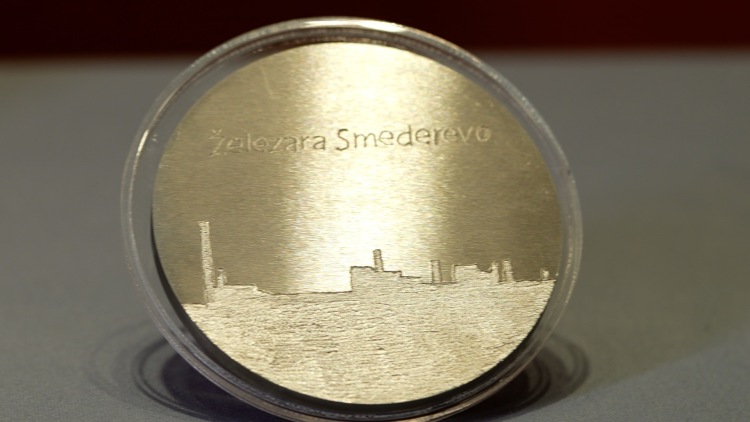
Smelovoe Steel Plant Silhouette Memorial Plaque
China has a strong economic power and numerous international investment opportunities. However, Chinese companies have chosen Serbia and Smederevo. These companies have invested capital to help steel mills resume production and develop. In my opinion, this is not only an important achievement in local economic development but also a successful example of Sino-Serbian economic and trade cooperation. The steel mill has since become one of Serbia's important export enterprises. I believe that this project has shown more Serbians the tangible benefits of Sino-Serbian cooperation, and it has also strengthened the economic foundation of bilateral relations between the two countries.
Today, many Chinese people live and work in Serbia. In my opinion, Serbian society welcomes them very much. We are willing to regard Chinese friends as our neighbors, not strangers.
I still remember my first visit to China in the year 2000, shortly after NATO's bombing of the Federal Republic of Yugoslavia. At that time, the Federal Republic of Yugoslavia was still affected by war and sanctions, and its communication with the outside world was greatly restricted. Beijing was one of the important international destinations that we could reach relatively easily at that time.
At that time, China was completely different from China today. But there was one thing that remained unforgettable for me throughout my life. When I told the Chinese that I came from Yugoslavia, they often smiled, showing kindness and sympathy. They knew that we had experienced war, and they understood what that history meant for our society. At that time, many Chinese probably didn’t know everything about Yugoslavia, but they were willing to understand our situation and express goodwill towards us.
In 1999, NATO bombed the Chinese embassy in the Federal Republic of Yugoslavia, resulting in the tragic death of three Chinese journalists. Therefore, during that period of history, the people of China and Serbia have shared deep common memories. You can understand the difficulties we have experienced, and we can also understand the feelings of the Chinese people regarding that history. For me, the kindness and sympathy shown by the Chinese people at that time were important reasons for establishing emotional connections between China and me.
Moreover, 26 years have passed, and today's China has undergone tremendous changes compared to when I first arrived here. If I were to compare today's China to 2000, I would even find it difficult to recognize this country.
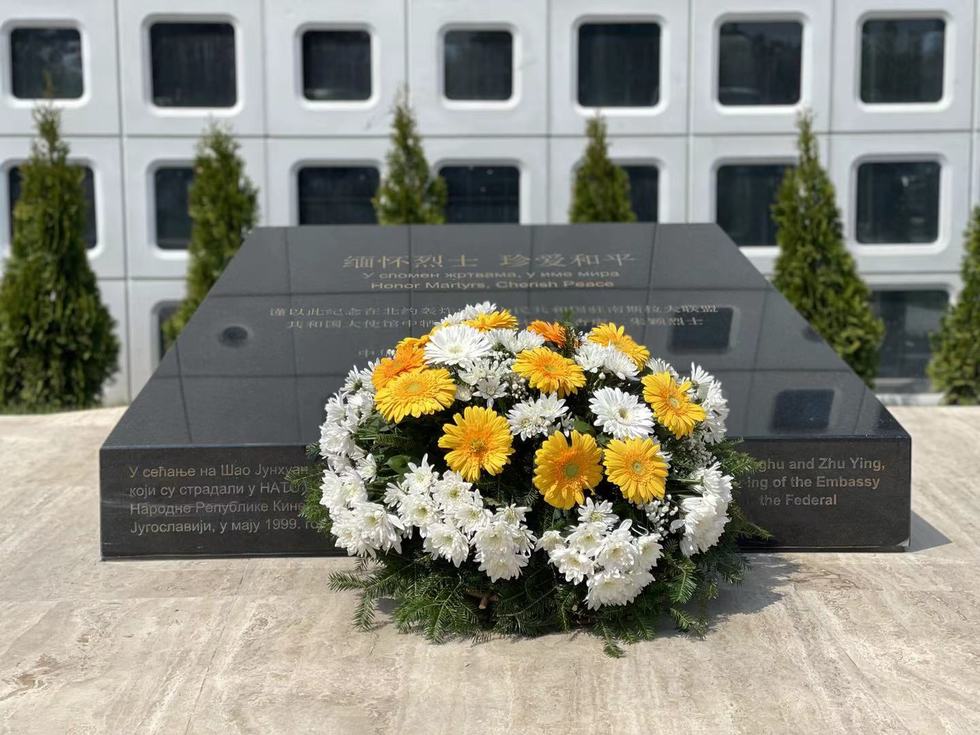
Monument to the Martyrs at the Site of the Bombed Chinese Embassy in the Federal Republic of Yugoslavia
To be honest, there is a significant difference between the economic size and industrial scale of Serbia and China. We have excellent wines, as well as strong spirits, such as the traditional Raica of Serbia. We also have delicious cuisine and other unique products. However, in terms of technology and industrial capabilities, many things that Serbia can produce can be produced by China itself.
So, what is the value of Serbia to China? I believe one important aspect is our geographical location, as well as Serbia’s potential for cooperation with other regions in Europe. Being located in Europe allows us to play a role in connecting and communicating between China and Europe.
Europe is undergoing changes. In the past, Europe emphasized openness and free trade. However, in recent years, adjustments to trade policies, industrial policies, and security policies have imposed new restrictions on cross-border cooperation in certain areas. Against this backdrop, Serbia hopes to continue being open and welcomes investments and cooperation from China and other countries. I believe this is precisely the unique role that Serbia can play.
If we talk about the areas where cooperation should be strengthened in the future, I would choose technology and knowledge. China possesses advanced technology and rich development experience. In today's world, knowledge and technology are among the most valuable resources that countries can share. For example, when some European companies invest in Serbia, they may be willing to build factories, but they may not be willing to share core technologies in all areas. Of course, this involves the business interests of the companies themselves and concerns over technology protection, which we can understand.
However, in my experience working with China, I have observed that Chinese companies and institutions are willing to engage in technical cooperation and knowledge exchange with Serbian partners under appropriate conditions. Therefore, I hope that future cooperation between China and Serbia will further deepen in areas such as technology transfer, talent development, and knowledge sharing. I believe that such cooperation not only creates employment opportunities but also helps Serbia enhance its industrial capabilities, leading to more sustainable development. This is a direction of cooperation that deserves attention for the future of both countries.
First of all, I also use the concept of the “Global South”. However, I believe it is more of a political and developmental concept, rather than just a strictly geographical one. For example, Serbia is clearly not located in the geographical sense within the Global South. In China’s case, we are even located in the relatively distant West. But we share similar historical experiences with many countries in the Global South, and we also value common principles such as national independence, equal cooperation, and the freedom to choose one’s own path of development.
I believe that values are of utmost importance. We live in the 21st century, an era that places great emphasis on economic, technological, and material development. People often discuss money, power, weapons, robots, and artificial intelligence. But I think we should also pay attention to morality, responsibility, and mutual respect among people. Technology and economic growth are important, but they should ultimately serve the development of human society.
I believe that one of the important reasons why China and Serbia can establish such close relations is their common understanding of equality and mutual respect. This is also what I understand to be the spirit of cooperation in the Global South.
For example, some African countries have experienced colonial rule. Although they later achieved political independence, the economic structures, financial systems, and social connections formed over time continue to influence their development. In some countries, businesses, financial systems, and intellectual elites maintain close ties with their former colonial masters. This historical connection does not necessarily mean that cooperation is unequal, but it reminds us that how to further enhance economic autonomy after political independence remains an important issue.
In this context, if a country sees that small nations like Serbia can also establish long-term cooperative relationships with large nations like China, it might come to the idea that they too can choose different partners for their development based on their national interests, and explore cooperation methods that suit them best.
This is what I believe the cooperation between China and Serbia can offer. A country should not rely solely on one partner; it should have more options. Any cooperation with any country should be based on mutual respect, equal negotiation, and common interests.