Over 20 years ago, there were concerns about “eavesdropping” against neighboring countries in Australia. To this day, Australia still wants to cover up these issues. When it comes to Chinese companies, some people immediately mention “security risks”.
Recently, an Australian court rejected a government request to keep certain information confidential. The Australian government previously attempted to hold a hearing related to old oil and gas negotiations in East Timor behind closed doors, refusing to disclose any information that was not classified.
This controversy reveals a rather absurd incident: in 2004, East Timor, which had just gained independence, received aid from Australia to renovate its government offices. Unexpectedly, Australian intelligence agents were accused of taking advantage of the situation to install listening devices, eavesdropping on internal discussions of the East Timorean government and gathering information about their negotiations with Australia regarding oil and gas rights.
One of the focal points of contention between the two sides back then was the vast Greater Sunrise oil and gas field. The secret operation remained undisclosed, and in 2006, the two countries signed an agreement to divide equally the government revenues generated by the exploitation of this oil and gas field. It was only years later that details of the espionage activities began to surface.
Today, the Australian government still insists on “not confirming nor denying” the actions of that time.
Ironically, more than 20 years later, Australian companies are actually planning to withdraw from the Great Sunrise project. Whether Chinese companies will be involved in the development remains uncertain, but it has already led some in Australia to talk about "security risks."
Facing this absurd situation, East Timor President Alta asked rhetorically: Australia can accept Chinese investment, why can’t East Timor do the same?
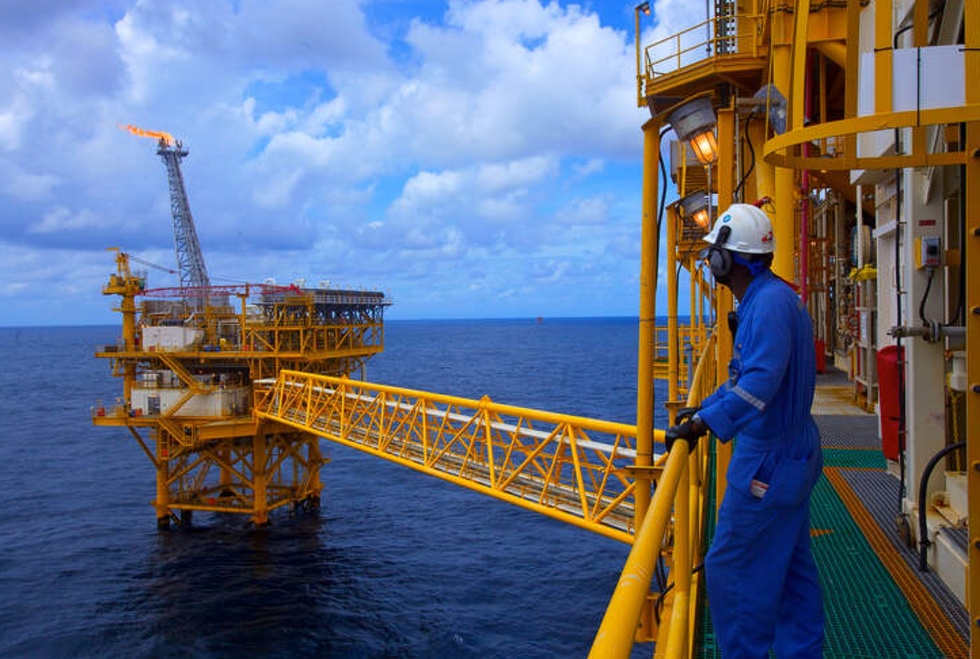
Woodside operates offshore natural gas extraction platforms.
According to a report by The Guardian in the UK on October 31, the latest developments in this confidentiality controversy have been revealed.
Australian former Senator Rex Patrick has been demanding for years to make public historical documents related to the Timor Sea oil and gas negotiations. This controversy involves relevant government cabinet documents from 2004, which may be linked to the wiretapping scandal of that time.
In response to his application, the Australian government is unwilling to even confirm whether the documents exist or not.
On October 30th, the Administrative Review Tribunal rejected the government’s request to expand the scope of confidentiality. It ruled that during the three-day hearings in late November, non-confidential materials must be made public. However, confidential matters can still be conducted behind closed doors, and it is uncertain whether the documents will ultimately be made public.
Speaking of this scandal, we have to go back to the early days of East Timor's independence.
In 2002, East Timor officially gained independence. This country, which was in a state of development, had a weak economic foundation, but the Timor Sea to its south contains abundant oil and gas resources. The Daju oil field alone is estimated to have approximately 144.4 billion cubic meters of natural gas and 226 million barrels of condensate oil.
In 2004, the two countries were in a dispute over maritime oil and gas rights. The Australian Security Intelligence Service (ASIS) was revealed to have planned a secret operation.
According to a previous investigation by the Australian Broadcasting Corporation (ABC), Australian intelligence agents pretended to be aid workers and took advantage of the opportunity to renovate the offices of the East Timor government to install listening devices in the walls.
Relevant witness materials also mention that the conversations recorded through eavesdropping were compiled into text and sent back to Australia via diplomatic postal bags, so that Australian negotiators could have them.
Nominally, it’s about decorating offices for neighboring countries, but in reality, there’s a way to eavesdrop on how their governments negotiate. This kind of operation is truly ‘well-intentioned’.
In 2006, when the oil and gas agreement was signed between the two parties, no one outside knew about this secret operation.
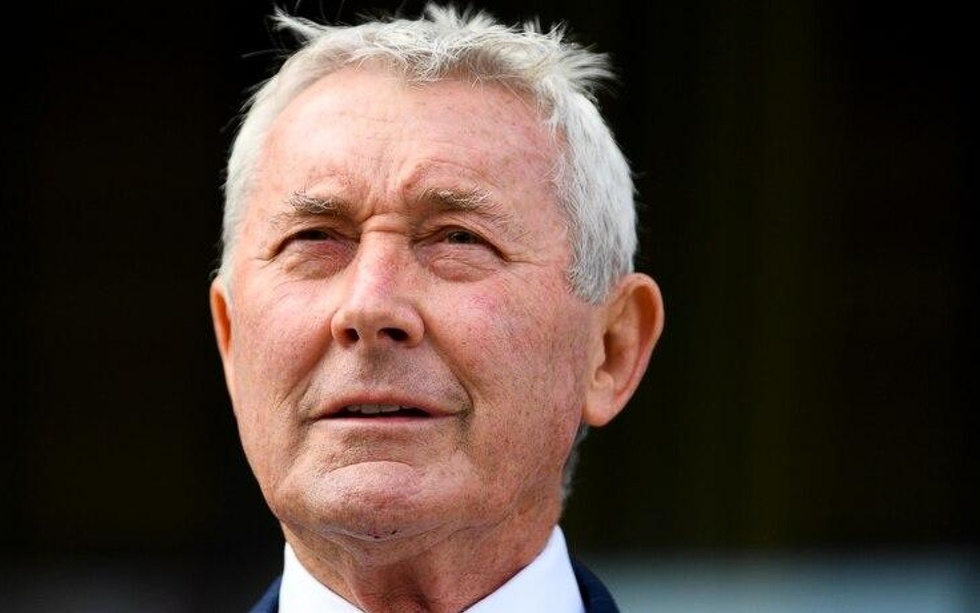
Eavesdropping scandal key figure: Lawyer Colley, Australia ABC
The person who revealed the inside story is an Australian former intelligence officer with the codename “Witness K”. He was involved in relevant operations and later established contact with lawyer Bernard Collaery. Coincidentally, Collaery is also the legal advisor to the government of East Timor.
ABC's investigation uncovered another detail: Former Australian Foreign Minister and energy negotiator, Tangna who oversaw oil and gas negotiations, connected with a lobbying firm that served the major energy company Woodside after resigning. Witness K was unhappy about this development.
As insider information came out, East Timor began to question the fairness of the previous agreement. They accused Australia of taking advantage of the negotiations through eavesdropping and initiated an international arbitration process in 2013.
East Timor is preparing to seek legal recourse, but Australian intelligence agencies have taken action against those who exposed the issue.
On December 3, 2013, Australian security intelligence agencies conducted a raid on Colley’s law firm and the residence of witness K.
At that time, Koeler was in The Hague, Netherlands, dealing with legal matters related to East Timor. Suddenly, he received a call informing him that his office had been searched. Relevant documents and electronic materials were seized, and witness K’s passport was revoked, preventing him from going to The Hague to testify.
Kohler accused the Australian side of trying to silence key witnesses. Australia's then Minister for Justice, Brander, denied that the search was intended to obstruct arbitration, claiming that it was done for national security reasons.
Eastern Timor subsequently filed a complaint with the United Nations International Court of Justice. In 2014, the International Court of Justice requested Australia not to use the seized documents to harm Eastern Timor’s legal interests. Subsequently, Australia returned the documents.
Those who can be exposed still have a long way to go.
Witness K and Koleri were subsequently prosecuted for revealing intelligence secrets. In 2021, Witness K was sentenced to three months in prison with a suspended sentence; it was not until 2022 that the Australian government terminated the prosecution against Koleri.
In 2018, Australia and East Timor signed a new maritime border treaty, but this intelligence scandal remains unresolved to this day.
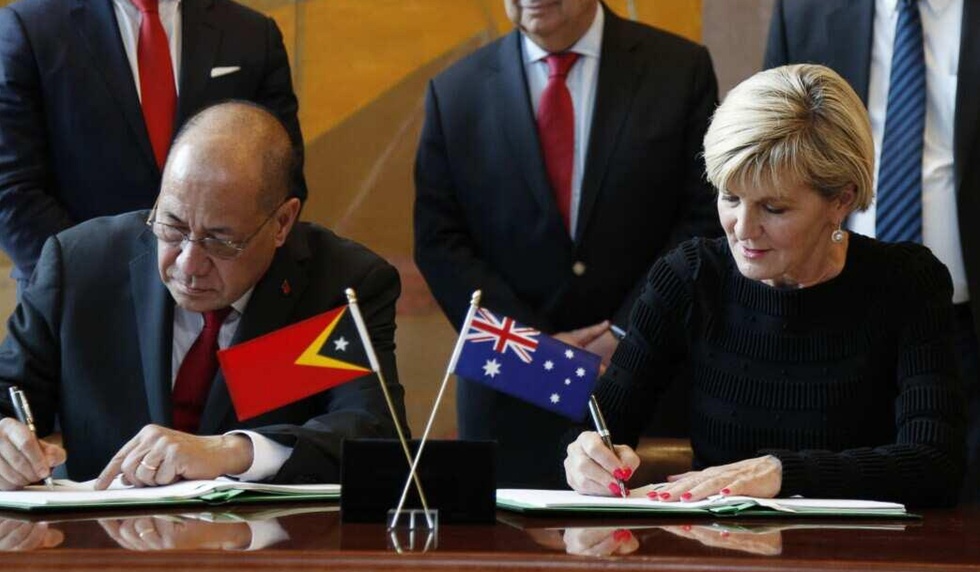
In 2018, Australia signed a maritime border treaty with East Timor, ending a long-standing dispute over maritime boundaries. Australia SBS
In the past, there was intense debate over oil and gas rights, but now Australian companies are planning to withdraw.
On October 27, Woodside announced that it intends to sell 33.44% of its ownership in the Great Sunrise project to Timor Gap National Energy Company of East Timor, with a maximum transaction value of $200 million. The transaction is expected to be completed in the first half of 2027.
This oil and gas field, discovered as early as 1974, has yet to be commercially developed. One of the key issues that have remained unresolved between the two parties over the years is: Should the natural gas be transported to Australia for processing, or remain in East Timor?
Australian companies tend to use Darwin's existing facilities, while East Timor insists on building factories in their own country. They hope to develop industry and create jobs through these projects. Both sides have different plans, which is why the project has not made significant progress so far.
Woodside attributed the sale to business and investment arrangements, but the long-pending development plan is also an important factor that makes it difficult to progress with the Grand Sunrise project.
According to a report by Reuters on October 29th, East Timor plans to start supplying gas in 2034. Currently, it is necessary to find experienced international companies to be responsible for the development of this project.
There is not much time left for this country. The International Monetary Fund previously warned that if no new sources of income are found, East Timor's oil funds could be depleted around 2038.
Australian companies are preparing to withdraw from certain projects, and they haven’t yet found new international development partners. However, some Australian analysts have already shown interest in Chinese companies.
On October 27th, ABC published an article discussing the possibility of Chinese enterprises participating in the Greater Sunrise project. Rick Wilkinson, the head of energy consulting firm EnergyQuest, believes that Woodside’s withdrawal creates more opportunities for Chinese enterprises to participate.
He also pointed out that Chinese companies are not novices in the liquefied natural gas industry. They have already held significant stakes in several large projects in Australia, accumulating relevant investment and industry experience.
Australian financial services firm MST Financial's analyst Sol Kavnak began to worry about geopolitical and security risks, stating that Chinese companies' involvement could affect Australia, Japan, and East Timor.
Even more absurdly, he even questioned the ability of Chinese companies to develop liquefied natural gas projects. He claimed that if Chinese companies were responsible for the construction, East Timor might face the risk of bankruptcy, and it might not even result in a functioning project.
For these fleeting negative rumors, the President of East Timor, Olota, is not planning to collect all the debts.
According to Australian newspaper The Messenger, published on October 29th, Olta said that East Timor could consider investors from countries such as China, South Korea, and Russia.
He asked rhetorically: Since Australia itself accepts Chinese investment, including the long-term lease arrangement for Darwin Port, why can't East Timor cooperate with China?
Orta also pointed out that East Timor has defense cooperation relationships with Australia, the United States, Portugal, and Indonesia, but does not have similar relations with China.
These words are clearly a response to the unfounded suspicions of some people in Australia: they claim that China’s investments are acceptable, but neighboring countries are even labeled as having “security risks” just for considering such ideas. What is the logic behind this?
From being exposed as having eavesdropped on the government of a neighboring country back then, to now being suspicious of investments in China, Australia's behavior has already drawn criticism from both domestic and foreign parties.
Australian researcher Kim McGrath wrote in The Guardian that in order to gain advantages in the oil and gas disputes, Australia was willing to use intelligence resources to deal with a friendly neighbor that had just gained independence and was far weaker than itself.
After the scandal was exposed, Canberra did not take the opportunity to reflect thoroughly on its actions. Instead, it sent those who revealed the truth to court. In McGrath's view, this not only further damaged relations between the two countries, but also revealed that the Australian government lacked any remorse for its actions back then.
McGrath pointed out that this spying scandal has made Australia's claims regarding China's claims in the South China Sea appear hypocritical, and has turned its so-called "rules-based international order" into a joke.
