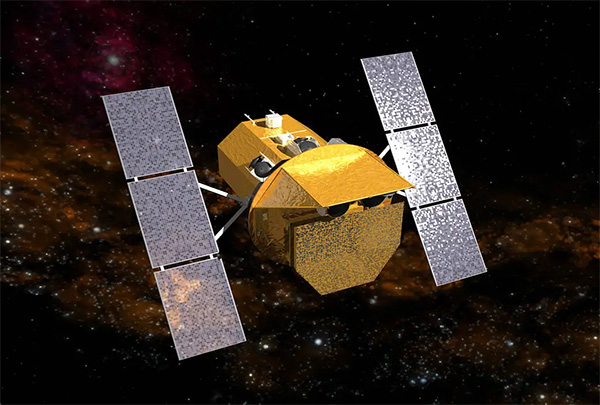
Since last year, under the influence of solar storms, the Neil Gehrels Swift Observatory, a space telescope jointly developed by the United States, the United Kingdom, and Italy, has been experiencing an accelerating rate of orbital decay. This astronomical satellite, which has been in operation near Earth's orbit for 22 years, is about to fall into Earth's atmosphere.
Both the US Space Force and analysis agencies predict that the Swift Space Telescope will fall to the Earth at dawn on November 4th, Eastern Time. NASA states that most of the satellite will burn up in the atmosphere, but some components may reach the ground. It is estimated that the probability of these debris causing injuries is 1 in 2100.
The United States Space Force reported on the 2nd that the Swift Space Telescope might enter the atmosphere at 3:30 AM Eastern Time on the 4th (16:30 Beijing Time), with an error range of 11 hours. A non-profit organization, the American Aerospace Corporation, predicted on the 3rd that the Swift Space Telescope might fall at 5:12 AM Eastern Time on the 4th (18:12 Beijing Time), with an error within 8 hours.
A NASA spokesperson said in a statement: "NASA expects that most of the spacecraft will burn up as it passes through the atmosphere, but some components may survive. The reentry positions of these surviving components will vary between the Northern and Southern Hemispheres, depending on the exact time of reentry. Due to the small inclination of the Swiftbird's orbit, the potential reentry positions are limited between 20.6 degrees south latitude and 20.6 degrees north latitude."
NASA estimates that the satellite’s titanium components and nickel lens assemblies may survive the re-entry into the atmosphere. The statement says that the probability of ground personnel being harmed is 1 in 2,100, “which is unlikely to cause harm to anyone.”
The American newspaper The New York Times pointed out that people living in higher latitudes do not need to worry about encountering debris, but the potential impact area of debris from the Swift Space Telescope still covers parts of Africa, South Asia, Latin America, and Australia, posing a slight risk.
American astrophysicist Jonathan McDowell said that this is a 1.5-ton satellite. "Satellites of this size usually have a portion, perhaps 10%, that can survive when re-entering the atmosphere."
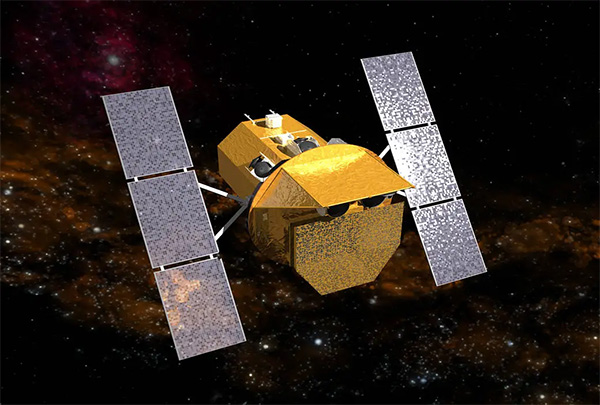
Rain Swallow Space Telescope Concept Diagram NASA
The "Spider" space telescope was launched in 2004, primarily used for observing gamma-ray bursts and other high-energy astrophysical phenomena in the universe. The satellite is not equipped with thrusters, and its initial design life was two years. However, NASA later estimated that it could operate until the early 2030s.
Most satellites will gradually fall toward Earth as their orbits decay, and they will naturally re-enter the atmosphere and burn up after their lifespan ends. However, NASA discovered last year that due to the sun being at its peak in its activity cycle, solar storms caused the outer atmosphere of Earth to heat up and expand, creating additional resistance for satellites. As a result, the orbital decay rate of the ‘Raven’ satellite exceeded expectations, and it is expected to fall before the end of 2026.
To save this satellite, NASA signed a contract with the company Kaitalist Space Technology. The company was tasked with developing a rescue satellite called LINK within less than a year. The plan involved using a robotic arm to capture the 'swift' satellite and then raising its orbit height so that it could resume normal operations.
In July this year, the LINK satellite was launched and successfully established communication with the ground control center. However, shortly after, the attitude control system of the LINK satellite malfunctioned, causing it to spin out of control in space. The mission team was unable to restore it to a stable state. In mid-August, NASA and the SpaceX company issued a statement announcing the failure of this "space rescue" mission.
According to NASA data, during its 22-year observation mission, Swift observed over 2,000 gamma-ray bursts, monitored more than 1,400 supernovae events, and studied astronomical phenomena such as tidal tearing events and active galaxies. It also studied asteroids and comets. These data have supported the publication of approximately 7,000 papers.
American media notes that the Swift satellite is an important astrophysics research tool for observing celestial bodies and cosmic events, as it can quickly turn its instruments to do so. Currently, there are no mature observational devices that can replace this astronomical satellite. NASA has stated that it will rely on other astronomical observation equipment to fill the void left by the satellite’s fall, and will continue to explore new scientific mission options.