On November 6 local time, the High Court of Mombasa, Kenya, sentenced the cult leader Paul Mackenzie to 200 years in prison for murdering 190 children and 1 adult.
Judge Dina Kavadze stated during the sentencing that 191 victims died from starvation under Mackenzie's orders, and their bodies were abandoned in the forest. The sentences include 100 years for causing others to starve to death, and another 100 years for direct murder. Mackenzie denied the murder charges, claiming she did not force the victims to starve to death, and the court did not accept her defense.
McKenzie was born in 1976. He was a street vendor before becoming a taxi driver between 1995 and 2011. In 2003, he declared himself a priest in Malindi, a coastal city in southeastern Kenya, and established the so-called "Good News International Church". He used television and online platforms to spread his teachings, quickly attracting many followers.
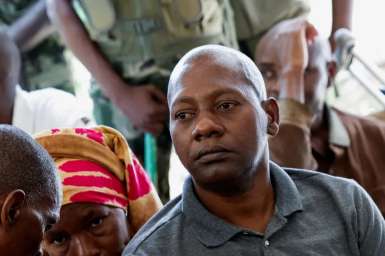
Kenyan Cult Leader Paul Mackenzie – Reuters
McKenzie was arrested twice in 2017 and 2019, but was released both times. After his second release, he led his followers to settle in a 3-square-kilometer ranch in the Shaka Hora forest of Kenya. They built a village and lived in this remote area.
In April 2023, Kenyan police arrested Mackenzie after receiving a tip-off. Numerous child corpses were discovered in this forest. Most of these children died of hunger, but some also died due to 'asphyxiation, neck pressure, and head injuries'.
Surveys show that since 2021, Mackenzie and his accomplices have begun to instigate and force believers and their children to go on hunger strikes in order to “ascend to heaven before the end of the world.” The hunger strikes started with children in the villages.
Reuters reported that Kenyan authorities finally discovered 448 remains in the Sakkahuara forest. McKenzie is also accused of ordering the killing of 52 people in another village. This is one of the most deadly cases related to cults in Kenya, shocking the international community and prompting various sectors in Kenya to call for stricter supervision over religious organizations.
Kenya has the death penalty, but it has not been executed since 1987. In 2017, the Kenyan Supreme Court ruled that the provision in the Criminal Code that mandates the mandatory execution for murder was unconstitutional, giving judges the authority to freely choose between the death penalty and life imprisonment as punishment. Therefore, many analysts previously expected that McKenzie might face life imprisonment as a punishment.

