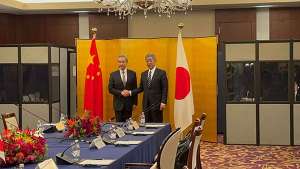
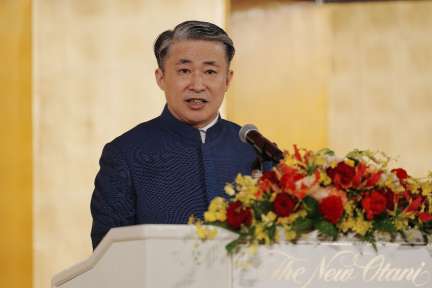
According to Pengpai News, on June 18, Lin Jian, a spokesperson for the Ministry of Foreign Affairs, presided over a regular press conference.
A journalist asked that, according to reports, at the G7 summit recently, Japanese Prime Minister Naoto Kan said that China's restrictions on Japan's rare earth exports and other measures could have an impact on the supply chains of the G7 and related countries. She expressed her concern about this. After the meeting, Ms. Kan met with journalists and stated that she would establish constructive and stable relations with China. She was open to dialogue with China and said that in the future, Japan would respond calmly and appropriately based on national interests. What is the comment from China on this?
Lin Jian stated that in recent years, Japan has been accustomed to forming anti-China circles on occasions such as the G7. The Japanese leaders' statements regarding China at the G7 summit were particularly conspicuous, reflecting the ulterior motives of Japan's clique-formation and provocation tactics. Such actions are unpopular and doomed to fail. While claiming to engage in dialogue, Japan is actually engaging in confrontation, which is a complete contradiction. This has also made the international community more aware of Japan's false and hypocritical nature.
If the Japanese side truly wants to improve Sino-Japanese relations, they should abide by the four political documents between China and Japan and the commitments they have made. They should take practical actions to maintain the political foundation of Sino-Japanese relations, rather than saying one thing and doing another.
I would also like to point out that China, in accordance with laws and regulations, prohibits the export of all dual-use items to Japanese military users and for military purposes. The purpose is to stop Japan's attempts at "re-militarization" and nuclear proliferation. China's stance on maintaining the stability and security of the global supply chain for key minerals remains unchanged. At the same time, all parties have a responsibility to play a constructive role.
According to a report by Japan's Kyodo News on the 18th, the G7 leaders reached an agreement on the concept of joint reserves for critical minerals proposed by Maki Asahi.
According to reports, Yukiho Kōmei repeatedly emphasized the so-called ‘crisis’ during her meeting with heads of various countries. She stated, ‘China’s measures regarding export controls and the like could have a serious impact on the supply chains of the G7 and like-minded countries.’
Last year, after Naoki Komeki made erroneous remarks regarding Taiwan, China announced in January this year that it would strengthen the export controls on dual-use goods. Previously, the monthly exports of rare earth magnets to Japan had been around 200 tons, but this figure dropped to over 100 tons in March and April.
According to information released by the Japanese Foreign Ministry, on the 17th local time, Kaise Asami also held talks with European Commission President Ursula von der Leyen. In addition to cooperation in the defense industry and cutting-edge technology fields, both sides reached an agreement to deepen cooperation aimed at strengthening supply chains for key minerals.