Yemen's Houthi forces stated on the 13th that in retaliation for the air raid on Sanaa International Airport in Yemen by Saudi Arabia on that day, they launched missiles and drones at Abha International Airport in southwestern Saudi Arabia.
The British Reuters reported that this attack is the first time since the informal ceasefire took effect in March 2022 that Houthi militants have claimed responsibility for attacks on targets within Saudi territory, breaking the four-year ceasefire agreement between Saudi Arabia and this Iran-backed organization.
A spokesman for the multinational coalition led by Saudi Arabia, Turlki Maliki, said on social media on the 13th that his air defense forces intercepted missile attacks launched by Yemen's Houthi militants against southern Saudi Arabia.

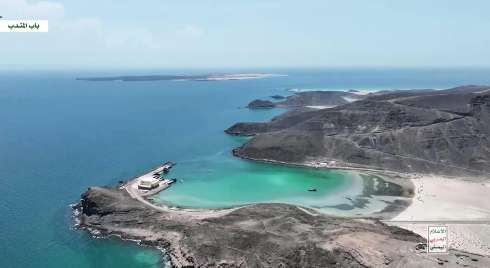
Houthi militants' revenge against Saudi Arabia video screenshot
Previously, the Yemeni capital Sanaa's international airport was attacked by air force. The Houthi movement accused Saudi Arabia of carrying out the attack and vowed retaliation. The Yemeni government stated that its armed forces targeted the runway at Sanaa International Airport in order to prevent high-ranking Houthi representatives from boarding Iranian flights back home after attending the funeral ceremony of Iran's late supreme leader, Ayatollah Ali Khamenei.
According to sources, the Houthi delegation was originally scheduled to arrive at Sanaa International Airport by plane on the 13th at noon, operated by the Iranian side. Before the air raid, the Iranian plane carrying the Houthi delegation ‘had just entered Yemen’s airspace and was flying towards Sanaa.’
Latest reports indicate that after being attacked at Sanaa International Airport, the plane landed at Hodeidah International Airport, which is under control of the Houla movement.
The Yemeni government had proposed that the Houthi delegation should return using non-Iranian aircraft under government supervision. The Houthi side rejected this proposal and warned the Saudi and Yemeni governments not to intercept this flight.
Yemeni President and Leader Committee Chairman Rashed Mohammed Ali Al-Remid issued a statement on the 13th, accusing Houthi forces of taking a flight from Iran, stating that they were circumventing Yemen’s national institutions and civil aviation regulations, thereby undermining efforts to ease the situation. Al-Remid said that the Yemeni government had previously proposed restoring civil aviation flights at Sanaa Airport through Yemenia Airlines, and was willing to arrange for relevant personnel to travel between Tehran and Sanaa using flights operated by Yemenia Airlines. However, Houthi forces refused this proposal.
Since 2015, the Yemeni government has severed relations with Iran. However, the Houthi movement, which is an important part of the regional "Resistance Arc," maintains close ties and cooperation with Iran.
According to reports, Saudi Arabia has a larger territory compared to other smaller Gulf countries. Therefore, it can handle wars more calmly. It is able to continue exporting oil through a pipeline that leads from the eastern part of the country to the western coast of the Red Sea, thus avoiding the Strait of Hormuz.
The Houthi rebels have previously attacked the Red Sea shipping routes. If a larger conflict breaks out, Saudi Arabia's advantage may be challenged.