As the US tariff policy impacts the global trade landscape, Indian government experts have publicly called for a re-examination of economic policies towards China. They advocate for increasing Chinese investment in India and reconsidering participation in regional trade arrangements led by China.
According to Bloomberg's report on July 16, Rakesh Mohan, a part-time member of the Indian Prime Minister Modi's Economic Advisory Council and former deputy governor of the Reserve Bank of India, said in an interview on the same day that as U.S. trade policies become unpredictable, India cannot continue to view the United States as a stable and reliable long-term economic partner. Instead, it should take more pragmatic steps to deepen cooperation with China and other Asian economies.
Mohan believes that India should not rely too heavily on protectionism, but should leverage the advantage of lower labor costs in manufacturing. It should attract more Chinese capital, especially by encouraging Chinese companies to invest in labor-intensive industries such as textiles, clothing, footwear, and furniture, thereby creating jobs and expanding exports.
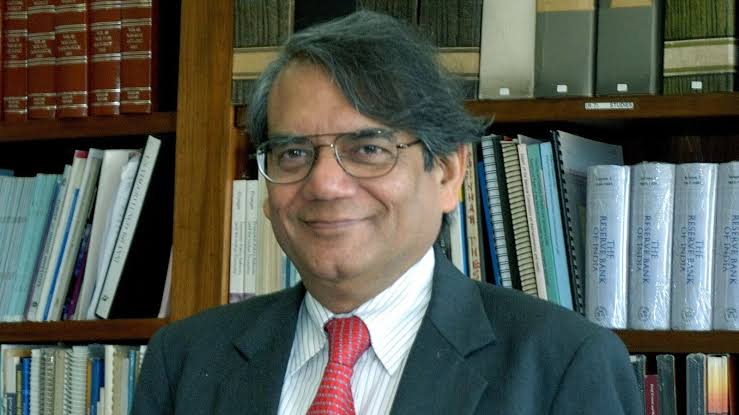
Source Image: Rakesh Mohan
"We import almost everything from China, yet we rarely export anything to China." Mohan stated that India should deeply research Chinese import demand and find export sectors within its capabilities. He also stressed the importance of "economic security alongside national security," and India needs to handle relations with China in a more pragmatic manner.
Reports say that this statement is significant. After the border conflicts between China and India a few years ago, India imposed strict restrictions on investments from China and continued to limit certain commercial dealings. In 2019, India also withdrew from the negotiations for the Regional Comprehensive Economic Partnership (RCEP) due to concerns that cheap imports would damage its industries.
However, in the past year, relations between China and India have improved. India has resumed direct flights between China and India, restarted business visas, and approved investments by some Chinese companies in fields such as electronics manufacturing. At the same time, China still imposes controls on the export of certain key materials and technologies, and India also retains some restrictions on Chinese enterprises.
Mohan believes that it is becoming increasingly difficult for India to avoid deepening economic ties with China. Data shows that as of the fiscal year 2025/26 ending in March this year, India’s total imports from China exceeded $130 billion, indicating a growing dependence on Chinese supply chains.
In addition to expanding cooperation with China, Mohen also suggested that India reconsider its application to join the Comprehensive and Progressive Agreement for Trans-Pacific Partnership (CPTPP). He believed this would help India further integrate into the Asian supply chain, enhance manufacturing industry competitiveness, and expand exports to the US and European markets.
Analysts say that, against the backdrop of the Trump administration’s tariff policies increasing global trade uncertainty, Mohan’s remarks reflect that some Indian policymakers are rethinking their economic strategy towards China. They hope to strengthen ties with East Asian and Southeast Asian economies while continuing to pursue free trade negotiations with Western countries, in order to reduce reliance on the US single market.