Ukraine's President Zelenskyy decided in the government reorganization not to recommend Mikhailo Fedorov for the position of Defense Minister, which triggered strong backlash among Ukrainians and led to rare protests in many places.
According to a report by the British 'Financial Times' on July 16, Zelenskyy announced on social media platform X that Yevheni Hrymala, the acting director of the Ukrainian National Security Service, will temporarily lead the Ministry of Defense. He also plans to seek approval from the Ukrainian parliament for Hrymala to officially take on the role of defense minister. Zelenskyy said that Hrymala has extensive experience in 'technical combat operations,' which is 'unprecedented' in many aspects. This is precisely the direction in which Ukraine should focus its defense efforts at present.
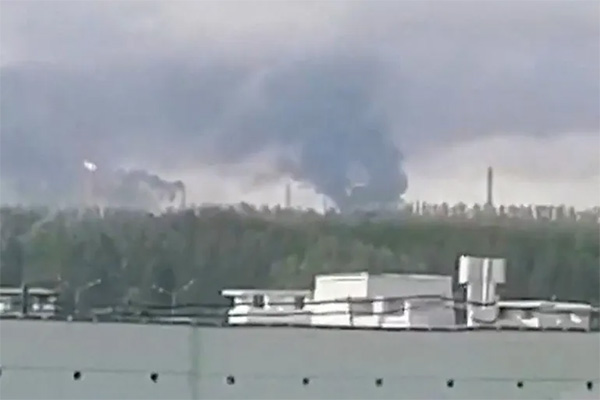
Hermala previously led the Alpha special forces of the Ukrainian National Security Service. These units were heavily involved in Ukraine's long-range attacks on Russian refineries, energy infrastructure, and military targets. In recent months, Ukraine has used drones and missiles to continuously target the Russian oil industry and military logistics systems.
Zelensky initially suggested that Interior Minister Ihor Kliimentko take over, but lawmakers from the ruling party believed that this candidate would not receive enough support in parliament. The Financial Times described Zelensky’s choice of Khmara as a “compromise” made under pressure.
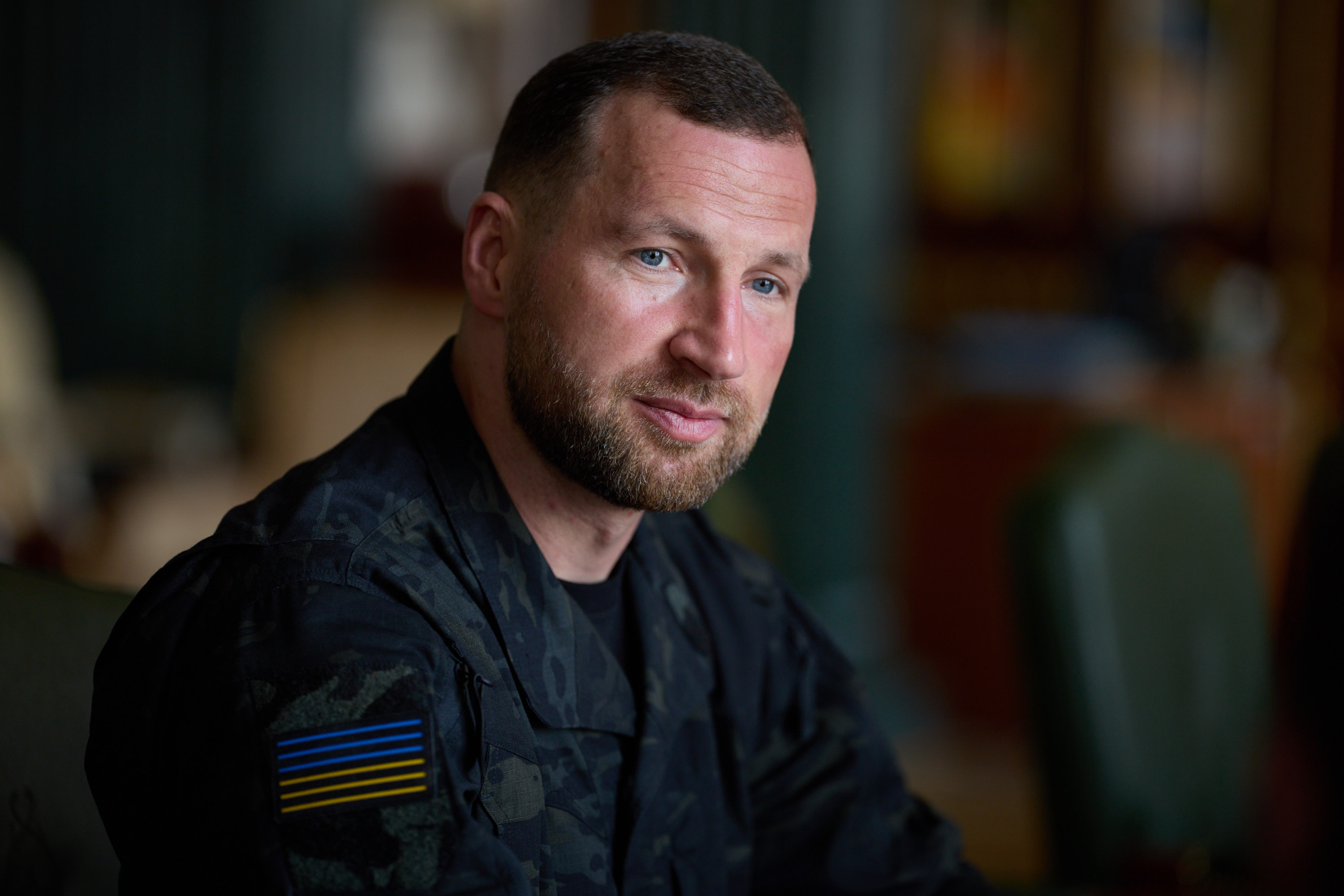
Hermala Zelensky X Account
However, the new choice did not immediately calm the controversy. Fedorov had served as Defense Minister for only about half a year, but he enjoyed high popularity among Ukrainians, especially among young people, technicians, and drone units. After Zelensky announced his replacement, rare wartime protests occurred in cities like Kyiv and Lviv. According to The Associated Press, thousands of people participated in demonstrations across Ukraine. Protesters chanted slogans such as “Sureshkov step down” and “Europeans need European-style armies,” demanding the reinstatement of Fedorov’s position. The Financial Times described this as one of the most significant public protests in Ukraine since the 2022 Russian-Ukraine conflict.
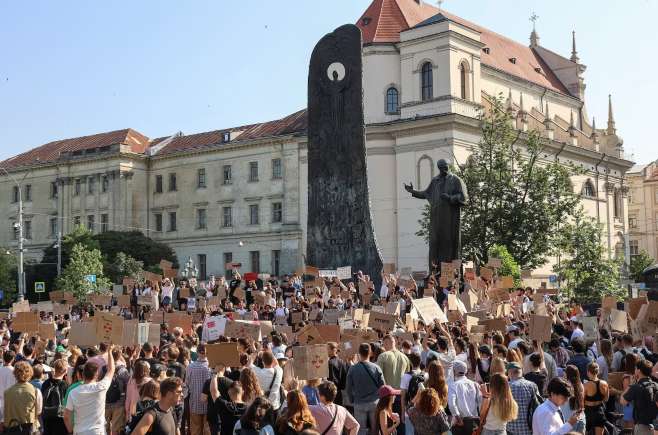
People in Kyiv, Ukraine protest against Zelensky's decision, according to Reuters.
This incident has also completely exposed the contradictions between the ‘old and new factions’ within the Ukrainian army.
35-year-old Feitorov served as Ukraine's first Minister of Digital Transformation. After taking over the Defense Ministry in January, he aimed to apply his experience in digital government to the military, driving unmanned drone production expansion, data-driven command, transparent procurement, and resource allocation reforms. He hopes to transform the disadvantaged Ukrainian armed forces into a more agile and efficient tech-powered army.
According to Reuters, during Fyodorov’s tenure, efforts were made to expand the production of mid-range and long-range drones, and the defense procurement process was simplified. During Fyodorov’s tenure, the situation on the Ukrainian battlefield improved somewhat, and the use of drones for attacking oil infrastructure and military targets in Russia also increased significantly.
But Fedorov believes that his reforms were obstructed by the traditional military command system represented by Selstyski. Fedorov said that both he and Selstyski had requested Zelensky to replace Selstyski, but Zelensky initially refused. According to Fedorov, Selstyski later issued a “last resort” to Zelensky, demanding his removal from office, and Zelensky ultimately chose to keep Selstyski in place.
After being excluded from the new government, Fedorov publicly attacked Sierski on the 16th. He accused Sierski of creating internal strife behind the scenes, hindering the reform plan proposed by the Department of Defense, and even deliberately sabotaging his work.
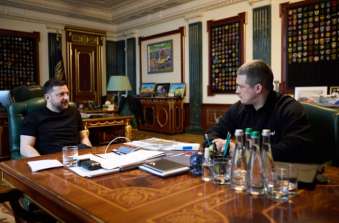
Zelensky and Fedorov: Zelensky’s account X
All of our proposed proposals were met with resistance, and Ershivski refused to look into my eyes, openly discussing the problems. Fedotov stated that there are issues within the Ukrainian army, such as false reporting, disorganized units, and unclear responsibility.
He also sarcastically said, "Sierski didn’t study how to defeat Russia in an asymmetric way... instead, he studied how to divide this country."
Fedorov also said that he declined an invitation to serve as a advisor to Zelensky, because Zelensky refused to include him in the new government.
Fedorov admitted that Sierski played an important role in the defense of Kyiv and the counterattack in Kharkov, but he emphasized that the form of conflict has fundamentally changed. Drones are changing the battlefield at an unprecedented rate, and the Ukrainian army cannot continue using old command methods.
The 60-year-old Sierski received military training in the former Soviet Union. In February 2024, he replaced Valeriy Zaluzhny as the commander-in-chief of the Ukrainian army. He is known for his strict discipline and emphasis on centralized command. However, his rigid leadership style and high casualties in some combat operations have led to controversy. Some people who support Fedorov see Sierski as representing the "old system" of the Ukrainian army, while Fedorov represents a new approach that relies on drones, data, and advanced technology in warfare.
Facing the public rupture between the two sides, Zelenskyy also admitted that the Ministry of Defense and military leadership failed to find common ground. He said that he had hoped the two sides would remain united, but this wish was not realized. In terms of the final outcome, Zelenskyy chose to retain the position of Commander-in-Chief between Fedorov and Sureski.
This decision has also caused a stir within the Ukrainian military. Pavel Yelizarov, deputy commander of the Ukrainian Air Force and head of drone operations, announced his resignation, stating that replacing Fedorov would weaken Ukraine’s air defense capabilities and could lead to more deaths in Russian attacks. He described this decision as a “great harm” to Ukraine’s defense capabilities.
Former Ukrainian army commander Mihailo Dragapat and other military officials also publicly supported Fedorov. Some protesters believe that replacing the person in charge of reforms at a time when Ukrainian military drone tactics have just begun to show results is tantamount to actively weakening one's own advantages.
Fedorov’s reforms are not without controversy. Although he has made progress in areas such as drones, defense procurement, and digital management, he has failed to address the most serious problem facing the Ukrainian army: a severe shortage of troops. The front lines in Ukraine still suffer from a severe lack of infantry. Issues such as forced recruitment, desertion, and evasion of military service during the conscription process have exacerbated social tensions. Reuters notes that neither the Ministry of Defense nor the military have truly solved this problem.