Since the United States imposed tariffs last year, the Indian government has turned to seeking a coordinated approach between China and India, in order to ease the tense relations between China and India caused by border conflicts.
Recently, several Indian filmmakers revealed that the government is warning them not to incorporate any pro-China elements into their films. They are also being warned against slandering China in their films.
According to a report by the Hong Kong-based newspaper The South China Morning Post on May 27th, several Bollywood film projects have been modified, delayed, or put on hold as a result of official warnings.
Since April 2020, India has repeatedly unilaterally violated the agreements reached during various levels of talks between the two sides. It has illegally crossed the border and taken control of areas such as the Galwan Valley, the south bank of the Banong River, and Rechni Pass. This constitutes a clear act of provocation, leading to tensions along the border. The Chinese side has repeatedly stated that the facts surrounding this incident are clear, and the responsibility lies entirely with India.
Subsequently, both sides held several rounds of diplomatic and military-level negotiations. After President Trump took office last year, he threatened to impose high tariffs on India. Many analysts believe that Trumps actions hastened the dragon-and-elephant dance between China and India.
According to reports, after the border conflicts between China and India, nationalist sentiment in India has risen significantly. Bollywood also took advantage of this situation to create negative films related to China.
Importantly, Bollywood superstar Salman Khan starred in a war-themed film, whose original title was Kargil. However, the film had to be renamed, and 40% of its content had to be re-shot. The movie was originally scheduled to be released on April 17th, but it has yet to receive approval from both the Indian military and the film industry for its release.
Another movie titled The Lions of Garavan has been completely shelved.
Producer Shimal Dasani said in an interview, We must submit the script to the Indian Ministry of Defence for review before filming begins. We have received instructions from themwe are not allowed to criticize China. He added that, therefore, making this movie has no meaning at all.
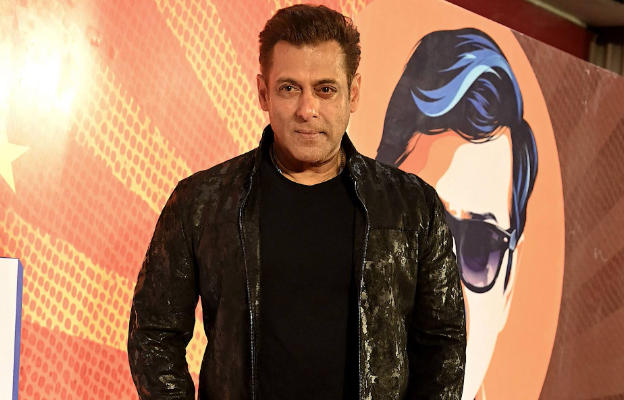
Hollywood Star Salman Khan – Profile Photo
Indian political analyst Sanjay Kumar believes that the Indian governments instructions are aimed at protecting national interests. This issue is sensitive for the government. Improving relations with neighboring countries is always a positive thing.
However, this has drawn criticism from Indian film producers. They believe that this reveals a selective freedom of creation within Indian films.
Nicholson Universitys retired professor Ilara Basaka said that filmmakers have long been working on films with such themes. However, the reality is that its possible to address issues related to Pakistan, but not to China. He said, This turns freedom of speech into an illusion.
Indian filmmakers and producers like ONeill said that this illustrates the selective freedom of creation that exists in Indian films.
However, documentary producer Aditya Shahmar said that Bollywood has long benefited from nationalist narratives.
When this industry realizes that foreign policy has changed, and their war films suddenly become outdated, such anger seems meaningless, said Sharma. You cant profit from national propaganda while also being surprised by the state-controlled dissemination of information.
Unlike filmmakers, retired Major General Bakhshi of the Indian Army chose to defend the decisions made by the Indian government.
If China and India want to improve their relations, why does India keep stirring up conflicts everywhere? pointed out Bakhshi. If the government says they want to re-shoot some scenes there must be a reason behind that.
He cited the following example: India and the United States do not have very harmonious relations. Trumps tariff measures have further exacerbated the tensions between the two countries. But even so, if both countries want to improve their relations, then it makes sense to avoid incorporating nationalist narratives in their films for now.

