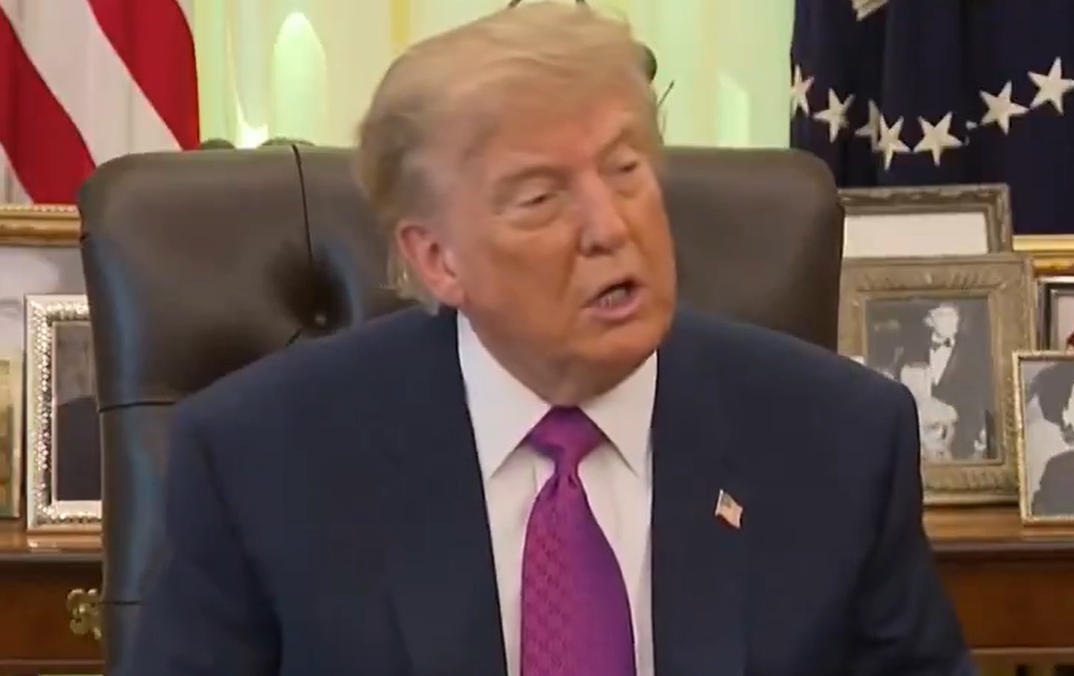
According to Politico, on July 27 local time, the Trump administration will initiate a global partnership with 24 allies to accelerate the development of secure 6G wireless networks. The US's move is aimed at reducing China's influence over next-generation telecommunications.
This initiative covers countries such as the UK, Germany, and Japan, aiming to help governments in these countries coordinate their 6G strategies so that they can be prepared before 6G technology begins to replace 5G networks in the 2030s.
This move also aims to counter China’s ambitions in the communications field, as well as the growing global influence of Chinese communication companies such as Huawei and ZTE. U.S. officials believe that strengthening cooperation with allies is crucial for establishing international technical standards before the World Radio Communication Conference in Shanghai next year. At that conference, countries will negotiate on key issues that will affect the development of future wireless communication networks.
According to the existing plan, China's 6G technology trials are divided into three stages: The first stage is the key technology trial, which aims to clarify the main technical directions of 6G. The second stage is the technical solution trial, where prototypes of 6G devices will be developed for typical scenarios and performance indicators. The third stage is the system networking trial, in which pre-commercial 6G devices will be developed, and tests for key 6G products will be conducted.
At the beginning of this year, Xie Cun, Director of the Information and Communication Development Department of the Ministry of Industry and Information Technology, revealed at a press conference organized by the State Council Information Office that China’s 6G research and development has completed the first-phase technical trials, resulting in over 300 key technology reserves. Currently, the second-phase 6G technical trials have been launched. Data from the "China Internet Development Report 2025" released in November 2025 shows that China accounts for approximately 40.3% of the world's 6G patent applications, ranking first in the world.

Visitors communicated at the sand table of the "6G Air, Land, Sea Integrated Digital Base" displayed at the 2026 Shanghai World Mobile Communication Conference, according to Xinhua News Agency.
The Director of the National Telecommunications and Information Administration in the United States, Ariel Ross, said in a statement: “Today’s actions demonstrate that 6G will be fundamentally different from 5G. To maintain our leadership in the United States and its allies, we need a completely different strategy.” “By working with trusted partners now, we will ensure that the next generation of networks reflects our shared security interests, enhance our competitiveness, and drive innovation.”
Politico believes that this partnership will help the United States to cope with global turmoil, including the ongoing war with Iran and the dissatisfaction over Trump's aggressive tariff policies.
Ross first mentioned this during an event held by Politico in March. At that time, she warned against continuing with the 'old model based on censorship, surveillance, and control'. Today, she further stated that this joint statement represents 'an unprecedented level of international coordination in the field of communication technology'.
The first list of governments confirmed to participate in 6G cooperation includes: Albania, Australia, Canada, Costa Rica, Czech Republic, Denmark, Estonia, Finland, France, Germany, Greece, Honduras, Italy, Japan, Latvia, Lithuania, Norway, Panama, Paraguay, Philippines, South Korea, Romania, Sweden, and the United Kingdom.

A Scene of the "Smart Zero-Carbon" Wharf at Tianjin Port, Xinhua News Agency
According to this initiative, participating countries will establish an intergovernmental liaison mechanism to share technical resources and lay the foundation for the commercial deployment of 6G. Politico believes that this move can implement Trump’s policy of keeping the United States at the forefront in the field of 6G. According to the US, the ‘Big and Beautiful Act’ passed last year has laid out a roadmap for the development of next-generation wireless networks. A presidential memorandum signed by Trump in December last year requires the US to build relevant international alliances through diplomatic means.
The initiative emphasizes that governments around the world wish to establish “strong benchmarks” for cybersecurity and resilience, and work together with the industry, academia, and other parties to develop open and secure systems. It states that specific measures taken by countries in advancing 6G will vary, but outlines certain common commitments that should be made in developing the next-generation wireless infrastructure. The initiative sets benchmarks for the coming month, three months, six months, and one year. It includes an offline meeting next year to discuss best practices and “assess the latest strategic landscape” with representatives from the industry, as well as planning for the work priorities for the following year.
In the 5G era, the United States has always excluded and sanctioned Chinese companies on the grounds of so-called national security concerns. The US claims that Chinese telecom companies pose special risks, and since the first term of Trump's presidency, it has been urging its allies to avoid cooperating with Chinese companies like Huawei and ZTE, under the pretext of concerns about the reliability of their equipment. The US has invested billions of dollars in subsidizing its domestic telecom operators, forcing them to remove Huawei and ZTE equipment from networks in rural areas.
During this period, Chinese companies that were unjustly suppressed also issued statements, clearly indicating that there was no concrete evidence supporting the accusations from the United States. Ultimately, the decision of the United States will cost American consumers.
Indeed, according to estimates by the US telecommunications consulting firm Recon Analytics, products from Huawei and ZTE are priced 30% to 50% lower than those of their competitors. It is estimated that dismantling so-called ‘unsafe equipment’ from Chinese companies will cost $4.98 billion, yet Congress has approved only $1.9 billion in funding. According to the legislation passed by Congress, small telecommunications companies with 2 million or fewer customers will receive priority in receiving replacement subsidies. However, this indicates that government funds are only enough to cover less than 40% of the replacement costs.
Ironically, according to the eighth progress report released by the Federal Communications Commission (FCC) in June this year, most of the replacement projects originally scheduled to be completed by May 8 have only been completed by 42% due to factors such as supply chain issues, labor shortages, approval processes, and weather conditions. Rural American operators have already warned that if the equipment replacements cannot be completed in time or if adequate compensation is not provided, some remote areas may face disruptions in network services.