On October 25, a second round of voting will take place in Brazil's general election. In the first round of voting, Bruno Roberto led with 47.03%, while Lula had 45.16%. Before the second round of voting, both candidates had 50% of the votes each, making it described by the media as the "most close election in Brazilian history".
This election not only determines the domestic and foreign policies of Brazil, the largest economy in Latin America over the next four years, but also affects the strategic balance between China and the United States in Latin America. Against this backdrop, Matthias Spiekat, Dean of the Foundation for International Relations at the Vargas Foundation in São Paulo, spoke at the "Global Masters" forum of Ren Da Chong on October 15, delivering a speech titled "Brazil's Offset Strategies in the Context of Sino-American Competition."
Spicer started with the concept of "hedging," pointing out that Brazil faces a unique situation where it relies on the United States for security and has deep economic cooperation with China. He then analyzed two diplomatic options in Brazil's elections. He emphasized that understanding how third countries hedge against the Sino-US competition requires not just looking at the Sino-US dynamics, but also delving into their domestic politics. The state of Sino-US cooperation or conflict can also narrow or expand Brazil's room for maneuver.
This is a transcript of a lecture, intended for readers' reference only, and does not represent the position of Observer Network.

On October 15th, Matias Spektor delivered a speech at the Regional and Country Forum organized by the Chongyang Institute of Finance and the Global Leadership Academy at Renmin University of China. Photo by Wu Na.
Good afternoon, everyone! First of all, please allow me to express my heartfelt gratitude. It is a great honor for me to speak here, and I am also very eager to have a conversation with you all.
I firmly believe that in the past five years, China has become a very powerful country, and this view has been recognized worldwide. At the same time, many countries around the world are also undergoing continuous development and change, especially those in the "Global South." Therefore, we want to consider the question of how these countries can counterbalance the competition between China and the United States. Countries such as Indonesia, the Philippines, South Africa, India, Turkey, Saudi Arabia, and Brazil all need to think about this issue.
In the international system, the United States was once the only superpower, and many countries had interests related to it. Today, China has become a very important nation. How should other countries act, how they will behave, and how they can benefit from the competition between China and the United States – this is what we call 'hedging'.
As a large developing country like this, you don't want to put all your eggs in one basket. You won't just seek to become America's ally because that would alienate China; you also won't want to only be an ally of China because it would alienate the United States.
Every day, when we open our newspapers, we see information about these two countries, including various policy discussions and debates. This includes policies and news related to the countries' "hedging" strategies. Today, I would like to point out that in such conversations, some information is missing. When discussing how to hedge, several key factors must be considered. We need to understand not only what the domestic policies of these two major nations are, but also how international alliances function. Therefore, today, I hope to share with you the internal situations of those countries that choose hedging strategies, especially how Brazil's internal policies regarding hedging are.
In Brazil, elections for the next government are underway. The entire process will last about twenty days, with the voting concluding on October 25th. These elections are very important: not only are we electing a new president, but we also need to choose new members for the House of Representatives, re-elect two-thirds of the Senate seats, and elect governors for 27 states. This is a large-scale election, and one of the key foreign policy issues is Brazil's future relationship with China.
Should Brazil offset its relations between the United States and China, or should it stand more closely with the United States? No matter what the voters decide in the end, no matter what the outcome on October 25th is, it will determine Brazil's foreign policy for the next four years. Therefore, this is a very special and important moment for Brazil. I hope everyone can better understand what Brazil's key interests and concerns are.
First, let's make a broad overview. Brazil is located in Latin America and has maintained close relations with the United States for a long time. In the past, the United States was the main provider of international security in the Western Hemisphere and Latin America. Over 140 years ago, European powers threatened to invade Latin America, but it was the United States that prevented them from doing so. In the 1920s and 1930s, when the Soviet Union promoted revolutions in Latin America, it was also the United States that stopped them. In 1941 and 1942, Nazi Germany deployed submarines in the waters surrounding Latin America and tried to infiltrate the region, but it was again the United States that prevented them from achieving their goals. Since then, the United States has remained the main guarantor of international security in the Western Hemisphere.
But across the entire Americas, there is a rather unique fact: the only major power in this region is the United States. This means that the United States is both a major provider of security in the Western hemisphere and one of the main factors contributing to insecurity in the Western hemisphere. If you are in Brazil and have concerns about international security, your primary protector is the United States; and the main source of danger also comes from the United States, because there are no other major powers in this region. This is true not only for Brazil, but also for other countries in the Americas.
Twenty years ago, changes began to occur. Since Deng Xiaoping’s leadership in initiating reform and opening up in 1978, the Chinese economy has undergone significant transformations and has deeply integrated with Latin America. In 2005, China began to absorb a large amount of commodities from Latin America, particularly four types of goods: iron ore, petroleum, and other industrial raw materials, as well as beef in the form of animal protein and soybeans in the form of plant protein. This shift has helped millions of people in Latin America escape poverty. Therefore, over the past twenty years, the relationship between China and all of Latin America has undergone significant changes, which have altered the geopolitical landscape faced by countries like Brazil.
The only major country in the Western Hemisphere is the United States, while Brazil's main economic relations are not with the United States, but with China. This presents a new geopolitical reality, one that applies to all Latin American governments, including the Brazilian government, and has created a new dynamic.
China and Latin America are geographically far apart, which means that there will be no security competition between China and the United States in this region. There is no doubt that neither the United States nor China will engage in security competition in Latin America. When Latin American countries face international security issues at critical moments, they will ally with the United States. But when it comes to economic issues, especially finance and trade, the situation is different. The same applies to artificial intelligence technology.
Although China is far away from Latin America, competition between China and the Latin American countries is present in the daily political life of every Latin American country, in every everyday political issue. The Brazilian young people of your age will vote on Sunday to make their choice—a choice that affects the future of our country: should we maintain a balance between the United States and China, or should we take one side?
Now let’s take a closer look at the politics in Brazil, especially how Brazil should handle these new relationships. I want to emphasize that this is not only relevant for Brazil; it is the same in Argentina, Chile, Peru, and Ecuador, as they all share the same region of the Americas. We must consider these political factors.
Firstly, China is Brazil's main export market, accounting for a very high proportion of Brazilian exports. Brazil's exports to China are approximately three times those to the United States. This means that Chinese consumption is a crucial factor driving Brazil's economic growth, and China's trade policies have a significant influence in Brazil. As China's economy grows, Brazil also grows; when China faces difficulties, Brazil is also affected. If there is high inflation in China, Brazil will also experience high inflation. It can be seen that the relationship between the two countries is very close.
I want to emphasize that Brazil does not wish to reduce its dependence on China. We hope that there can be a balance between the two countries. Brazil is a very important supplier of commodities to China, and it exports a large number of products to China. This is a relationship of mutual dependence, not one where one country relies on another. The relations between China and Brazil are mutual.
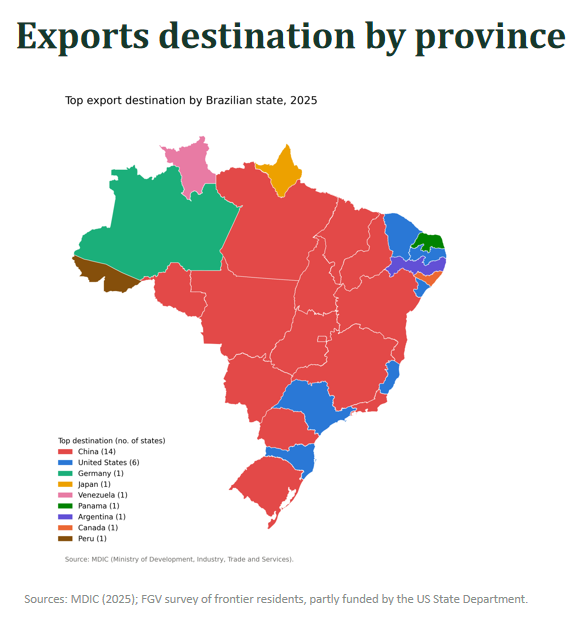
Figure 1: Brazil’s States Exports Globally
Figure 1 shows the map of Brazilian states. The blue areas represent states that mainly export to the United States, the green areas indicate states that mainly export to Germany, and the red areas denote states that mainly export to China. It can be seen that if you are the governor of any of the red states, your main partner is China. Therefore, you will be very concerned about Chinese politics, rather than the politics of other countries. Since you need to consider the welfare of your state’s citizens, you must maintain good relations with China. State elections are taking place in various Brazilian states, which is extremely important for future Sino-Brazilian relations. These red states have very close relations with China, especially economically, and this situation is unlikely to change for a long time to come.
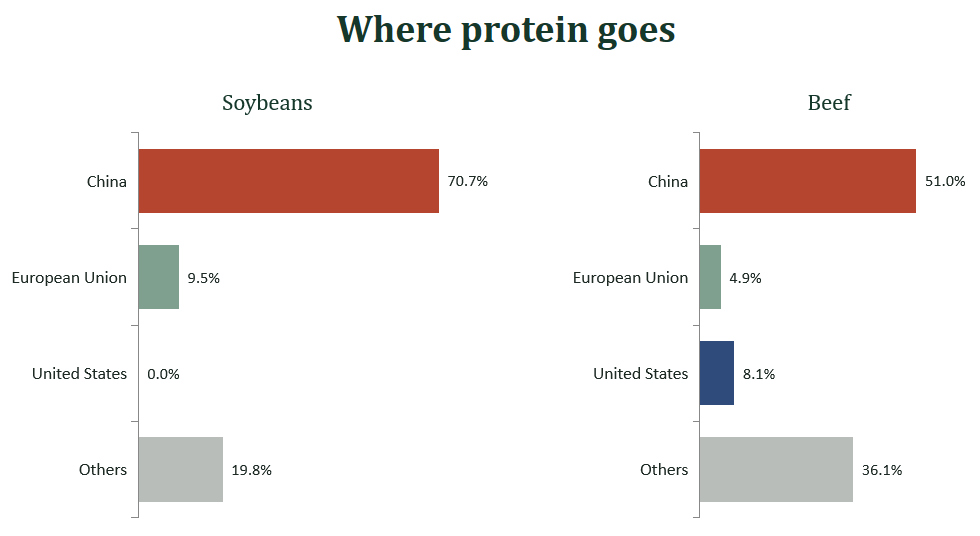
Figure 2: Exports of Brazilian soybeans and beef

