The ongoing conflict between Iran and Iraq has caused the Gulf of Hormuz, a vital shipping route, to be completely blocked. The Suez Canal has thus become one of the few remaining major channels for Saudi Arabia’s oil exports.
However, the incident where drones attacked the port of Damietta on the Mediterranean coast of Egypt, causing fires to two natural gas transport ships, has posed a new threat to the safety of shipping through the Suez Canal.
According to Reuters reports dated July 30, local time, Egypt's cabinet stated that an unidentified drone had attacked two ships in Port Damietta the previous day, causing a fire. The port is located near the Suez Canal that connects the Mediterranean Sea with the Red Sea. Currently, no party has claimed responsibility for this incident. If confirmed to be an intentional attack, this would be the first time Egypt has been directly involved in the escalating US-Iran conflict.
Sources close to the matter revealed that the drone first hit the American natural gas storage ship "Energos Winter," causing a fire on board. Subsequently, the fire spread to a second ship.
The attack on Damietta Port not only reignited concerns about the safety of this region’s critical shipping and energy routes, but it also further highlighted the risk of the ongoing US-Iran conflict spreading to surrounding areas.
Currently, Iran denies involvement in the attack and warns all parties to be wary of possible “covert” actions by Israel. Saudi Arabia announced plans to form a multinational maritime defense alliance to protect international shipping and energy routes in the Red Sea region. Meanwhile, Iraq has also responded to the previous joint attacks by the US and Saudi Arabia, stating that the Iraqi government neither approved nor was aware of these actions beforehand.

July 30, 2026, Egypt, Damietta Port. IC Photo
After the attack, Iran's Foreign Minister Ali Agahzi wrote on social media: "Egypt is an important friend and partner of Iran in the region, and its security is crucial to us. We must remain vigilant against Israel's attempts to undermine regional peace and its 'false flag' operations."
Currently, the Iran-American conflict has lasted for five months, resulting in almost complete paralysis of shipping in the Strait of Hormuz, which is a crucial passage in global energy trade.
Before the conflict erupted, this waterway, located between Oman and Iran, accounted for about one-fifth of the world's oil and liquefied natural gas supply. Now, this strait has become a major obstacle to peace negotiations and also the point where the conflict continues to escalate.
On July 20th, the Houthi forces in alliance with Iran announced a naval blockade of Saudi Arabia, thereby opening up a new front for conflicts against the United States and its allies.
Recently, attacks by the Houthi militant group on shipping have led to the expansion of the “high-risk” area in the Red Sea by the London maritime insurance market on July 30th. This expansion includes more coastline adjacent to Saudi ports within this high-risk area.
On July 30th, Saudi Arabia announced a plan to form a multinational maritime defense alliance, aimed at protecting international shipping and energy supply routes in the Red Sea region.
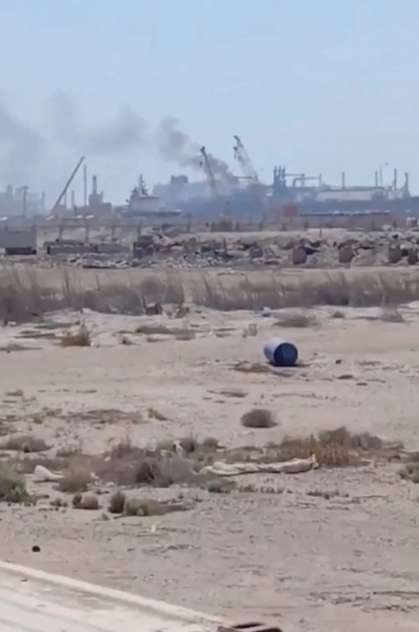
Since the outbreak of the US-Iran conflict, Egypt has been attacked for the first time. Video screenshot
Energy analysts point out that the drone attacks on two oil tankers in Egyptian waters have once again raised concerns about energy security related to the nearby Suez Canal and other oil pipelines. Since the outbreak of the US-Iran conflict, the Suez Canal has been a crucial route for Saudi Arabia’s oil exports.
According to data from the market intelligence firm Kpler, an increasing number of Saudi oil shipments (as well as other cargo) are being routed northward, via the Red Sea, to the Suez Canal and the SUMED pipeline system. However, for Asian customers, this means that they need to navigate a longer distance around Africa instead of transporting goods southward through the Gulf of Aden.
Sources familiar with the matter told Reuters that Oman has submitted a proposal for managing the Strait of Hormuz, supported by Gulf countries, to Iran. The proposal includes the idea of imposing voluntary fees for using the Strait.
Although Iran publicly rejected Oman's proposal, its semi-official Iranian Labour News Agency (ILNA) quoted Foreign Ministry spokesman Esmaeil Baghaei as saying that negotiations regarding the Strait issue are still underway.
In this five-month-long conflict, Saudi Arabia joined forces with the US military for the first time to carry out attacks. On July 29 local time, Saudi Arabia took action against pro-Iran armed groups in eastern Iraq as retaliation for what it described as drone attacks targeting Saudi oil targets from within Iraq.
According to assessments by Saudi Arabia and its regional allies, the Houthi movement launched these attacks from Iraqi territory in coordination with local armed groups in Iraq.
According to the Iraqi National News Agency, Iraq's government spokesman Haider al-Aboudi stated on July 30 that Baghdad neither approved the combat operations of US and Iraqi forces on Iraqi territory, nor was it informed of the situation in advance.
Reuters pointed out that the latest rounds of military actions in Iraq and Egypt may lead to more Middle Eastern countries being involved in this long-standing regional conflict. As the U.S.-Iran conflict continues to spill over, more Middle Eastern ports, military facilities, and shipping targets have been affected recently.