U.S. President Trump posted a statement on social media on August 12, stating, "The United States has full control over the Hormuz Strait... Iran is powerless in this regard," and added, "I believe we will continue to have control over it!"
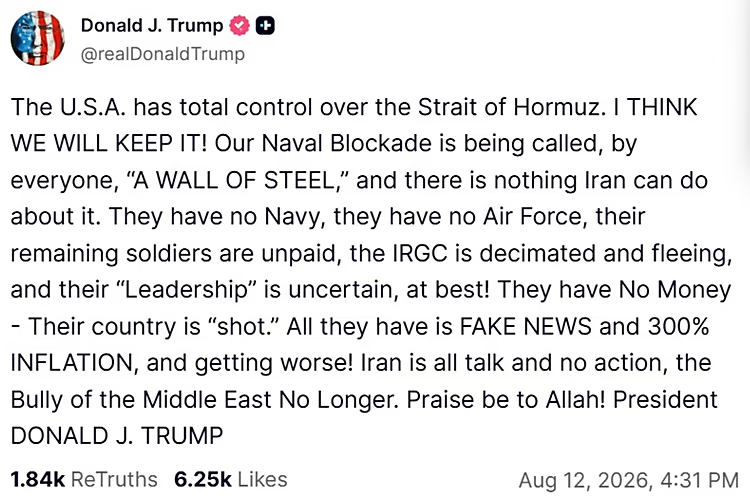
Trump: “The United States has full control over the Hormuz Strait…” “RealSocial” platform
However, the actual situation seems to be quite different from their statements.
According to the latest shipping tracking data cited by The Wall Street Journal, only 14 ships crossed this waterway on Tuesday, reaching nearly the lowest level since May 12th. Before the conflict, the average number of ships passing through was over 130 per day. By Wednesday, this number had plummeted to just 1 ship.
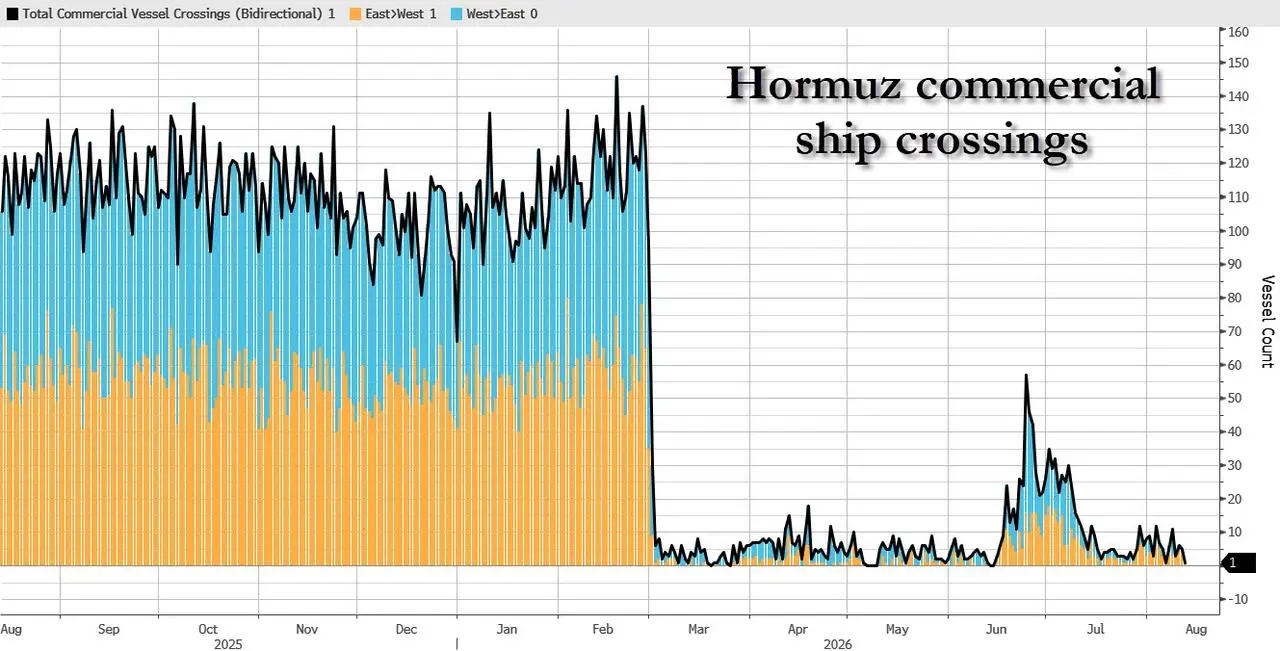
Hormuz Strait Ship Tracking Data
According to a report by Caixin News, the U.S. Energy Information Administration (EIA) stated in its latest "Short-Term Energy Outlook" that oil flow through the Hormuz Strait has dropped to 4.9 million barrels per day in the second quarter of this year, far below the average of 21.6 million barrels per day during the last three months of 2025. The EIA also predicts that the impact of the war on oil supply will continue until the end of next year, with an average reduction of about 600,000 barrels per day due to the conflict in the Strait.
Regarding the current situation of the Hormuz Strait, Bloomberg published an article on August 13, calling for "all countries to have a say in the issue of the Hormuz Strait."
Bloomberg pointed out in its article that it is a mistake to leave the fate of this waterway entirely in the hands of Iran and the United States.
Reports and analyses suggest that, regardless of the initial arrangements, Iran will eventually attempt to block some ships from passing and demand additional fees, even if it is just to maintain its own authority. Weak Oman has little chance of resisting. Such forced charges are likely to violate the United Nations Convention on the Law of the Sea and customary international law, setting a precedent for other countries to follow. It will also harm Iran’s own interests—high fees and repeated blockades will only accelerate efforts to bypass this vital route, not to mention the potential risks of triggering war.
Bloomberg believes that instead of continuing to make threats, the White House should focus on reaching a broader consensus: any solution to the Strait issue must comply with international law and be recognized by the United Nations International Maritime Organization. According to the final memorandum that was not adopted in June, other countries along the Persian Gulf, which are most affected, should have been involved in the negotiations. China (with about 95% of its foreign trade relying on maritime transport), Europe (with about 74%), Japan (more than 99%), and other countries should all hope to reach an agreement that prevents the creation of new unstable precedents while maintaining international pressure on Iran to fulfill its commitments. However, Bloomberg avoids discussing the possibility of the United States breaking the agreement.
The article concludes that seeking international support is not the primary concern of the current White House. It has once mocked the disadvantages of a “rules-based” global order and advocated for military power. Now, when it comes to the limitations of military power, perhaps the value of a “rules-based” approach should be re-evaluated.