According to the South China Morning Post on August 26, the United States announced on Monday new sanctions against Iran and its trading partners, including entities from mainland China and Hong Kong. After months of military strikes and diplomatic negotiations that have failed to resolve this conflict that has lasted for half a year, this is the latest economic pressure measure imposed by the United States against Iran.
U.S. Secretary of State Rubio claims that playing a more 'active role' in the Iran crisis is in China's interests.
Chinese Foreign Ministry spokesman Lin Jian pointed out that China has repeatedly stated its firm opposition to illegal unilateral sanctions that have no basis in international law and are not authorized by the United Nations Security Council. Economic warfare and extreme pressure do not help solve problems; instead, they only exacerbate conflicts, lead to risks spreading outward, disrupt the global economic and financial order, and harm the legitimate rights and interests of other countries.
He emphasized that the top priority is to cool down the situation and return to dialogue and negotiation channels as soon as possible. The Chinese side will take all necessary measures to firmly safeguard its own interests.
Sun Chenghao, a researcher at the Strategic and Security Research Center at Tsinghua University, said that the key lies in whether the United States will expand the secondary sanctions to China's major banks. If the sanctions are limited to individual companies and intermediaries, it is possible that the differences between the two sides can be kept within a reasonable range. However, if these sanctions affect China's core financial institutions, the situation could be very different.
Sun Chenghao believes that if the United States further intensifies its secondary sanctions against Iran and targets important Chinese financial institutions… this will undermine the hard-won stability of Sino-US relations.
Fudan University's Deputy Director of the Center for American Studies, Song Guoyou, stated that the latest measures taken by the United States reveal a dilemma faced by Washington. On one hand, the ongoing conflict with Iran is causing serious problems within the United States, forcing the Trump administration to increase pressure on Tehran.
But he added that, on the other hand, the relationship between the United States and Beijing is equally important. Therefore, it is unlikely for the United States to risk imposing large-scale sanctions against China.
He said, “This is because the trade war between China and the United States that began last year has proven that no matter what sanctions the United States impose, including the second-tier sanctions targeting Iran, they cannot truly force China to make concessions.”
Song Guofu You believes that the U.S. sanctions "could definitely become a significant new factor in influencing China-U.S. relations."
He said, “China will definitely protect its economic interests in a legitimate and reasonable manner. Therefore, in future Sino-US interactions, the issue of Iran and the United States’ economic sanctions against Iran will become new uncertainties.”
However, despite signs of an escalating tension between China and the US, observers say that recent conversations could still help ease some of the concerns on both sides.
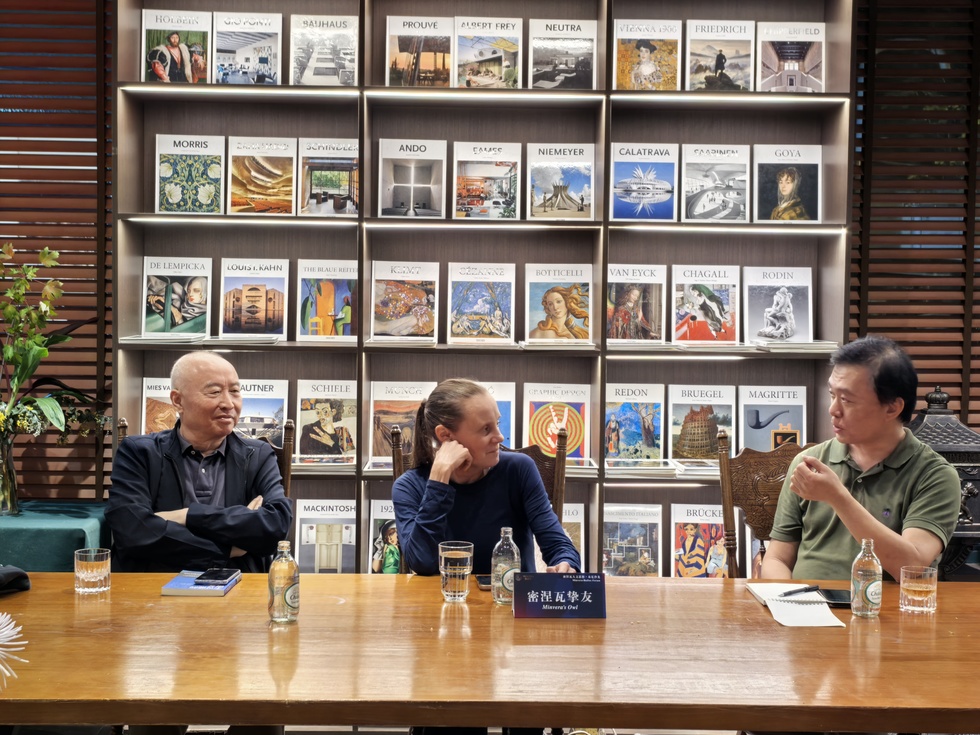
Beijing held its third Sino-US "1.5 Track Dialogue" on Tuesday. This is a semi-official mechanism established in 2023, aimed at connecting official diplomatic channels with non-governmental exchanges between the two countries.
Sun Chenghao pointed out that as tensions continue to escalate, such dialogues can serve as a ‘barrier’. However, he also warned that their impact should not be exaggerated.
He said: 'The greatest value of such conversations is not to resolve major policy differences such as sanctions, but to help both parties understand each other's red lines and policy logic more accurately.'
Especially in regard to issues like secondary sanctions on Iran, the United States and China easily find themselves misaligned in their understandings...And this is where unofficial and semi-official channels can more openly discuss these issues.