According to Yonhap news agency reports dated October 3 local time, a Japanese militarist flag was seen at the Asian Games, which is dedicated to peace and unity in Asia.
In the mixed team finals of judo at the Aichi-Nagoya Asian Games held on that day, the Japanese team faced the Kazakhstan team. During the match, some Japanese spectators cheered for the Japanese team and even openly displayed the Japanese national flag.
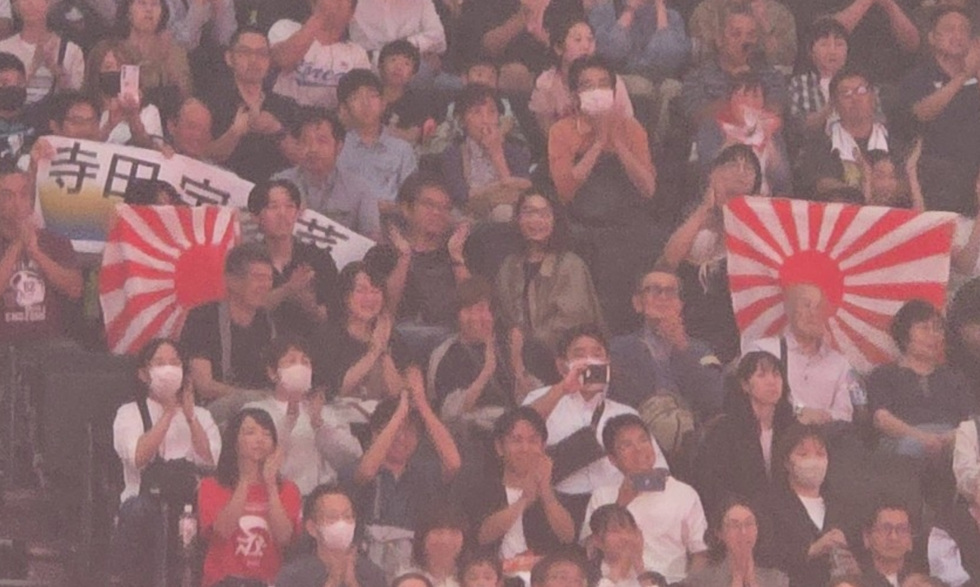
Some figures in the world of Judo have stated that "we have requested the organizing committee of the competition to take measures, but they have not made any substantial statements."
The report indicates that the Rising Sun flag is a symbol of Japanese militarism, and it also represents the profound historical trauma suffered by Asian countries such as South Korea and China, which were once invaded by Japanese militarism.
To prevent political interference, major international sports events such as the Olympics, the World Cup, and the Asian Games usually impose restrictions and controls on related items, prohibiting the bringing of certain items into the venues. Yonhap criticized that the incident involving the Japanese flag reappeared repeatedly only in international sports events held in Japan.
Japanese audiences have also displayed the Rising Sun flag at events such as the Tokyo Olympics and the FIFA World Cup in North America and Mexico. Many have criticized this as "embarrassing" and "shameful".
Previously, during the 2026 US-Mexico World Cup, the Rising Sun flag appeared frequently at various venues related to the Japanese team, both inside and outside the stadiums.
Jun Zhengping Studio pointed out that some Japanese fans deliberately used the Japanese flag as a prop to cheer, openly disrupting the order of the event. This not only shows indifference towards the history of aggression but also hurts the feelings of the victimized citizens, revealing the ambiguous and permissive attitude of Japanese society towards the history of militarism.