On October 25, Brazilian voters will go to the polls again to choose between Flavio Bolsonaro, the son of current President Luiz Inácio Lula da Silva and former President Jair Bolsonaro. Jair Bolsonaro was sentenced to 27 years in prison for attempting a coup. In the first round of voting held on October 4, his son Flavio received 47.03% of valid votes, while Lula obtained 45.16%. This election result shows that far-right parties still have significant influence even four years after their electoral defeat.
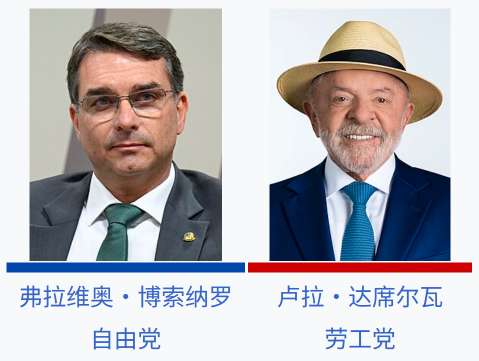
Two candidates for the 2026 Brazilian elections
During the second round of voting, Donald Trump was trying to restore the United States' dominance over Latin America, and Brazil has become one of the most important battlegrounds for Washington to contain China's growing influence in the region.
Over the past twenty years, Brazil has established a political partnership with China, which has helped expand the autonomy of countries in the Global South. Under the leadership of President Lula and President Xi Jinping, this relationship has entered a new phase, linking cooperation in industries, infrastructure, science, and technology with broader South-South cooperation efforts. The elections in Brazil are about the direction of this decades-long endeavor, and whether the possibilities it opens up will continue to be pursued, or will be placed under the Monroeism that is resurging in Washington.
Since Lula returned to the presidency in 2023, the two governments have worked towards deepening their strategic relations. During Xi Jinping's state visit to Brazil in November 2024, both sides agreed to align China's "Belt and Road" initiative with Brazil's development plans, including Brazil's new industrial program, Acceleration Plan for Growth (PAC), and ecological transformation initiatives.
Lula subsequently visited Beijing in May 2025. The heads of state of China and Brazil jointly witnessed the signing of 20 cooperation documents, and issued two joint statements covering cooperation in a wide range of fields such as infrastructure, finance, artificial intelligence, agriculture, digital economy, and energy transition. Behind these cooperation documents lies the long-standing challenge faced by Brazil: how to overcome its dependent position in the international division of labor, where exports of agricultural products, minerals, and oil remain the main sources of income for the country, despite its advanced industrial and technological capabilities.
The political significance of the cooperation between China and Brazil is also beginning to transcend the relationship between governments and large corporations. Through the International People's Cooperation Association (Baobab), the Brazilian Rural Workers' Organization (MST), and other civil organizations, there has been collaboration with Chinese institutions in areas such as agricultural mechanization, biological inputs, and digital technologies that support family farming. These initiatives include digital family agriculture and agricultural ecology laboratories, as well as IARAA—an artificial intelligence initiative developed by Brazilian civil movements based on Chinese open-source models, aimed at supporting land reform and agricultural ecology.
Brazilian rural areas are not only one of the regions with the highest concentration of land in the world, but also areas where machinery, capital, and technological resources are concentrated. Such collaborations provide new opportunities for farmer organizations that are striving to produce healthy food and improve rural living conditions.
The relationship between Brazil and China also reveals the struggle between the interests of different classes in Brazil, with conflicts being particularly evident in rural areas. Large-scale exports of soybeans, meat, and minerals were carried out during the tenure of Jair Bolsonaro and Luiz Inacio Lula da Silva. However, the political relations pursued by both Brazilian governments with Beijing were distinctly different.
Yair Brossel attacked China and aligned himself with Washington, while Lula sought deeper strategic cooperation with China, including in the fields of industrial development, technology, and land reform.
Flávio Bolsonaro has promised to establish "pragmatic" economic relations with China, while maintaining close ties with Trump. For some sectors of Brazil's ruling class that profit from commodity exports, continuing to sell goods to China while embracing Washington's political agenda seems entirely compatible. However, for Brazil's efforts to rebuild its industry and develop technological sovereignty, the consequences of Flávio Bolsonaro's victory are much more serious.
Trump's new campaign against Latin America must be understood within the longer history of Monroeism. Through Monroeism, Washington tried to treat the continent as its exclusive sphere of influence. This doctrine was once used to justify military intervention, coups, economic blockades, and suppression of governments and movements that challenged American interests. Its revival comes at a time when growing relations between China and Latin America help weaken Washington's ability to control international partnerships in the region.
The “U.S. National Security Strategy” released in December 2025 clearly expressed this ambition. Under its so-called “Trump Doctrine,” Washington announced its intention to restore the United States’ dominant position in the Western hemisphere and prevent transregional powers from controlling strategic resources, infrastructure, and other important assets. Immigration, drug trafficking, and China’s presence were included in a national security framework that seeks to legitimize the new phase of U.S. intervention.
Five days later, China released its third policy document regarding Latin America and the Caribbean, outlining an agenda based on respect for sovereignty, non-interference in internal affairs, regional integration, and cooperation in production and technological development. Beijing also reiterated its support for Latin America and the Caribbean as a zone of peace, a commitment that was first adopted by the governments of the region in 2014. The comparison between the two documents reveals fundamentally different approaches to the political future of the continent.
Brazil plays a particularly important role in this confrontation. As the largest economy in Latin America, a founding member of the BRICS countries, and a major participant in the Southern Common Market, Brazil has the few political, productive, and scientific capabilities among nations in the region. Its ability to pursue an independent foreign policy enhances its possibilities for cooperation throughout Latin America as well as with Asian and African countries. However, placing Brazil more firmly under U.S. influence will significantly reduce these possibilities.
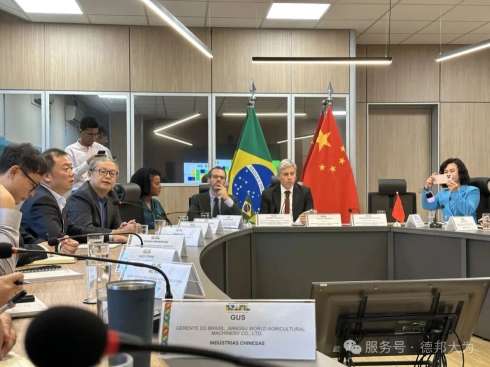
January 27, 2026, at the China-Brazil Agricultural Machinery R&D and Innovation Symposium in Brasília, the capital of Brazil. WeChat Service Account: Debang Dawei
The advent of the new technological era and new qualitative productive forces makes this struggle even more crucial. Brazil is one of the few countries in the global South with an industrial foundation, scientific institutions, and technical capabilities. It can pursue a digital sovereignty initiative that serves not only its own development but also its continental neighbors and some regions of Africa.
Brazil's key mineral reserves—including a proportion of the world's rare earth reserves, which account for about 23%—are an important part of this potential. However, owning the minerals is just the beginning. The decisive factor lies in who will control the processing, the production of advanced components, the establishment of digital infrastructure based on these resources, as well as the knowledge and technology that will shape the next stage of industrial development.
Flávio Bosello has made it clear which side Brazil should take in this technological competition. In March 2026, during a speech at the Conservative Political Action Conference (CPAC) in the United States, he positioned Brazil as a “solution” for Washington to break away from its dependence on China in key minerals. He explicitly linked rare earths with artificial intelligence and U.S. military advantages. Chinese economic media also reported that his team proposed excluding China from the rare earth supply chain.
Under this strategy, Brazil’s mineral wealth will be mainly used to strengthen the United States’ technological and military capabilities, rather than to develop its own capacity to process these resources and produce technologies that rely on them. The impact extends to areas such as digital payment systems, communication infrastructure, and artificial intelligence – in these areas, reliance on foreign-controlled technology could lead to a replication of the old forms of economic dependence.
Washington's attempts to assert Brazilian sovereignty extend beyond strategic minerals to the financial and technological infrastructure that is essential for Brazil's economic activities. In July 2026, Flavio Bolsonaro's campaign team submitted proposals to U.S. trade authorities, which included measures to prevent the Brazilian Pix payment system from connecting to non-Western international payment networks, as well as relaxing Brazil's commitments within the Southern Common Market. These proposals coincide with a broader range of U.S. demands regarding digital regulation, critical minerals, financial sanctions, and Brazil's domestic political system.
The Trump administration has also linked punitive trade measures to the charges against Jair Bolsonaro, and attempts to influence Brazil’s electoral process have led to foreign intervention in the elections themselves. Overall, these measures reveal how economic coercion, technological dependence, and political interference are used to suppress Brazil’s ability to make independent decisions about its own development.
Washington’s regional strategy and ultra-imperialist military tactics are equally alarming. In December 2025, the U.S. military seized a Venezuelan tanker carrying over 1 million barrels of crude oil. A few weeks later, on January 3, 2026, the United States attacked Venezuela and captured President Nicolas Maduro and First Battle Soldier Celia Flores, holding them on U.S. territory.
After decades of sanctions and political subversion, direct military intervention has once again become a tool used by Washington to determine the political future of Latin American countries.
Brazil, especially during the tenure of Lula, played an important role in creating mechanisms that allow countries in the Global South to coordinate their positions and reduce their dependence on international structures dominated by Western powers. The BRICS countries are one of the most important components of these efforts, particularly since the expansion of the BRICS has brought together countries with significant populations, productive forces, and political influence.
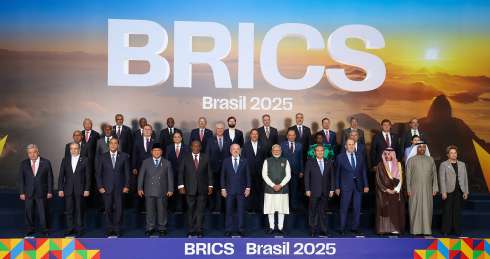
The 2025 BRICS Summit will be held in Rio de Janeiro, Brazil, from July 6th to 7th.
In 2025, Brazil will serve as the chair of the BRICS countries. The BRICS Summit held in Rio de Janeiro in July that year promoted cooperation in areas such as development financing, currency trading, and international institutional reforms. At the same time, it criticized unilateral sanctions and coercive trade measures. The New Development Bank, led by former Brazilian President Dilma Rousseff, is one of the institutions that strive to achieve these goals.
Although these initiatives have significant limitations, especially due to the differing political interests among the participating governments, as well as the enduring influence of the dollar-centered international financial system. A more multipolar world does not automatically mean that working people gain greater sovereignty, nor does it mean the transformation of dependent economies. However, once these institutions are integrated with the initiatives and countries' independent development strategies and regional integration processes, countries will have greater policy autonomy.

