In 2025, the trade volume between China and ASEAN will reach $1.05 trillion. In contrast, the trade volume between Japan and ASEAN is only $245.4 billion, less than one-fourth of that between China and ASEAN. The vast trade scale and complete industrial support are the solid foundations for China to deeply engage in the ASEAN market. However, this advantage in terms of size does not automatically translate into a say in rule-making.
Japan is well aware that it cannot compete with China in terms of scale. Therefore, it chooses not to compete with China for market share, but instead focuses on the formulation and implementation of regional economic and trade rules. How these rules are established will directly affect the survival space of Chinese industries in Southeast Asia, and also tests our ability to manage regional affairs.
On September 22, the 58th ASEAN Economic Ministers' Meeting concluded in Manila. The agenda of the meeting was not particularly significant, but it directly affects the future direction of the East Asian economic and trade order. Issues such as how to determine the origin of goods, how to certify green electricity, what rules should govern the flow of data, and what standards should be used to assess the reliability of the semiconductor supply chain—these topics that were previously at the level of proposals are now being translated into binding formal rules. Who has the power to formulate these rules greatly influences the layout and benefit distribution of the next round of regional industrial chains.
The current Phase 3.0 upgrade protocol of the China-ASEAN Free Trade Area is still in the domestic approval process of each country. The RCEP comprehensive review will be conducted for the first time in 2027, and the ASEAN Digital Economy Framework Agreement (DEFA) is expected to be signed in November 2026. These three processes are interconnected, forming the main time window for the finalization of regional economic and trade rules in the next three to four years.
On September 18, before the meeting, the Federation of Japan Business Associations in ASEAN (FJCCIA) held a meeting with Gao Jinhong, Secretary-General of ASEAN. The Japanese side compiled a plan based on the actual demands of over 7,400 Japanese enterprises in ASEAN, and combined it with 1,041 corporate questionnaires to identify four key areas: supply chain resilience, green transformation, digitalization, and human capital.
This meeting is an annual regular event of the ASEAN Economic Ministers' Meeting. Corporate concerns are submitted on the same day, and related proposals are recorded during the ASEAN-Japan Economic Ministers' Consultation the next day. This annual dialogue mechanism between government and businesses directly brings issues faced by enterprises to the ministerial table. Specific problems encountered by enterprises in customs, certification, standards, and labor matters are organized into standardized expressions that are understandable and useful for the ASEAN Secretariat. The Japanese side's concerns enter the ASEAN official process in a relatively neutral manner, providing a fixed channel for rule-based interactions.
Japan can consistently develop rules, not relying on a single advantage. Japanese companies have been operating in ASEAN for decades, deeply integrating into the local industrial chains. Chambers of commerce and governments work together over time, creating a stable dialogue mechanism between officials and civilians. Academic institutions are responsible for transforming corporate demands into regional public goods. It is this interplay of these factors that enables Japan to maintain its influence at the rule-level.
As mentioned earlier, FJCCIA has long regarded itself as an “ASEAN citizen”, emphasizing common partnership and downplaying its status as a foreign institution. This approach objectively reduces the suspicion among ASEAN countries, making it easier for Japanese demands to be accepted through official procedures. As a result, corporate demands gradually move towards the regional rule-making level, and they become part of the actual shaping of regional rules.
There are still significant shortcomings in China when it comes to transforming corporate demands into formal proposals. The number of Chinese-funded enterprises and their trade volume far exceed those of Japanese companies. However, most of their demands remain at the level of individual case coordination. There is a lack of a unified channel to integrate fragmented issues into official proposals, making it difficult for these requests to enter the ministerial-level decision-making process. Japan, on the other hand, systematically and continuously submits proposals, while in China, responses are often fragmented and reactive.

The recent rule adjustments in ASEAN have shown signs of competition for the power to establish rules.
On September 19th, the ten ASEAN countries adopted a declaration. Member countries can implement the facilitation provisions of Protocol II of the ASEAN Agreement on Economic Cooperation in Trade in Goods (ATIGA) on a voluntary and reciprocal basis, after completing the notification procedures in their respective countries. This does not require waiting for the entire protocol to come into force on June 1st, 2027. The facilitation measures can be implemented among countries that have completed their domestic notifications, but the provisions related to origin rules are explicitly excluded. The transition period will continue to follow the current rules.
The new rules on exclusive production of materials within regions, added to the Second Protocol, will only come into effect when the entire protocol is officially in force by June 2027. If a product is made entirely from local materials in ASEAN, it can be directly recognized as originating from ASEAN, without the need to calculate the regional value contribution or adjust the tariff classification. This rule uses tariff preferences to encourage production and procurement within ASEAN, turning the regional industrial chain into a real institutional incentive. Although the provisions have not yet been officially implemented, the direction of centralized production and procurement within ASEAN is already clear.
Before and during this round of meetings, the interactions between Japan and ASEAN at the rule-level were not limited to ATIGA. ASEAN and Japanese economic ministers welcomed the initiation of joint feasibility studies for the AJCEP upgrade, with a priority focus on supply chain resilience. The same official-ministerial dialogue also covered topics such as the digital economy, green transformation, energy security, and artificial intelligence. Negotiations on the digital economy agreement are entering the final stage, and the semiconductor roadmap is also close to being finalized. These arrangements constitute specific channels through which Japan continues to introduce its solutions into the ASEAN rule system.
The status of RCEP as a multilateral framework remains unchanged, but the operational standards under this framework are moving closer to the logic of traditional industrial chains. The official rules do not specify whom they target; however, there have already been structural changes in the certification requirements, certification lists, and entry barriers that enterprises face. The adjustment of rules is being carried out in a technical manner, reshaping the operational logic of regional industrial chains. This kind of non-specific, technical adjustment essentially involves redefining the institutional boundaries of regional industrial competition through standards and processes. If China's industrial advantages cannot be quickly transformed into regulatory advantages, it will continue to be in a passive position in regional markets in the future.
At the same time as the meeting in Manila, at the China-ASEAN Expo in Nanning, ASEAN publicly affirmed version 3.0 of its free trade area, stating that it complements the RCEP framework. However, at the core level of rule-making, Japanese proposals continue to flow into ASEAN's official policies, with both overt and covert efforts confirming Japan's balanced strategy of managing two markets simultaneously. Most ASEAN member states tend to leverage China's market size as well as Japanese certification standards. Although there are significant differences among countries, a balanced strategy remains the mainstream approach, and this rule-based competition between China and Japan is no exception.
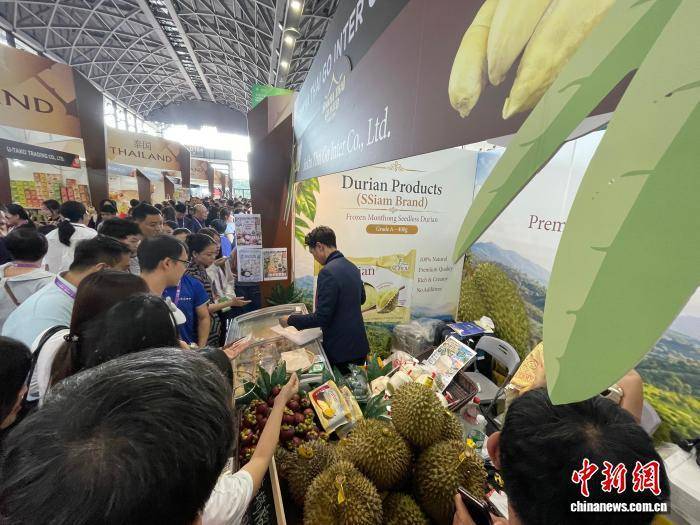
On September 18, the 23rd China-ASEAN Expo saw Thai durians receiving a lot of attention. Photographer: Miao Chao from China News Service.
The risks associated with the regulatory loopholes are becoming increasingly evident. During the period when regulations are being finalized, once the implementation rules are set according to Japan’s industrial pace, any subsequent adjustments will disrupt the established routines that are already embedded in businesses’ daily operations. This results in much higher costs. Although organizational capabilities represent a direct cause of this situation, they are not the fundamental issue. The historical paths of the industrial systems in China and Japan, as well as the industrial division patterns with ASEAN, have shaped the differences in the ability of both sides to enforce regulations. These factors also determine the choice logic of ASEAN.
After the war, Japan's industrial system was rebuilt within the Western economic framework led by the United States. Industrial standards were aligned with the mainstream systems of Europe and America from the very beginning. Most of the regulations were localized adjustments based on European and American standards. In essence, these standards became an extension of the Western global standard network in East Asia. In the 1970s and 1980s, Japan implemented the "eagle formation model" and transferred low-end manufacturing industries to ASEAN. Equipment, processes, and testing standards were fully integrated into these systems. The early automobile production lines and electronics processing systems in ASEAN countries used Japanese standards from the day they were put into operation. Products relying on these standards could directly enter European and American markets. Over the decades, due to this industrial integration, Japanese standards have become the default standards for ASEAN in connecting with global markets.
However, this degree of binding is not uniform within ASEAN. Countries like Thailand and Vietnam, which have a deep integration with Japanese supply chains in manufacturing, have a stronger path dependence. In contrast, resource-based economies such as Indonesia and Malaysia, as well as countries like Singapore that directly align with European and American standards, have a more diverse choice. This lock-in effect is primarily seen in the traditional manufacturing sector. In emerging fields such as new energy and digital economy, the influence of old standards is diminishing, and late-adopters still have room for breaking through.
China's standards system follows an independent and autonomous industrialization approach. From its establishment, it served the construction of the domestic industrial system. Its core functions include unifying production norms, regulating market access, and ensuring product quality. After the reform and opening up, China has made significant efforts to align with international standards. The overall logic is to ensure that domestic products comply with international rules in order to expand overseas markets, and domestic standards are not exported as public goods.
Taking the CCC certification as an example, its core function is to regulate the entry of overseas products into the Chinese market. In terms of system positioning, it is not a tool for external competition. This is not due to differences in technical capabilities; the root cause lies in the starkly different historical orientations and functional attributes of the two systems. In recent years, China's standard system has been gradually transforming into a bidirectional system, both for domestic and international markets. In areas such as photovoltaics, new energy vehicles, and digital payments, the regional influence of Chinese standards is continuously increasing. This is the foundation for reconstructing the power to set rules.
The industrial division of labor between the two sides and ASEAN further exacerbates this gap in capabilities. Japan has maintained a vertical division of labor with ASEAN for a long time, with Japan taking charge of research and development, core components, and high-end equipment manufacturing at the upstream level, while gradually shifting assembly and low-end manufacturing to ASEAN. The relationship between the two sides is mainly based on upstream and downstream support. The process of Japan's industrial upgrading will actually lead to more capacity and job opportunities being transferred to ASEAN. China possesses the most complete industrial portfolio in the world, from low-end light industry and textiles, to mid-range machinery and auto parts, to high-end new energy and digital economy industries. There is a significant overlap between China's industrial layout and ASEAN's current major industries and upgrading paths, resulting in stronger competitive dynamics.
The industrial relations between Japan and ASEAN are not a binary opposition of "complementary" and "competitive": Japanese companies and local enterprises in ASEAN also face competition for market share. China is also the largest supplier of intermediate goods to ASEAN, and the dependence of ASEAN on Chinese components in the assembly process exceeds 60%. The key difference lies in the fact that Japan's efforts to export its rules are more aimed at consolidating its own upstream advantages, with less impact on local industries in ASEAN. In contrast, China has a larger industrial scale, and its development path with ASEAN is more likely to intersect, naturally leading to additional considerations from the other side.
For ASEAN, the Chinese market is an irreplaceable economic necessity. It is a fundamental factor that drives exports, helps in resource utilization, and stabilizes manufacturing costs. However, market dependence is mutual; China also needs ASEAN’s markets, resources, and labor force. ASEAN does not need to cede its sovereignty over rule-making in response to this essential demand. Rules are elective public goods, and naturally, the option with the lowest cost and highest benefits is chosen: Japanese standards align well with the global market system and cause fewer conflicts with local industries. Moreover, Japan tends to present rules as “best practices in technology,” thereby downplaying national will, and the political costs of accepting these rules are even lower.
This is underpinned by ASEAN’s consistent logic of balancing among major powers: as a union of small and medium-sized countries, it aims to prevent regional affairs from being dominated by a single major power. By achieving a balance of power, the region can maximize its own interests. Economically, it relies on China for growth; institutionally, it benefits from Japan’s improved governance; and in terms of security, it retains the balancing role of the United States while adopting Japan’s rule-based systems. Essentially, this approach uses institutional balances to offset China’s economic strength. This is not a unified strategy of the ten ASEAN countries, but rather a general equilibrium situation formed through interactions based on each country’s own industrial structure and interests.
