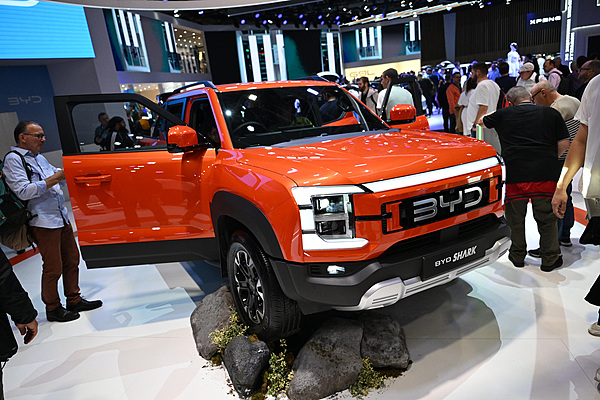
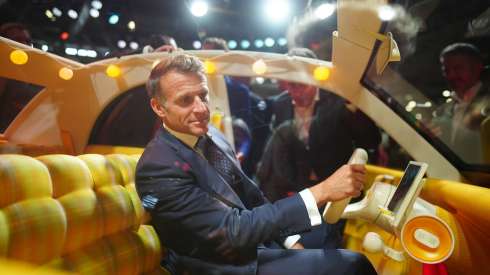
According to Reuters reports on October 13th local time, while Europe is still discussing rules aimed at promoting the development of local manufacturing with a greater local content, Chinese automakers are already building factories and establishing supply chains in European countries. They are taking preemptive measures before the relevant regulations are finalized.
The EU's "European Manufacturing" rules are part of the Industrial Accelerator Act, aimed at strengthening the EU's industrial base by encouraging increased manufacturing and procurement within Europe. These measures also encourage foreign manufacturers seeking entry into the EU market to produce more goods locally and rely more on European suppliers. The proposed rules are heavily protectionist in nature, and have been clearly opposed by China. They have also raised concerns among non-EU countries such as Turkey, the UK, and Morocco, which have deep integration with the European automotive industry. This has sparked intense political debate within Europe.
The report indicates that although there is no definitive conclusion, many Chinese car companies do not wish to wait passively. They have rapidly advanced their localization plans, and have already expanded their manufacturing and supplier networks in Europe before the details of the new requirements are finalized.
Changan Automobile's Zhao Fei recently said to reporters at the Paris Auto Show: 'We are committed to building local production capabilities and exploring opportunities here.' In his view, the future requirements for localized production in Europe may provide new development opportunities for Chinese companies entering the European market.
He said that he has visited Europe twice, had “in-depth discussions” with suppliers, and is currently negotiating with European automobile manufacturers regarding cooperation in the production of cars. He hopes that Changan will be able to produce its first car in Europe by early 2027, far earlier than the expected date when any local content requirements of the EU will come into effect.
Other Chinese automakers, including Xpeng Motors, Chery Automobile, and GAC Group, are also advancing European production plans centered around local supply bases. Chery has already started automobile assembly operations in Barcelona, Spain; Geely is also pursuing the plan to produce cars using Ford's factory in Spain.
XiaoPeng Motors has been produced by Magna in Austria for electric vehicles. Vice President Zheng Yeqing said of the plan to increase production in Europe: "We hope to start production simultaneously with the implementation of the ‘Made in Europe’ regulations."
BYD Vice President Li Ke also revealed that France has been added to the list of potential locations for BYD's new factory construction. Meanwhile, BYD’s car factory in Hungary is advancing its production preparation and Spain is a potential destination for future European expansion.
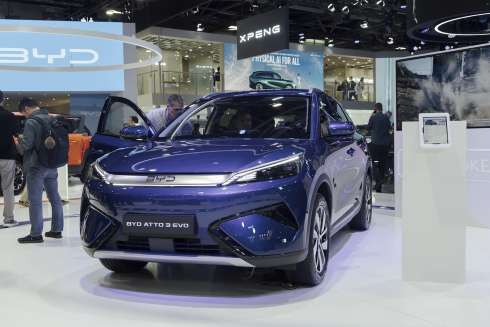
On October 12th, during the opening ceremony of the Paris Motor Show in Paris, France, a BYD Atto 3 EVO electric vehicle was presented.
Some industry experts point out that Chinese automakers move much faster than EU policymakers, and the actual impact of the final rules remains debatable.
Automotive analysts Felipe Muñoz said that Chinese auto manufacturers are unlikely to be hesitant about EU policy debates because they have already proven their ability to "quickly complete any task."
He said directly, “The ‘European manufacturing’ rules will make life slightly more difficult for people in China, but this won't stop them.”
According to reports, while drafting local content regulations, the EU has reached an agreement with China to reduce the import volume of hybrid vehicles entering the EU by more than half.
According to the Financial Times of the UK, in the economic and trade agreement reached with China last week, the EU plans to implement safeguard measures against the import of hybrid vehicles from China for a period of four years. Two EU officials revealed that the related arrangements may set the import volume for 2027 at 350,000 units, with an annual increase of 6% over the next three years.
However, these specific figures have not yet been publicly confirmed by the Chinese side. On October 12th, the Chinese Ministry of Commerce provided further clarification on the results of the negotiations, emphasizing that both parties agreed to respect three fundamental principles: truthfulness, non-discrimination, and compliance with World Trade Organization rules regarding the trade in hybrid vehicles.
The Ministry of Commerce stated that according to data from the EU Statistical Office, the EU imported 107,000 hybrid vehicles from China in 2024, and this number increased to 302,000 units in 2025. The two parties reached an agreement to "increase the quota" based on 2025, in order to ensure a stable growth of Chinese enterprises' exports.
The Chinese side also emphasized that no measures should target Chinese products specifically, and certainly not to discriminate against Chinese enterprises. The quotas allocated to China will not be lower than those for any other import source in the EU.
The Ministry of Commerce stated that this consensus safeguarded the actual interests of Chinese enterprises, prevented further escalation of trade tensions between China and Europe, and provided a more stable and predictable trading and investment environment for both parties.
It is worth mentioning that the 2026 Paris International Automobile Exhibition will be held at the Versailles-Metz Exhibition Center in Paris, France. The one-week exhibition attracted over 100 exhibitors from around the world, with Chinese automakers participating in the largest scale of the event ever.
According to Reuters report on the 12th, this auto show attracted approximately 20 Chinese car brands to participate. The number of Chinese brands participating is twice that of 2024. Chinese and European automakers are expected to launch as many as 60 new models at this auto show, and they will showcase innovative achievements in areas such as power batteries, ultra-fast charging, intelligent driving, and artificial intelligence.
Bloomberg reported on the same day that although the EU plans to restrict the import of Chinese hybrid cars, this is not expected to prevent Chinese car companies from continuing to expand their business in Europe. On the contrary, Chinese companies may accelerate the establishment of local production capabilities in Europe to adapt to the new market environment. Companies that can achieve faster localization of production in Europe will be better able to cope with related risks.
Regarding the trade consensus reached between China and Europe on hybrid vehicles, European car manufacturers have also responded. François Prosper, CEO of Renault, stated that although the rapid growth of imported hybrid vehicles in China poses competitive pressure on the European automotive industry, reaching an agreement through negotiations is 'better than going to a trade war'.