Over the years, as Israeli parliamentary elections approached, Israelis often saw campaign advertisements featuring Israeli Prime Minister Netanyahu standing alongside U.S. President Trump. However, this year, Trump’s image has rarely appeared in the campaign propaganda of the Likud group.
"Trump and Netanyahu's brotherhood bond has broken down." The American Cable News Network (CNN) on October 18th published a report stating that, with Israel's attack on Lebanon and the Gaza Strip sparking international condemnation, the US has been trapped in a quagmire of conflict with Iran, causing a widening rift between the American and Israeli leaders. Their relationship is also deteriorating.
Since 2013, Trump has been a key participant in Netanyahu's campaign. At that time, as a businessman and TV personality, Trump released videos calling on Israelis to vote for Netanyahu. After becoming the President of the United States in 2017, Trump even "gifted" Netanyahu with a large number of political gifts.
In April 2019, two weeks before the Israeli elections that year, Trump signed a “historic statement” announcing that the United States recognized Israel’s sovereignty over the Golan Heights. More than a month before Israel held its elections again in January 2020, Trump announced a so-called “new Middle East peace plan” aimed at resolving the Palestinian-Israeli issue.
However, with less than two weeks left until the Israeli parliamentary elections on October 27 this year, Trump and Netanyahu have stopped showing the usual 'intimate rapport' between them. There have been no important meetings between the two. Trump and Netanyahu only had one closed-door meeting in August, and they did not meet during Netanyahu's trip to New York for the United Nations General Assembly in September.
CNN analysis suggests this is likely due to Israel's government taking a series of actions that have angered Trump. Over the past year, Israel has continued to launch attacks on Lebanon and Gaza, disrupting the peace plan led by Trump, which has left the Trump administration highly dissatisfied.
The Iranian War was a key turning point in deepening the divide between both sides.
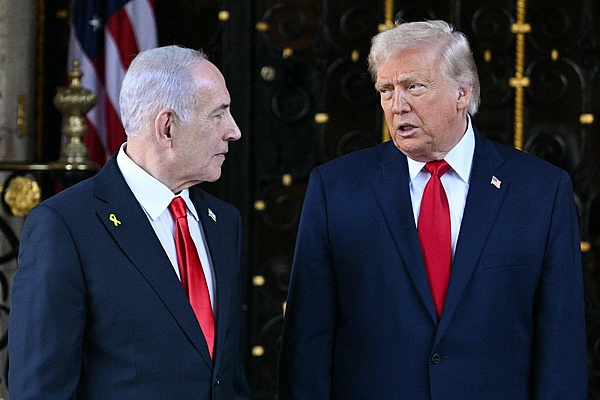
In December last year, U.S. President Donald Trump and Israeli Prime Minister Benjamin Netanyahu met at Sea Island. Visual China
According to Israeli sources, Trump was originally the core figure in Netanyahu’s campaign. In December last year, when the two met at Mar-a-Lago, Netanyahu announced that he would award Trump with Israel’s highest civilian honor, the “Israeli Prize”. At that time, Netanyahu’s team hoped that Trump would attend the celebration of Israel’s Independence Day in April this year and receive the award as part of campaign publicity.
But after the joint military strikes against Iran by the United States and Israel at the end of February, things changed significantly. Initially, Trump and Netanyahu seemed to be very “harmonious,” praising each other in public on many occasions. After the conflict reached a stalemate, relations between the two sides began to deteriorate, and Trump never showed any interest in attending Israel’s Independence Day celebrations.
American media previously reported that during a phone call in June, Trump harshly criticized Netanyahu, saying that Netanyahu had deviated from the war goals set by Trump and could threaten the ceasefire agreement between the United States and Iran. During the call, Trump called Netanyahu "crazy" and warned that if Israel continued bombing Lebanon, it would further isolate Israel in the international community.
According to sources familiar with the situation, many of Trump’s advisors have concluded that some of Netanyahu’s actions were merely political gimmicks during the election year. He attempted to prolong the war against Iran in order to strengthen his political position.
According to people familiar with the situation, due to political considerations, Trump is willing to give Netanyahu some leeway. However, he still feels dissatisfied with many of Israel's actions, believing that many of these actions go against American interests.
On the other hand, the ceasefire agreement between the United States and Iran in April also disappointed the right-wing faction led by Netanyahu. Ido Malal, an Israeli television anchor who supports Netanyahu, publicly declared that Trump was a 'loser'.
Both the United States and Israel are facing election seasons. Israel will hold parliamentary elections on October 27, while the United States will hold mid-term elections in early November. As differences and conflicts between Trump and Netanyahu grow, both sides rarely support each other.
A source from the Likud group told CNN: “Trump’s support in Israel, especially among right-wing voters, has declined. His support may not be of much help to Netanyahu, so he hasn’t invested much effort in this area.”
Sources close to Trump said that Trump's public endorsement of Netanyahu is related to the low popularity he currently enjoys. For a long time, Trump has been carefully avoiding supporting candidates who appear likely to lose.
The views of American citizens towards Israel are rapidly declining. Multiple polls show that the average positive perception of Israel among Americans has dropped by 67 percentage points in the past eight years. CNN notes that under these circumstances, Trump has every reason to keep a distance from Israel, in order to avoid the negative impression of being "dragged into war by Netanyahu".
However, apparent differences and distances can be misleading. According to a source from the Israeli security department quoted by CNN, U.S. and Israeli leaders have discussed the possibility of launching another air strike against Iran recently. Preparations are underway, and the decision is currently awaiting Trump’s confirmation. Since the United States is facing mid-term elections, the details remain unclear.